Modern intermodal terminals operate under extreme pressure. Rail-Mounted Gantry (RMG) cranes run 24 hours a day, rapidly transferring containers between flatcars and road trailers. Each braking cycle sends powerful lateral shear forces into the track. Each heavy lift compresses the rail against its foundation. Over thousands of daily cycles, standard fasteners simply fail.
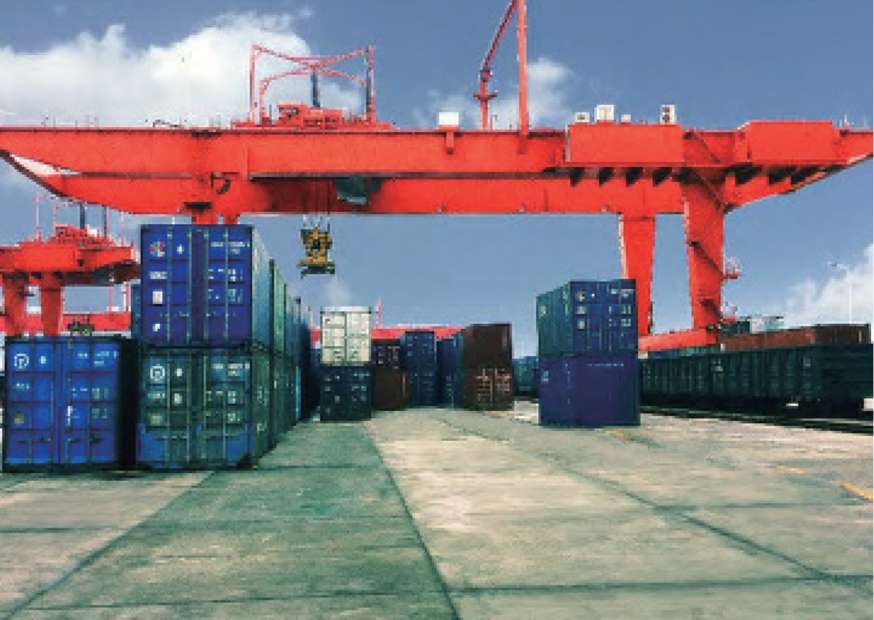
Intermodal terminal rail clips are engineered specifically for this punishment. Unlike general-purpose track hardware, they combine high-strength forged bodies, vulcanized elastomeric pads, and wide lateral adjustment to survive the unique stresses of container stacker tracks. Working with a specialist crane rail clips manufacturer is the first step toward a reliable runway system that minimizes downtime and protects costly concrete foundations.
Dynamic Braking Thrust and Lateral Shear Absorption
RMG cranes decelerate fast. When a heavily loaded trolley stops suddenly, it generates lateral braking shear forces that can exceed 300 kN on a single rail section. Repeated thousands of times per week, these impacts fatigue standard clip bolts and crack concrete bases.

Heavy-duty clip series such as the Xingrail 9120 and 9220 address this directly. Their dual-bolt design delivers lateral shear resistance from 165 kN up to 300 kN per clip pair. That capacity keeps the rail locked in position even during emergency stops.
Equally important is the vulcanized elastomeric nose pad. Made from nitrile or neoprene rubber at Shore A 75° ± 5°, it cushions the rail foot against the clip body. This dampens vertical rail wave and prevents hard steel-to-concrete impact. The result is less concrete spalling and a longer service life for the entire runway structure.
For a complete overview of engineered runway systems at busy logistics hubs, explore the dedicated intermodal terminal rail solutions page.
Sizing Fasteners for UIC 60 and QU100 Rail Profiles
Intermodal yards often carry two very different rail types side by side. Transfer tracks serving mainline trains typically use uic 60 rail (60E1), with a base width of 150 mm. RMG crane runways, however, often require heavy crane rail such as GB QU100 or DIN A100, which feature a wider and taller profile.
Each profile demands a specific clip configuration. The upper clip nose geometry, rubber pad width, and base plate height all change with the rail foot dimensions. Using the wrong clip leads to uneven clamping, accelerated wear, and potential derailment.
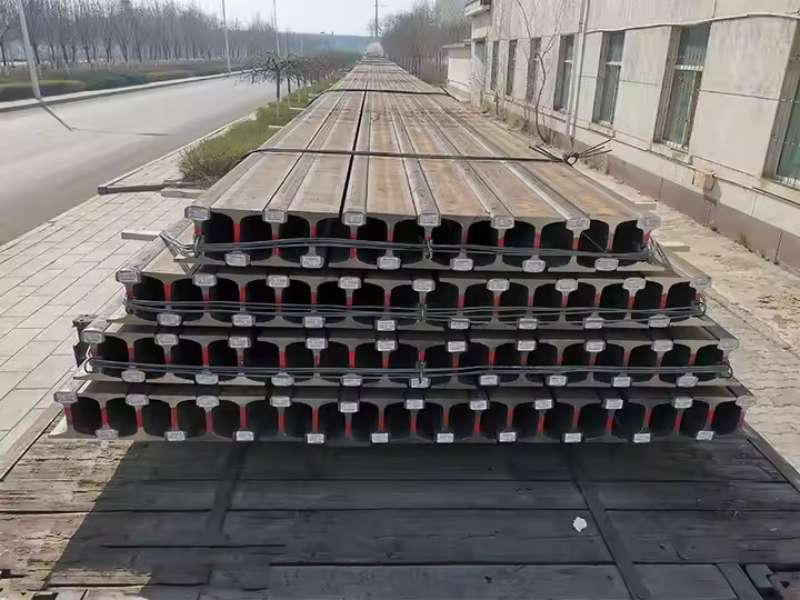
To simplify selection, the online rail clips configurator selector lets engineers input the rail type, single-track length, and maximum wheel load. The tool instantly calculates the correct clip model, required quantity, and safety margin.
All adjustable clip models provide ±15 mm of lateral play. This matters on long outdoor runways where thermal expansion and uneven ground settlement gradually shift the track gauge. The wide adjustment range allows precise re-alignment without cutting or replacing anchor hardware.
Related: rail clamps for cranes, rail clips for cranes, casting crane rail clips and port crane rail fixings.
Bolted Fastening on Concrete Runway Foundations
Most intermodal crane runways are built on continuous concrete slab beams with pre-embedded anchor studs. Hot welding on-site is impractical and weakens the base structure. Bolted rail fixing clips solve this cleanly.
The installation process is straightforward. Leveling shims set the rail to the correct height. The clip assembly drops over the anchor bolt. Non-shrink epoxy grout fills any gap beneath the base plate. At last, the bolt is torqued to specification.
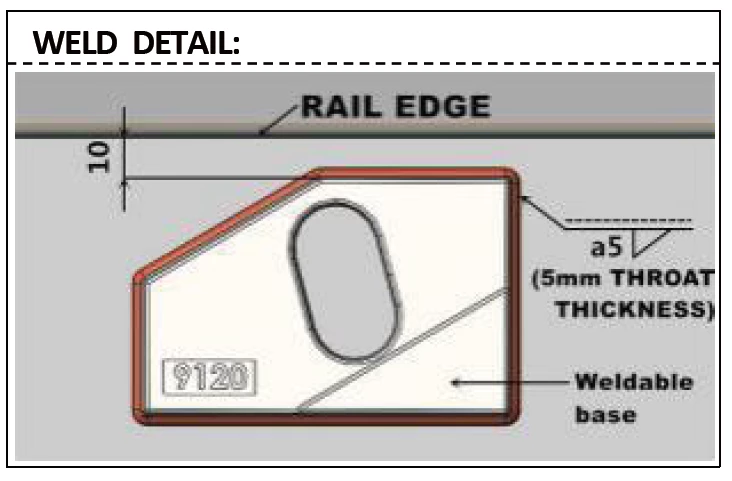
A dual-nut and wedge self-locking block prevents loosening under continuous high-frequency vibration. This mechanical self-locking feature is critical in 24/7 terminals, where manual re-inspection cycles are limited and unexpected fastener failure causes costly operational stops.
Runway Maintenance Standards and Torque Verification
Maintaining geometric accuracy on long crane runways is a continuous responsibility. Span, rail level difference, and straightness must be checked regularly using laser total-station equipment. Even small deviations accelerate wheel flange wear and increase structural loads.
For Grade 8.8 M20 anchor bolts, the correct torque is 320 Nm. Calibrated torque wrenches must be used — not impact guns. In a fully operational container terminal, a visual inspection of clip alignment and bolt condition is recommended quarterly. Full torque verification should be carried out every six months. Worn or compressed rubber pads must be replaced immediately to prevent hard contact between the rail and foundation.
FAQ
Q1: What makes intermodal terminal rail clips different from standard overhead crane clips?
— Intermodal clips must survive outdoor environments — freeze-thaw cycles, rain, and UV exposure. They also handle far greater dynamic lateral forces from fast RMG cranes. This demands heavy-duty hot-dip galvanizing, continuous synthetic rubber pads, and ±15 mm lateral adjustment for ground settlement.
Q2: Can one clip model fit both UIC 60 and QU100 rails?
— A single clip body series can cover both profiles, but the upper nose pad and base plate must be configured to match each rail’s foot width and height. The rail clips configurator selector tool computes the correct pairing automatically.
Q3: Why are bolted adjustable clips preferred over welded clips on concrete slabs?
— Bolted clips install cleanly over leveling shims without hot work. Individual components are easy to replace during maintenance windows, and the adjustable design allows precise gauge correction at any time.
Q4: How do elastomeric pads protect concrete from spalling under crane rails?
— Under wheel loads up to 450 kN, rigid steel-to-concrete contact concentrates stress and causes water-pumping damage. A Shore A 75° elastomeric pad cushions each impact, distributes the load uniformly, and dampens vibration before it reaches the foundation.
Q5: What is the recommended maintenance interval for RMG rail clips?
— In 24/7 terminals, perform visual inspections quarterly and full torque verification semi-annually. Re-torque any loose M20 Grade 8.8 bolts to 320 Nm. Replace compressed or cracked rubber pads immediately to avoid hard-contact damage.