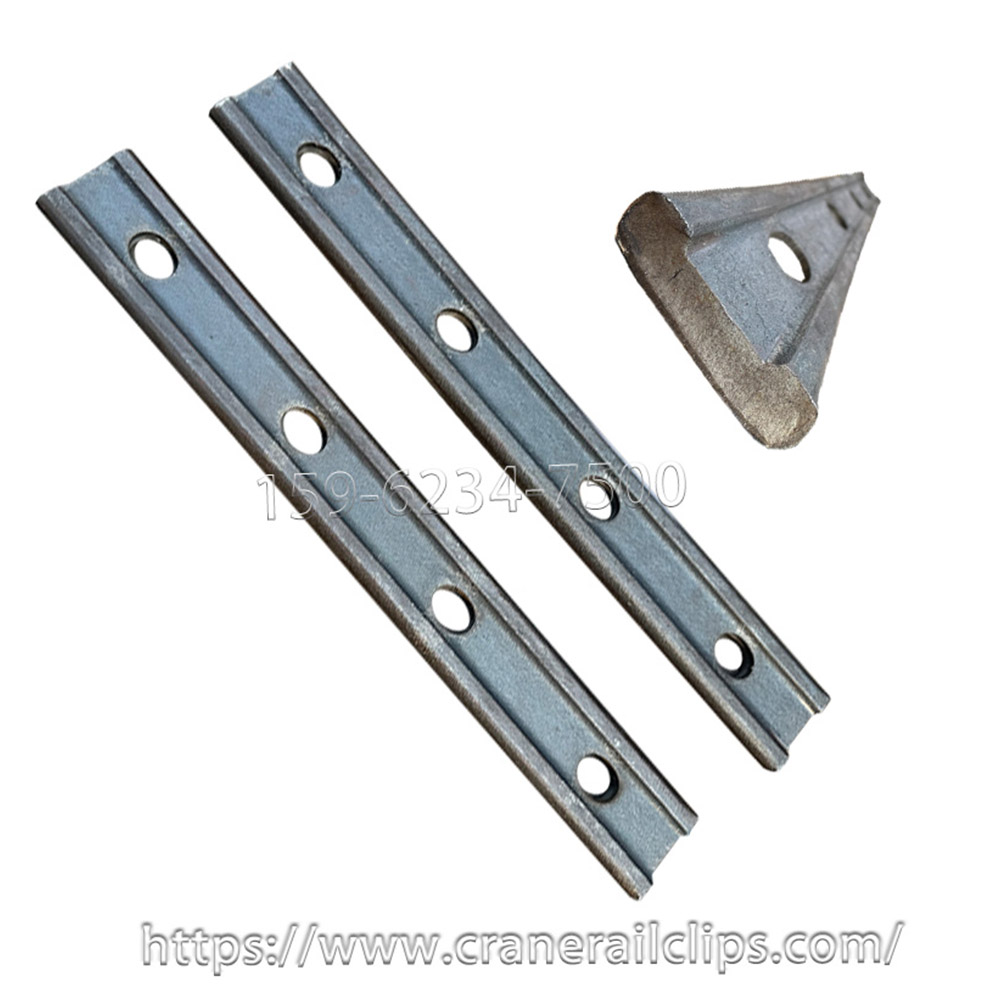
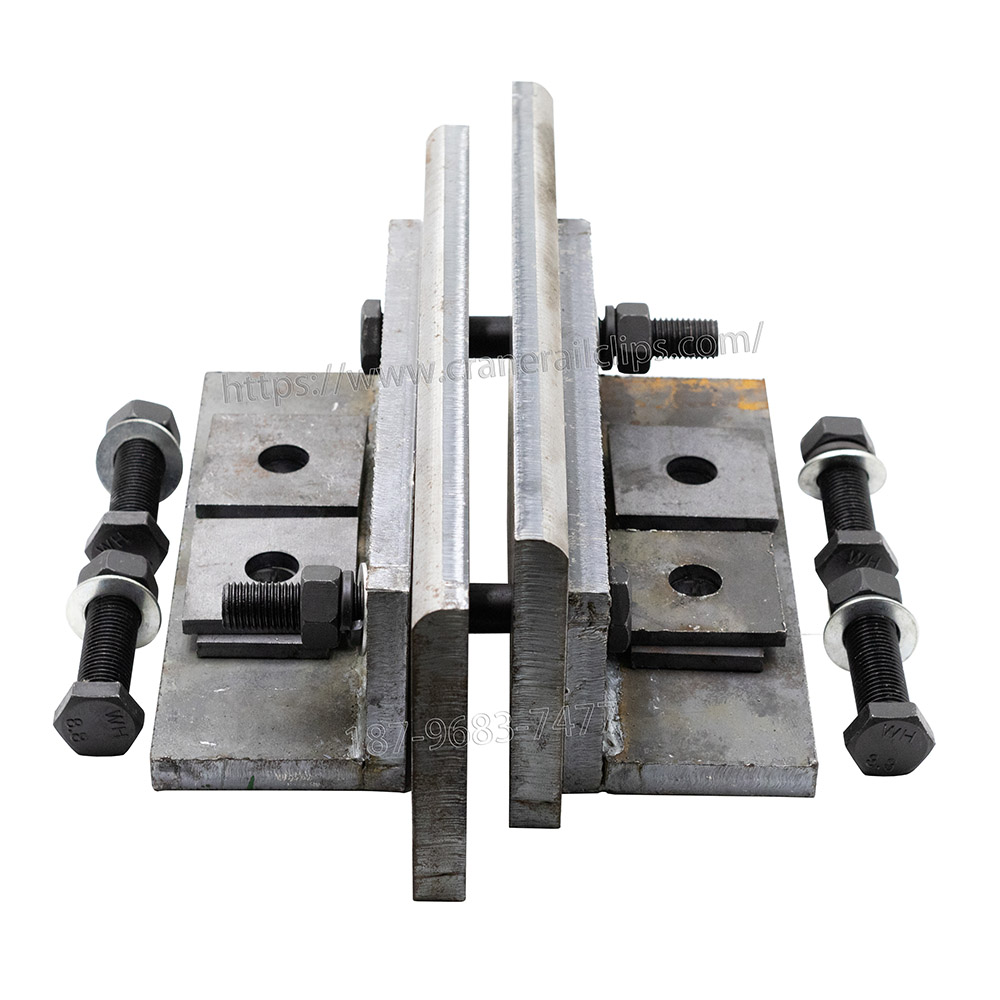
Rail Fish Plates For Light Rail

Rail Fish Plates For Light Rail

Our light rail fish plates are a better and cheaper option than welding. They are designed to be easy to install with matching fish bolts, which cuts down on labor costs and the time it takes to get the track. The arched bridge design is a key feature that was created to absorb shock and lessen the effect of wheels going over the joint. This makes the rail more continuous along its length, which means less wear on track parts and a smoother, safer ride. Our fish plates guarantee better performance and longer life for modern light rail systems by making train passage more stable and extending the life of your track.

Fish Plate Joint Bar description

Types of Fish Plates

  1. Light Rail Fish Plates: Also known as rail joint bars, and Heavy Rail Fish Plates, also referred to as crane rail inclined joint bars. Insulated Fish Plates are entirely made of insulating materials. These new rail materials, crafted from high-strength composite materials, are corrosion-resistant, rust-proof, UV-resistant, non-conductive, and non-magnetic. As thermosetting materials, they cannot be reprocessed, making them theft-proof.
  2. Fish Plate Models: Fish plates are categorized based on rail specifications, including 8kg, 12kg, 15kg, 18kg, 22kg, 24kg, 30kg, 38kg, 43kg, 50kg, 60kg, and 75kg. Insulated light rail fish plates include models such as 8KG, 9KG, 12KG, 15KG, 18KG, 22KG, 24KG, and 30KG. Insulated heavy rail fish plates include models such as 38KG, 43KG, 50KG, 60KG, QU70, QU80, QU100, and QU120, also known as crane rail inclined joint bars.
  3. Ordinary Cast Iron Fish Plates: These are available in two types: four-hole and six-hole fish plates. Insulated fish plates for international standards include the BS47 and UIC series, such as BS80A, BS75R, UIC60, and UIC54. There are four specific types within these categories.
  4. Material Classification: Fish plates are classified by material, including ductile cast iron, Q235 rolled steel, and forged steel. The primary raw materials are medium-carbon steel and high-carbon steel. Our company mainly produces fish plate models such as 115RE, 132RE, UIC60, UIC54, BS80A, BS90A, BS100A, and 90/91LB. Additionally, we manufacture machined composite fish plates, as well as cast iron or cast steel fish plates.

Here add below images here by below order.

Rail Fish Plates For Light Rail 38 43mm thick 4 holes (1)

Rail Fish Plates For Light Rail 38 43mm thick 4 holes (2)

Rail Fish Plates For Light Rail 50mm 4 holes (3)

Rail Fish Plates For Light Rail 70 80mm (4)

Fish Plate Joint Bar Parameters

Fish Plates Railway Parameters

Rail Type

Fish Plate Length (mm)

Cross-Sectional Area (cm²)

Theoretical Weight (kg) Per Meter Length Weight

Distance from Center of Gravity to Various Points (cm) Without Bolt Holes

Inclination Angle of Axial Line With Bolt Holes

38kg/m

790

26.01

20.37

16.09

15.57

43kg/m

790

26.01

20.37

16.09

15.57

50kg/m

820

30.05

23.53

19.29

18.72


Rail type

Fishplate length/mm

Cross-sectional area/cm2

Theoretical weight/kg

Distance from center of gravity to various locations/cm

The inclination angle of the axis

Weight per meter length

Weight of each piece does not deduct bolt holes

Deduct the weight of the bolt holes

Distance to top Y1

Distance to bottom Y2

Distance to the inside X1

Distance to outside X2

Angle φ of the horizontal axis of the Z axis

Angle β between the neutral axis and the Z axis

38kg/m

790

26.01

20.37

16.09

15.57

4.89

4.51

2.09

1.88

4°03′

27°11′

43kg/m

790

26.01

20.37

16.09

15.57

4.89

4.51

2.09

1.88

4°03′

27°11′

50kg/m

820

30.05

23.53

19.29

18.72

5.37

5.05

2.38

2.18

4°39′

30°15′

Materials for Cryogenic Fishplates

Type

Chemical Composition

Mechanical Properties

YW35 Low-Temperature Fish Plate

C: 0.32-0.40%, Mn: 1.10-1.30%, Si: 0.30-0.50%, P: 0.035%, S: 0.035%, Mo: 0.15-0.25%, V: 0.06-0.20%, Nb: 0.04-0.07%, Cu: 0.20%

After heat treatment at -40°C: σb ≥ 720 MPa, σs ≥ 520 MPa, δ ≥ 13%, ψ ≥ 30%, Ak ≥ 20 J, Cold bending 60° intact

Non-Quenched Bainitic Fish Plate

C: 0.15%, Mn: 1.026%, Si: 0.576%, P < 0.006%, S < 0.007%, Cr: 0.299%, V: 0.028%, Nb: 0.04-0.07%, Cu: 0.121%, Ni: 0.030%

σb: 966.3 MPa, σs: 722.3 MPa, δ: 18.7%, Ak ≥ 60.7 J, Cold bending 60°

American XY-30 Low-Temperature High-Strength Fish Plate

C: 0.33%, Mn: 1.49%, Si: 0.32%, P: 0.016%, S: 0.017%, Cr: 0.07%, V: 0.12%, Nb: 0.04%, Cu: 0.18%, Ni: 0.05%, Mo: 0.19%, Ti: 0.001%

Without heat treatment: σb ≥ 900 MPa, σs ≥ 780 MPa, δ ≥ 17%, ψ ≥ 40%, HB 245-276, Ak ≥ 38.5 J (-30°C), Cold bending 30° intact

DY-30 Fish Plate

C: 0.20-0.38%, Mn: 1.30-1.50%, Si: 0.28-0.33%, P ≤ 0.035%, S ≤ 0.035%, Cr: 0.10-0.30%, V: ~0.1%, Nb: Residual, Cu: Residual, Ni: Residual, Mo: 0.02-0.20%, Ti ≤ 0.1%

After heat treatment (900°C quenching, 600°C tempering): σb: 1082.3 MPa, σs: 960.8 MPa, δ: 15.3%, ψ: 57%, Ak: 53.5 J (-30°C), Cold bending 180°, Fatigue strength

E483 Fish Plate

C: 0.18%, Mn: 1.26%, Si: 0.55%, P: 0.030%, S: 0.030%, Cr: 0.60%, V: 0.020%, Nb: 0.25%, Cu: 0.18%, Ni: 1.00%, Mo: 0.40%

For North American clients (cold regions): σb ≥ 800 MPa, σs ≥ 600 MPa, δ ≥ 15%, ψ ≥ 40%, HB 240-330, Ak ≥ 30 J (-30°C), Cold bending 180°, Fatigue strength intact (5×10⁶ cycles)

contact us. we are here to help you!