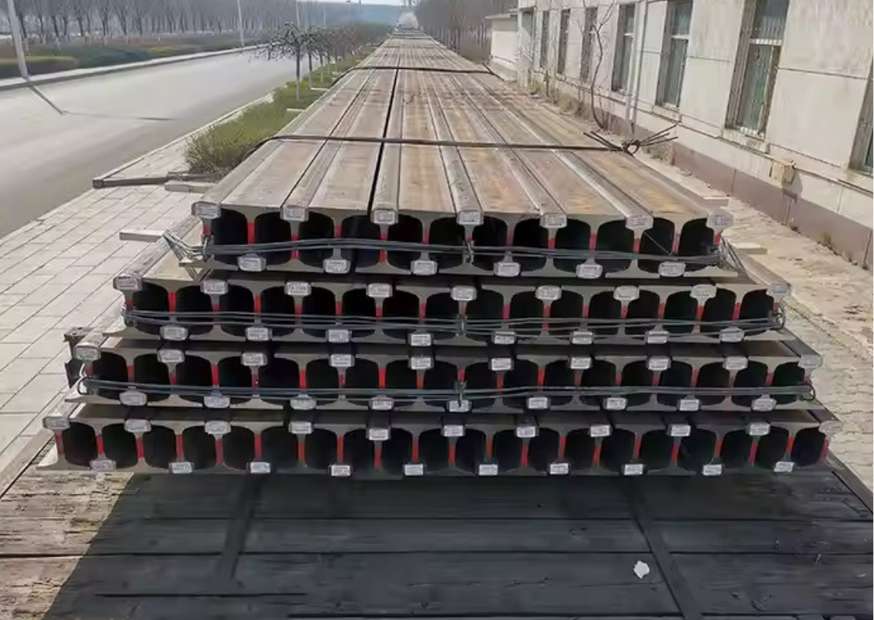
The 60 kg rail is a cornerstone of modern heavy-duty railway systems across the globe. As a critical component for mainlines, high-speed routes, and industrial tracks, a thorough understanding of the 60 kg rail specification is essential for ensuring track safety, durability, and performance. This rail profile, which has a nominal weight of approximately 60 kilograms per meter, is engineered to withstand immense stress from high axle loads and frequent traffic. Its design is governed by various international standards, most notably the UIC 860 and others like JIS E1101 and TB/T 2344-2012. This technical guide Xingrail provides a detailed look at the dimensions and material properties of the 60 kg rail and the specifications for the rail clips that secure it.

60 kg Rail Specification
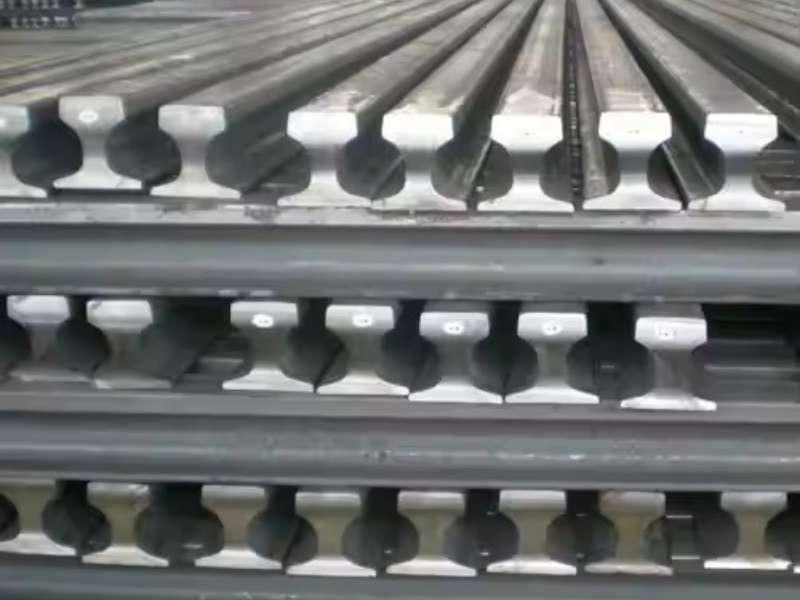
Different international standards provide slightly varied dimensions for the 60 kg rail profile, but they all adhere to the fundamental principles of a heavy-duty design. The most common standard is the UIC 60 (also known as 60E1), which is widely adopted in Europe and many other parts of the world. Other standards, such as the Chinese TB/T 2344-2012 and the Japanese JIS 60kg, offer similar profiles tailored to specific regional requirements. These specifications define the rail’s geometry, which dictates its strength, stability, and interaction with train wheels. The robust I-beam cross-section is optimized to resist vertical and lateral forces, ensuring a long service life under demanding operational conditions.
60 kg Rail Specification Table
The table below provides a comparative look at the dimensions of the 60 kg rail according to three prominent standards: UIC 60, Chinese Standard 60kg, and JIS 60kg.
|
Dimension |
UIC 60 (60E1) |
Chinese Standard (TB/T 2344) |
JIS 60kg (JIS E1101) |
|
Nominal Weight |
60.21 kg/m |
60.80 kg/m |
60.80 kg/m |
|
Overall Height |
172 mm |
176 mm |
174 mm |
|
Head Width |
72 mm |
73 mm |
65 mm |
|
Base Width |
150 mm |
150 mm |
145 mm |
|
Web Thickness |
16.5 mm |
16.5 mm |
16.5 mm |
|
Section Area |
76.70 cm² |
77.45 cm² |
77.45 cm² |
|
Material Grades |
900A, 1100 |
U71Mn, U75VX |
U71Mn |
The overall height of the rail, ranging from 172 mm to 176 mm, gives it exceptional vertical stiffness. This is critical for preventing the rail from flexing under the immense weight of modern trains, which ensures a smooth ride and reduces stress on the track structure. The head width, which is the contact point for the train wheels, is designed to be wide enough (typically 72-73 mm) to distribute forces effectively and minimize contact stress, which in turn reduces both wheel and rail wear.
A wide and stable base width of 150 mm is a key feature of the 60 kg rail specification. This provides a solid foundation, distributing the load across the sleeper and the ballast. It also offers significant resistance to rail tilting or rollover, a crucial safety factor, especially on curved tracks.
The material properties are just as important as the physical dimensions. 60 kg rails are manufactured from high-carbon, high-manganese steel alloys such as U71Mn and U75VX. These materials are heat-treated to achieve a high tensile strength (often exceeding 880 MPa) and a hard running surface (typically 260 HB or higher). This combination provides excellent wear resistance against the grinding action of train wheels while maintaining enough ductility to resist brittle fracture under impact loads and in cold temperatures.
Rail Clips for 60 kg Rail Applications
To function correctly, the 60 kg rail must be secured by a fastening system capable of handling the same heavy-duty conditions. Rail clips are the essential component of this system, providing the clamping force (toe load) needed to hold the rail firmly to the sleeper. This prevents longitudinal movement (rail creep), maintains the correct track gauge, and helps absorb vibrations. For a rail as substantial as the 60 kg profile, the clips must be equally robust.
Type I and Type II Elastic Clip Fastening Systems
In many railway networks, elastic clip fastening systems are the standard for heavy rail like the 60 kg profile. These systems are designed to provide a consistent, maintenance-free clamping force. The Type I and Type II systems, widely used in China and other regions, are excellent examples.
The system consists of a screw spike that fastens a gauge baffle and an elastic clip against the rail foot. A plastic insulator and rubber rail pad complete the assembly, providing electrical isolation and vibration damping. The clips themselves, often called ω-shaped elastic clips, are made from spring steel bars.
Specifications for Compatible Elastic Clips:
- Application: Suitable for 50 kg/m and 60 kg/m rails.
- Clip Types: The system uses A-type and B-type elastic clips. The longer A-type clip is often used with 60 kg/m rail to provide adequate reach and clamping force.
- Material: Made from high-grade spring steel such as 60Si2Mn or 55Si2Mn.
- Buckle Pressure: A single B-type clip can provide a buckle pressure of 9 kN, while a Type II clip provides 10 kN, ensuring the rail is held securely against vertical and lateral forces.
- Gauge Adjustment: The system allows for fine-tuning of the track gauge by using different gauge baffles, which is essential for maintaining precise track geometry over time.
SKL Tension Clamps
Another popular fastening system for 60 kg rail, especially in systems following European standards, is the SKL tension clamp system. These fasteners are also made from spring steel but are secured with a screw spike that passes through the clip itself. As the screw is tightened into a dowel in the concrete sleeper, the arms of the SKL clip are tensioned, pressing down on the rail foot. This method provides a very high and reliable clamping force.
Specifications for Compatible SKL Clamps:
- Common Type: SKL 14 is a very common choice for UIC 60 rail.
- Material: Spring Steel (e.g., 60Si2CrA).
- Hardness: Typically in the range of 42-47 HRC.
- Clamping Force: Provides a high and consistent toe load, suitable for high-speed and heavy-haul lines.
- Installation: Used in conjunction with screw spikes, plastic dowels, and guide plates on concrete sleepers.
The selection of the right clip depends on the type of sleeper (concrete or wood), the operational requirements (high-speed vs. heavy-haul), and the specific railway standard being followed. However, for a demanding profile like the 60 kg rail, an elastic fastening system is almost always the preferred choice over more rigid, bolted alternatives.
Recommended Products for 60 kg Rail Specifications
Heavy-duty 60 kg rails form the backbone of high-speed networks and high-capacity freight lines worldwide. Because these rails support extreme axle loads and intense traffic, securing them requires an equally robust fastening system. The strength of your railway relies directly on matching your rail clip to the physical cross-section of your rail profile.
To maintain precise track geometry, your rail clip must perfectly fit the base width of your 60 kg rail. The popular UIC 60 and Chinese Standard profiles feature a wide 150 mm base, while the JIS 60kg rail uses a 145 mm base. When your fastening clip seats flush against these wide bases, it delivers the maximum downward clamping force (toe load) necessary to lock the heavy steel to the sleeper. This intense friction absorbs severe dynamic vibrations and successfully prevents dangerous gauge widening.
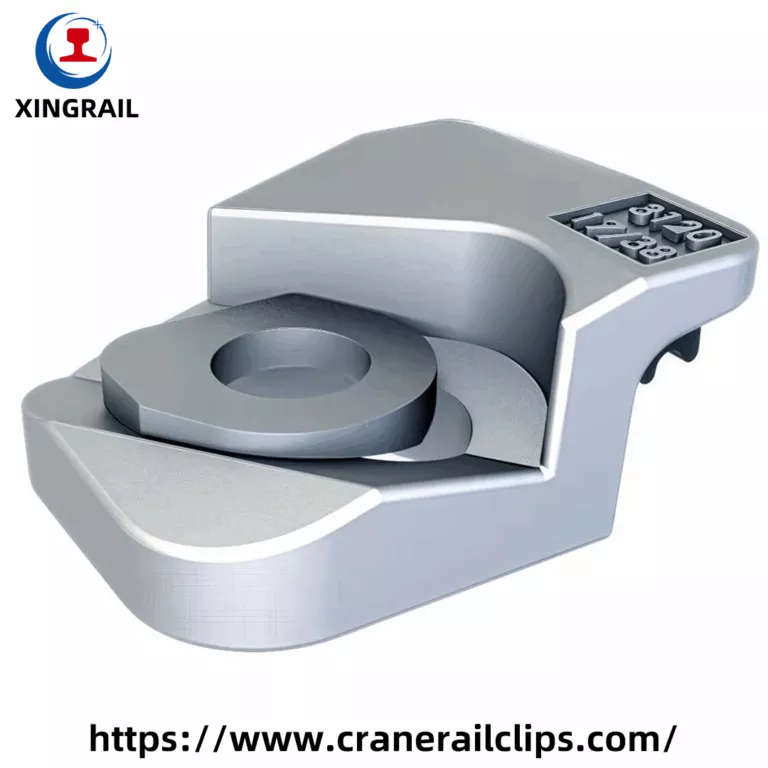
To help you build a resilient, high-capacity track structure, we have paired our heavy-duty crane rail clips with the leading international 60 kg rail profiles. Review the table below to find the correct fastening system for your specific rail dimensions.
|
Rail Type |
Base Width |
Height |
Weight |
Recommended Clips |
|
UIC 60 (60E1) |
150.0 mm |
172.0 mm |
60.21 kg/m |
9 Series Welded Rail Clips |
|
Chinese Standard 60kg |
150.0 mm |
176.0 mm |
60.80 kg/m |
9 Series Welded Rail Clips |
|
JIS 60kg |
145.0 mm |
174.0 mm |
60.80 kg/m |
9 Series Welded Rail Clips |
Frequently Asked Questions (FAQs)
- Why do wide 150 mm base rails like the UIC 60 require heavy-duty welded clips?
Engineers deploy 60 kg rail profiles specifically for high-speed routes and heavy-haul freight lines. These massive trains generate extreme lateral and vertical forces that actively try to push the rails apart. You weld the 9 Series clips directly to the underlying steel plates to create a permanent, rigid anchor. This structural bond securely grips the wide 150 mm rail base and successfully neutralizes intense high-speed vibrations. - How does the base width of a 60 kg rail dictate my rail clip selection?
The base width defines the exact physical span your rail clip must cover. A fastener only works if it hugs the rail foot perfectly. Because the Chinese Standard 60kg rail has a 150 mm base, you must use a clip engineered specifically to match this footprint. A precise fit ensures the clip applies the maximum clamping force needed to stop rail creep. - Do elastic fastening systems work well with heavy 60 kg rail profiles?
Yes. As heavy trains travel over 60 kg rails, the massive axle loads cause the steel to bend and vibrate aggressively. Our elastic 9 Series clips utilize premium spring steel components that flex to absorb these intense shocks. They continuously spring back to their original shape, pressing down heavily on the rail foot and pinning the steel firmly against the sleeper. - What happens if I install a mismatched rail clip on a JIS 60kg track?
Installing a rail clip that fails to precisely match the 145 mm base of a JIS 60kg rail creates an immediate derailment risk. If you place a clip engineered for a narrower base onto this heavy rail, the housing will fail to seat flush against the flange. You will instantly lose the essential toe load clamping force, allowing passing trains to rattle the rails loose. - Can the 9 Series Welded Clips handle the extreme braking forces on a 60 kg mainline?
Absolutely. Heavy freight trains exert massive longitudinal stress when they brake, attempting to drag the 60 kg rails forward. The 9 Series Welded Clips feature a robust wedge-action design. As dynamic forces push against the clip, the geometry forces the fastening components to clamp down even tighter. This active grip prevents longitudinal rail movement and maintains perfect track alignment.