115RE rail is one of the most widely used heavy-duty railroad profiles in North America. Selecting the right 115RE rail clips matters more than most engineers expect. A mismatched clip can cause gauge creep, rail rollover, or signal interference, all of which are costly to fix. This guide covers what 115RE rail is, which fastening types fit it, and how to choose between them for your specific application.

What Is 115RE Rail and Why Clip Selection Matters
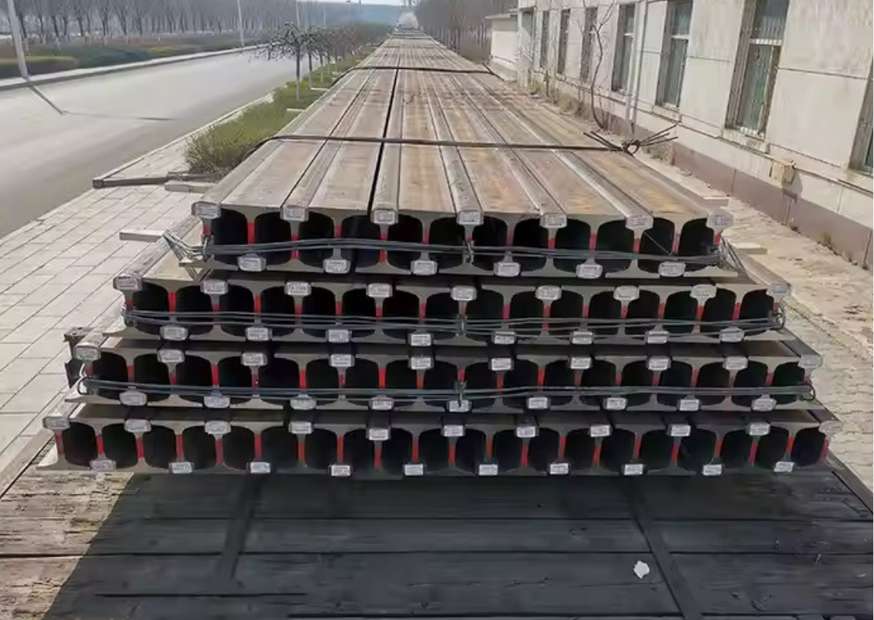
115RE is an AREA/AREMA standard railroad rail weighing 115 lb per yard (approximately 57 kg/m). It is used in heavy-haul mainline tracks and, less commonly, in heavy-duty crane runways where load capacity matches the profile’s strength.
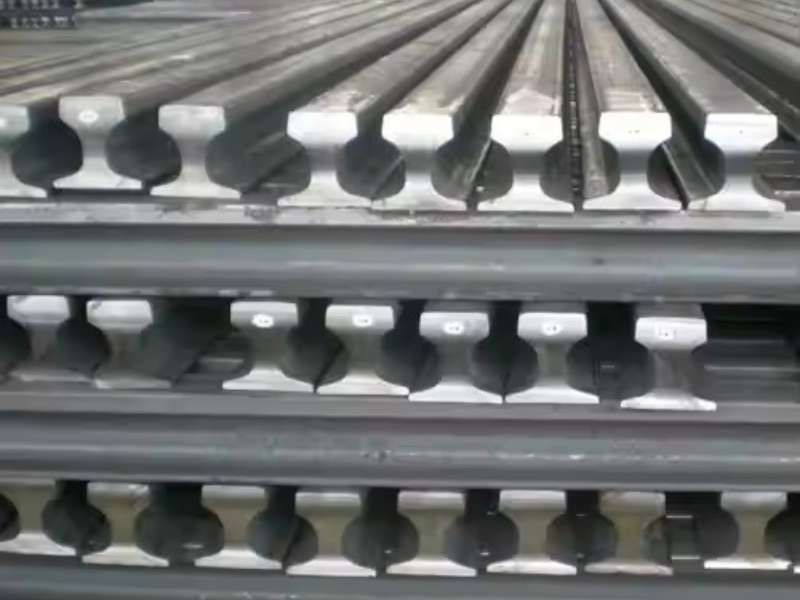
Because 115RE has specific head-width, base-width, and rail-height dimensions, every fastener must be sized to those exact tolerances. An elastic clip calibrated for a narrower head will not deliver the correct toe load. A forged clamp designed for a wider flange will rock under lateral force. Clip selection is not optional, it is a structural decision.
You can verify the exact rail section against the 115 lb rail dimensions page before ordering any hardware.

115RE Rail Specifications at a Glance
The table below shows the key reference dimensions for 115RE rail. Always confirm these against the AREMA rail standard or factory drawings before specifying fasteners.
| Dimension | Value |
|---|---|
| Weight | 115 lb/yd (≈57.0 kg/m) |
| Rail height | ≈168 mm |
| Base width | ≈127 mm |
| Head width | ≈69 mm |
| Standard | AREA / AREMA |
These dimensions define the clip geometry. Any fastener supplier needs at least the base width and head width to confirm compatibility. If you are unsure whether the rail on-site is true 115RE, use the weight-per-yard calculator embedded on this site to cross-check.
Technical Spec Comparison — 115RE vs Adjacent AREA Rails
Engineers sometimes receive 132RE or 136RE rail on-site instead of 115RE. The two profiles look similar but the base width is 152 mm versus 115RE’s 127 mm, a 25 mm difference that makes the clip sets entirely incompatible. The comparison below helps you identify the correct profile before installation.
| Spec | 115RE | 100RE | 132RE | 136RE | ASCE 85 |
|---|---|---|---|---|---|
| lb/yd | 115 | 100 | 132 | 136 | 85 |
| kg/m | ≈57.0 | ≈49.6 | ≈65.4 | ≈67.4 | ≈42.2 |
| Height (mm) | ≈168 | ≈152 | ≈184 | ≈184 | ≈122 |
| Base (mm) | ≈127 | ≈127 | ≈152 | ≈152 | ≈102 |
| Clip family | AREA | AREA | AREA heavy | AREA heavy | ASCE |
115RE and 100RE share the same 127 mm base width. This means some AREA-series clips will physically fit both profiles. However, the head width difference still requires a clip with the correct toe-load rating for the heavier 115RE section. Never assume that a clip fitting one profile is safe for another without verifying the toe-load specification.
For ASCE rail dimensions and the separate ASCE fastener families, refer to the dedicated dimension page.
To quickly match a rail section to clip type, use the rail clip selector below.

Rail Clip and Clamp Options for 115RE Rail
There are two main fastener families that work with 115RE rail, and the right choice depends entirely on the application.
Elastic rail clips (e-clips / spring clips) are the standard for railroad mainline track. They apply a controlled, consistent toe load across the rail foot. They also accommodate track pad systems for noise damping and signal insulation. These clips comply with rail fastening systems requirements and are the default choice for passenger and freight rail.
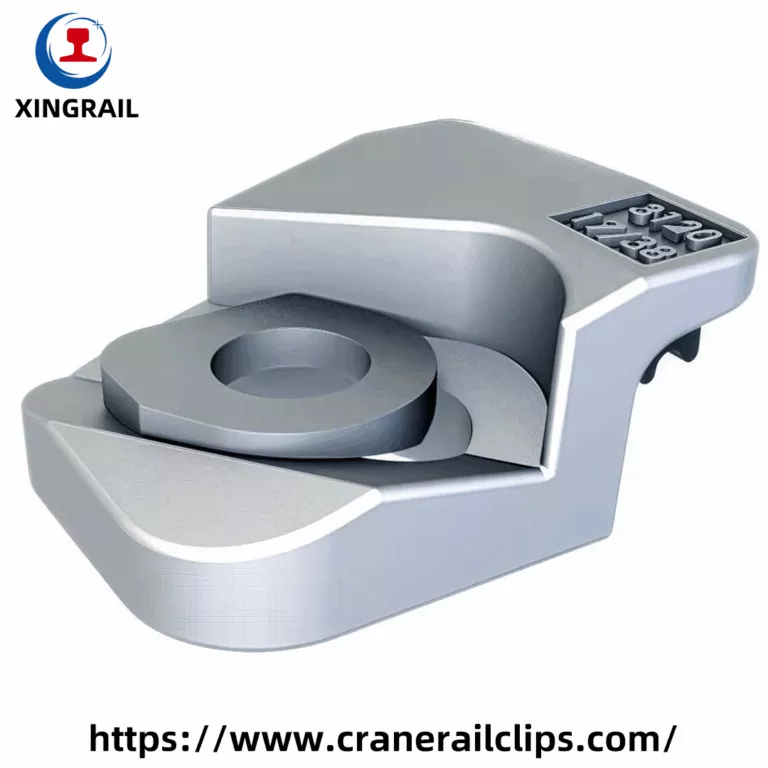
Forged clamps and self-locking plates are used when 115RE rail serves as a crane runway girder. Crane operations generate high lateral forces during acceleration and braking. Elastic clips are not designed for this load case. Forged clamps grip the rail foot rigidly and resist lateral displacement without fatigue failure. For this application, review the self-locking crane rail clips option, which is purpose-built for overhead crane runways.
If you are laying AREA railway track under standard freight conditions, elastic clips with under-rail pads are the proven choice.

Application Scenarios: Which Fastener to Use
| Scenario | Recommended Fastener | Key Reason |
|---|---|---|
| Mainline heavy-haul rail | Elastic clip + rail pad | Fatigue resistance, insulation |
| Crane runway (115RE) | Forged clamp / self-locking plate | Resists lateral force |
| Port or steel mill | Weld-on forged clamp | Rigid grip, high cycle load |
| Signal-critical zone | Elastic clip + insulating pad | Signal circuit compatibility |

Frequently Asked Questions
Q1: What is 115RE rail?
— An AREA/AREMA standard railroad rail weighing 115 lb/yd (about 57 kg/m), used in heavy-duty tracks and crane runways.
Q2: What does “RE” mean in 115RE rail?
— “RE” is the AREA/AREMA rail section designation that identifies the 115 lb/yd profile in the American railroad rail series.
Q3: Which rail clips fit 115RE rail?
— AREA-series fastening clips and forged clamps matched to the 115RE head and base geometry. Confirm the section on the 115 lb rail dimensions page before ordering 115RE rail clips.
Q4: How much does 115RE rail weigh per yard?
— 115 lb per yard, or roughly 57 kg/m. Confirm against the AREMA standard or factory drawings for your specific heat.
Q5: Is 115RE rail the same as 115 lb rail?
— Yes. 115RE is the AREA/AREMA section designation for the 115 lb/yd railroad rail. The two names refer to the same profile. When sourcing 115RE rail clips, either name applies.