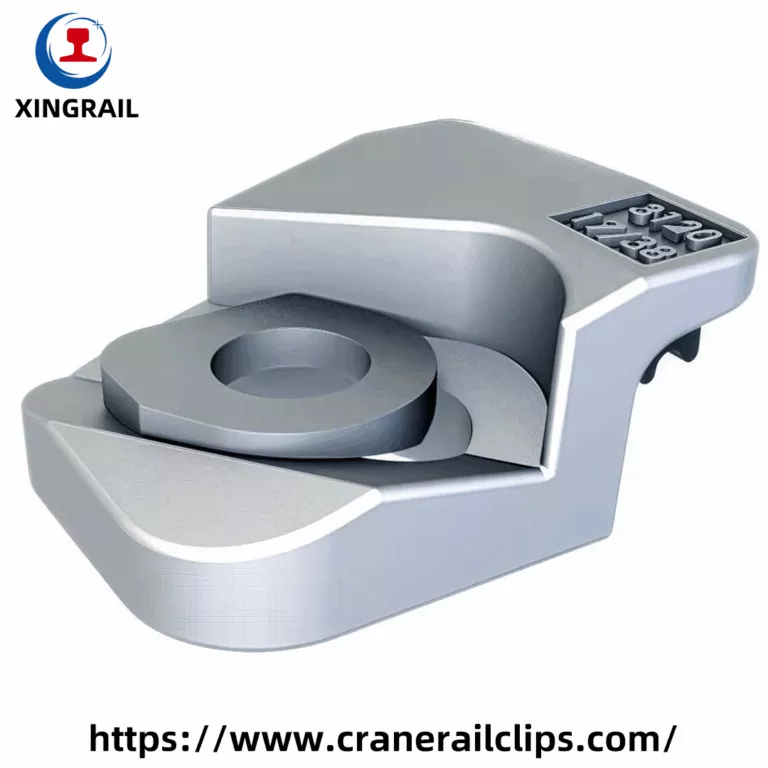
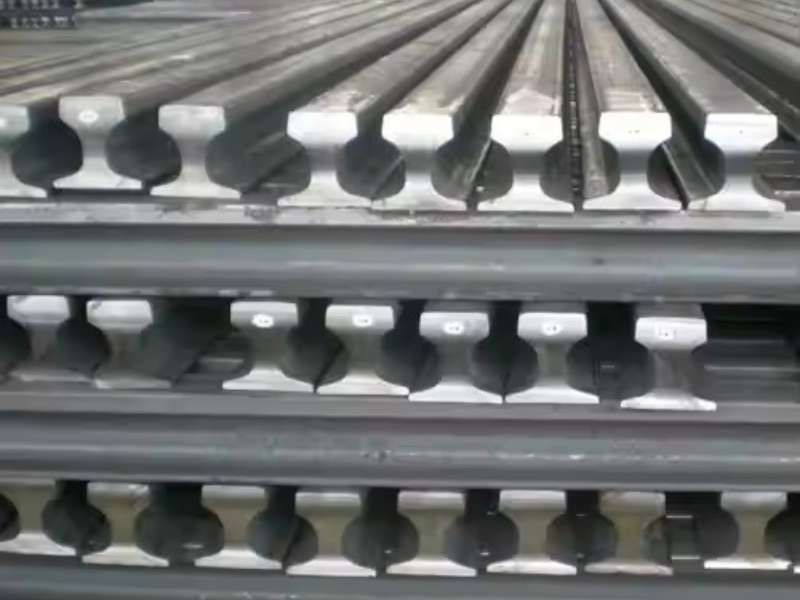
60kg rail clips are fasteners designed for 60 kg/m heavy rail, internationally known as UIC 60 or EN 60E1. Three main types cover most applications: forged self-locking, welded, and bolted clamps. Your choice depends on whether the rail is continuously welded, whether vibration or thermal movement is present, and whether an insulated track circuit is required.
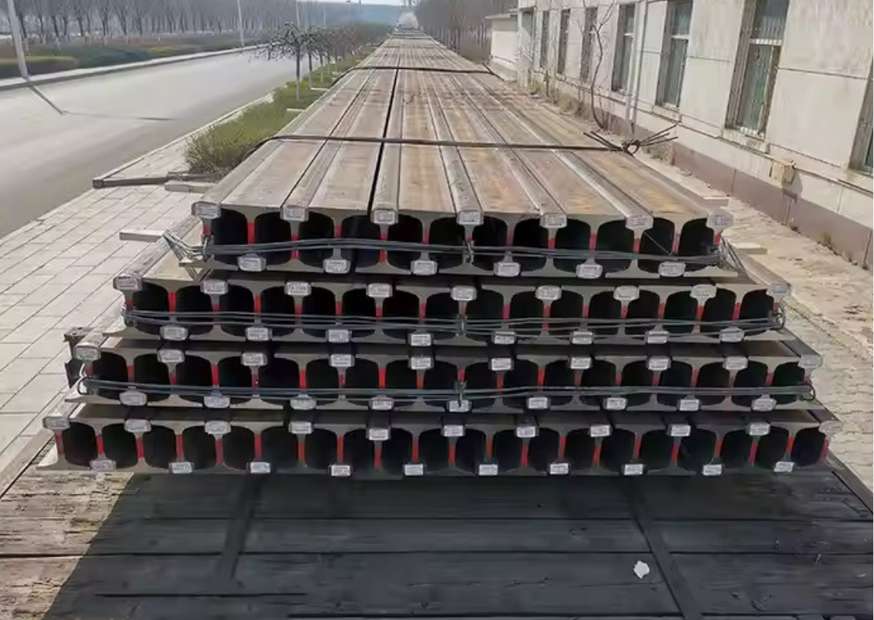
What Is 60 kg/m Rail?
The 60 kg/m section appears under three labels depending on the standard in use:
| Label | Standard | Approx. weight |
|---|---|---|
| 60 kg/m | GB (China) | 60.64 kg/m |
| UIC 60 | UIC | 60.34 kg/m |
| 60E1 | EN | 60.34 kg/m |
These three names describe the same rail profile. For comparison with lighter sections such as 43 kg or 50 kg, refer to our rail size chart.
Do not confuse 60 kg/m with 60 lb/yd rail. The 60 lb/yd section weighs only 29.8 kg/m — a completely different foot width and fillet geometry. See 60 lbs rail dimensions before ordering if your drawing uses pounds per yard.
All clip data in this guide follows our published 60 kg rail specification, so the selection matches the real section rather than a nominal figure.
Use the rail weight calculator below to cross-check rail weight and section.

Types of 60kg Rail Clips
Three clip families cover most 60 kg/m installations:
| Forged Self-Locking | Welded Clip | Bolted Clamp | |
|---|---|---|---|
| Fitting | Press-fit, no bolt | Weld to baseplate | Bolt to tie plate |
| Anti-creep | Excellent | Good | Good with lock nut |
| Adjustable | No | No | Yes |
| Insulation | Compatible | Limited | Compatible |
| Typical use | CWR, vibration | Slab track | Adjustable gauge |
Where the track sees vibration or repeated thermal movement, self-locking rail clips remove the need for periodic re-torquing — a clear maintenance advantage on high-cycle routes.
Three questions to guide your selection:
- Is the rail continuously welded? Forged self-locking clips perform best here.
- Is significant vibration or temperature cycling present? Avoid plain bolted clamps without lock nuts.
- Is an insulated track circuit required? Choose a clip variant with a nylon insert option.
Use the rail clip selector below to narrow your choice quickly.

Why 60 kg/m Rail Demands More from Its Clips
At roughly 60.64 kg/m, this section generates higher lateral forces and greater thermal creep than lighter profiles. As a result, 60kg rail clips must meet higher clamping force targets — typically 60–80 kN per clip pair — and stricter fatigue test requirements than clips designed for 43 kg or 50 kg rail.
Clamping force figures only make sense inside a complete rail fastening systems package, not for a clip evaluated in isolation. On heavy-axle-load routes, always request a fatigue test report alongside the clamping force certificate.
Matching Clips to Your Application
- Mainline heavy-haul railway: Forged self-locking clips paired with anti-vibration pads deliver the best creep resistance under high axle loads.
- Metro and urban rail: Welded clips bonded to concrete slabs work well, especially where insulating layers are already specified.
- Port and yard heavy lines: Bolted clamps with hot-dip galvanising resist the corrosive environments common in coastal yards.
- Crane runway rail: Note that crane rail profiles such as QU80 and CR80 use different clip families. Do not interchange crane rail clips with 60 kg/m railway clips — the foot geometry is incompatible.
For projects specifying AREA-standard track alongside heavy GB sections, use one supplier so rail and clip tolerances stay matched — see our AREA railway track range.

Ordering Checklist
Before placing an order for 60kg rail clips, confirm each item below:
- Material: Q235B (standard duty), 45# steel (medium load), or 42CrMo (heavy duty and high-fatigue applications).
- Surface treatment: Hot-dip galvanising, Dacromet coating, or black oxide — matched to the site’s corrosion exposure.
- Key dimensions: Foot width tolerance, rail height, and clip throat opening — all verified against the actual section drawing.
- Test documentation: Clamping force certificate and fatigue test report from the manufacturer.
- Packaging: Bundled with matching bolt sets, clearly labelled by rail section.

Frequently Asked Questions
Q1: What is 60kg rail, and is it the same as UIC 60 or 60E1?
— Yes, 60 kg/m, UIC 60, and EN 60E1 are three names for the same rail profile. The actual weight is approximately 60.34–60.64 kg/m depending on the standard. By comparison, 43 kg/m and 50 kg/m are meaningfully lighter sections with narrower feet, while 75 kg/m is heavier and wider. Any clip specified for UIC 60 or 60E1 rail is suitable for GB 60 kg/m rail, provided the foot width and fillet radius are confirmed to match.
Q2: How much does 60kg rail weigh per meter, and which clip dimensions does that affect?
— The GB 60 kg/m section weighs 60.64 kg/m; the EN 60E1 section weighs 60.34 kg/m. Full cross-section data — including foot width, head width, rail height, and web thickness — is published on our 60 kg rail specification page. The foot width directly determines the clip throat opening, while the rail height affects the clamping lever arm and therefore the minimum clamping force required. Heavier self-weight also increases lateral thrust, which is why clamping force targets for 60 kg/m rail are higher than those for 50 kg or 43 kg sections.
Q3: Can the same 60kg rail clips be used on 60 lb/yd rail?
— No. The 60 lb/yd section weighs only 29.8 kg/m and has a significantly narrower foot and different fillet geometry compared to 60 kg/m rail. A clip sized for the 60 kg/m foot will not clamp correctly on the 60 lb/yd foot — and vice versa. If your project drawing specifies pounds per yard, check the actual section dimensions on our 60 lbs rail dimensions page and select a clip family matched to that lighter section.
Q4: What are the MOQ, lead time, and material options for 60kg rail clips?
— Standard material grades are Q235B for general-duty applications, 45# steel for medium-load service, and 42CrMo for heavy-duty or high-fatigue environments. Surface treatments include hot-dip galvanising (HDG), Dacromet coating, and black oxide, selected according to site corrosion exposure. Minimum order quantities and lead times vary by clip type and surface treatment — forged self-locking clips in Q235B HDG are typically held in stock, while custom alloy or special-coating orders require additional production time. Contact us with your rail section drawing, annual tonnage, and site location for a firm MOQ and lead-time quotation.