The framework of China Railway GB Standards (Guobiao standards) provides the essential technical foundation for one of the world’s largest and most advanced railway networks. These national standards govern the manufacturing, material composition, and dimensional tolerances for all track components, ensuring interoperability, safety, and performance. This guide delivers a technical examination of two critical components under these standards: the steel rails that form the running surface and the rail clips used in fastening systems. We will explore the specific profiles and properties that define these elements, offering a clear reference for engineers, manufacturers, and maintenance personnel involved with Chinese railway infrastructure.
An Overview of China Railway GB Standards for Rails
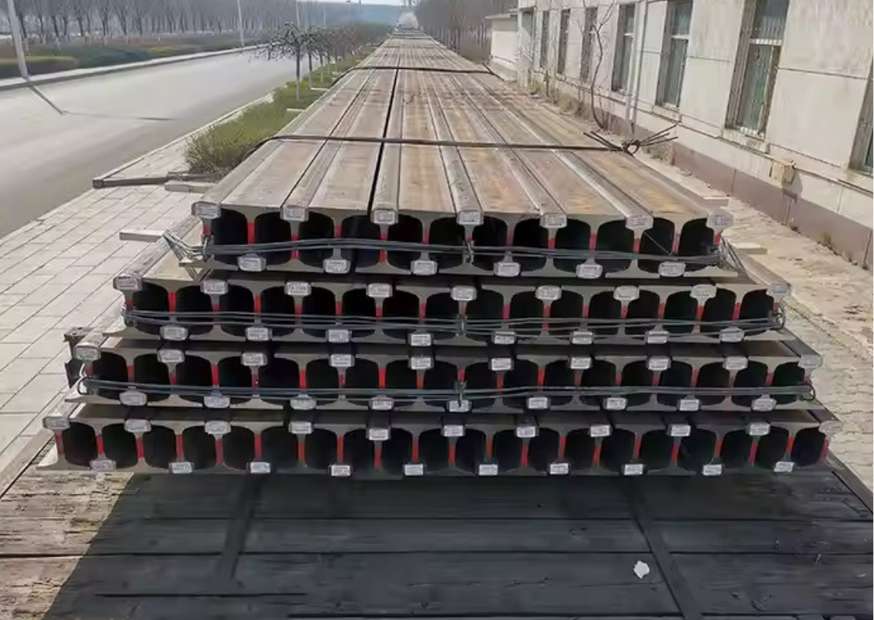
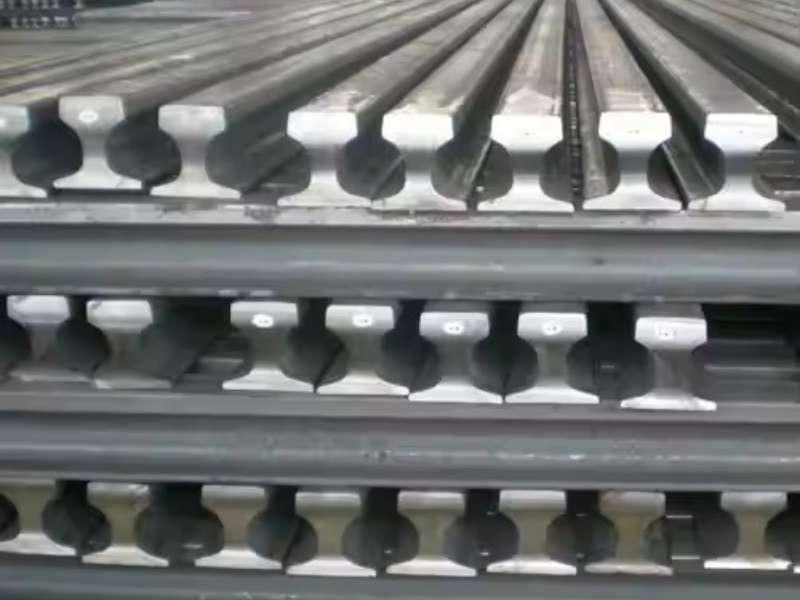
Under the China Railway GB Standards, steel rails are categorized primarily by their mass in kilograms per meter (kg/m). This classification includes light rail (≤ 30 kg/m), heavy rail (e.g., 43, 50, 60 kg/m), and crane rail. For mainline and high-speed applications, heavy rail profiles are the norm. The most prevalent heavy rail profiles are 43 kg/m, 50 kg/m, and 60 kg/m, with the 75 kg/m profile used for exceptionally heavy-haul lines. These standards are meticulously designed to support everything from conventional passenger and freight traffic to the demanding requirements of high-speed rail, which operates at speeds exceeding 350 km/h.
Detailed Specifications of Key GB Standard Rails
The precision of China Railway GB Standards is reflected in the detailed specifications for each rail profile. Adherence to these dimensions is crucial for seamless integration with turnouts, fastening systems, and other track components. The tables below outline the core dimensional, chemical, and mechanical properties of the most common heavy rail profiles used in China.
Table 1: Dimensional Specifications for Chinese GB Standard Heavy Rails
|
Property |
43 kg/m |
50 kg/m |
60 kg/m |
75 kg/m |
|
Mass (kg/m) |
44.65 |
51.51 |
60.64 |
77.45 |
|
Height (mm) |
140.00 |
152.00 |
176.00 |
190.00 |
|
Head Width (mm) |
70.00 |
70.00 |
73.00 |
75.00 |
|
Base Width (mm) |
114.00 |
132.00 |
150.00 |
150.00 |
|
Web Thickness (mm) |
14.50 |
15.50 |
16.50 |
18.00 |
|
Head Height (mm) |
42.00 |
42.00 |
50.00 |
50.00 |
|
Section Area (cm²) |
57.00 |
65.60 |
77.45 |
98.66 |
Material Composition and Mechanical Properties
The performance and longevity of a rail are determined by its steel metallurgy. GB standard rails are typically manufactured from high-carbon steel grades, such as U71Mn and U75V. The “U” signifies rail steel, the number indicates carbon content, and the letters (e.g., Mn, V) denote alloying elements like Manganese or Vanadium, which enhance strength and wear resistance. For high-speed or heavy-haul applications, advanced heat treatment processes are employed to create head-hardened rails with superior durability.
Table 2: Example Chemical Composition for GB Standard Rails (U71Mn)
|
Element |
Percentage (%) |
|
Carbon (C) |
0.65 – 0.76 |
|
Manganese (Mn) |
0.70 – 1.05 |
|
Silicon (Si) |
0.15 – 0.35 |
|
Phosphorus (P) |
≤ 0.030 |
|
Sulphur (S) |
≤ 0.030 |
The mechanical properties dictate the rail’s capacity to withstand the dynamic forces of rail traffic. Tensile strength and hardness are particularly critical for resisting deformation, fatigue, and surface wear.
Table 3: Typical Mechanical Properties for GB Standard Rails
|
Property |
Standard Rail (e.g., U71Mn) |
Head-Hardened Rail (e.g., U75V) |
|
Tensile Strength (MPa) |
≥ 880 |
≥ 1175 |
|
Hardness (Brinell, HBW) |
260 – 300 |
340 – 380 |
|
Elongation (%) |
≥ 10 |
≥ 9 |
The choice between a standard carbon rail and a head-hardened rail depends entirely on the operational context. Head-hardened 60 kg/m and 75 kg/m rails are standard for China’s high-speed lines and heavy-haul freight corridors. In contrast, 43 kg/m and 50 kg/m rails are often sufficient for conventional lines, industrial tracks, and sidings with lower traffic density.
Rail Clips and Fastening Systems in China
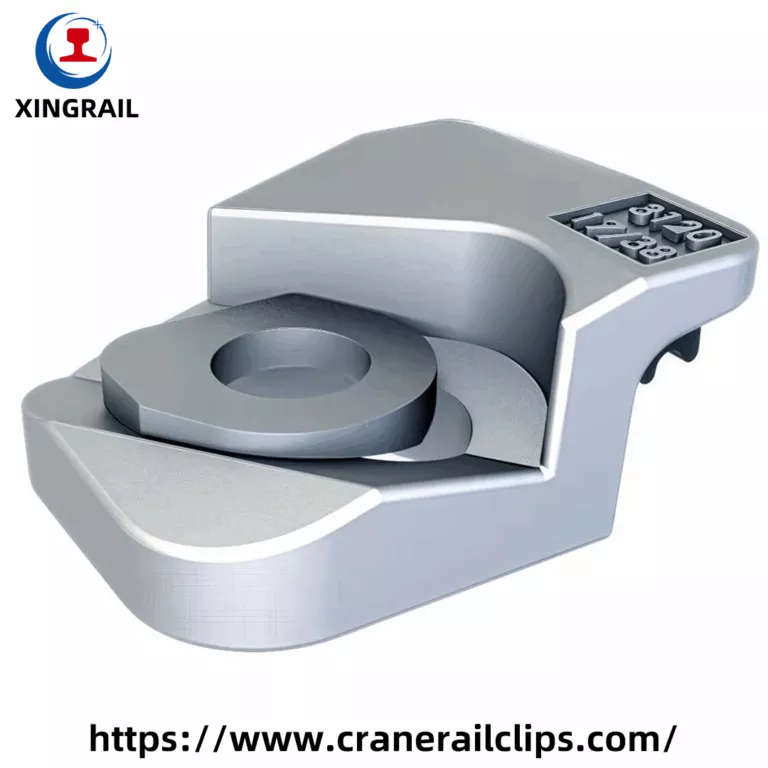
Rail clips are a fundamental component of the track fastening system, designed to secure the rail to the sleeper. In China, which predominantly uses concrete sleepers (especially Type II and Type III slabs), elastic clips are the standard. These systems must provide a consistent clamping force, prevent rail movement, maintain track gauge, and absorb vibrations. The development of fastening systems has been a key area of innovation supporting the country’s high-speed rail ambitions.
Common Rail Clip Types under GB Standards
A variety of elastic clip fastening systems are used across China’s network. These systems are often designated by type, such as Type I, II, III, WJ-7, and WJ-8.
- Blade-type Clips (Type I & II): Earlier systems used a simple blade-type clip, often secured with bolts. While effective for lower-speed applications, they have largely been superseded on mainlines by more advanced designs.
- E-type Clips (Type III, IV): The E-clip, similar in design to the Pandrol e-Clip, is widely used. It is a threadless spring clip driven into a pre-installed shoulder in the concrete sleeper. Its shape provides a reliable and resilient clamping force, and it is known for its simple installation and maintenance. Different series offer varying clamping forces to suit different rail profiles and applications.
- WJ-7 and WJ-8 Systems: These are advanced fastening systems specifically developed for high-speed ballastless track. They feature a unique clip design and are bolted to embedded plates within the concrete track slab. These systems offer very high clamping force, excellent elasticity, and precise adjustability to maintain the extremely tight tolerances required for high-speed operation. The “WJ” designation stands for “Wǔguǎng Jiànzhù” (related to the Wuhan-Guangzhou high-speed line where they were prominently used).
Technical Specifications for Chinese Rail Clips
The performance of a rail clip is defined by its clamping force, fatigue resistance, and material quality. These specifications ensure the fastening system remains secure and reliable over decades of service.
- Clamping Force: The vertical force the clip applies to the rail foot. For high-speed lines, this force is typically high and consistent, often between 8 kN and 12 kN per clip, to ensure absolute stability.
- Material: Clips are made from high-quality spring steel, such as 60Si2MnA, which is heat-treated to achieve the necessary strength and elasticity to endure millions of load cycles without failing or losing tension.
- Fatigue Life: Clips used in China’s railway network are rigorously tested to ensure a fatigue life of over 3 to 5 million cycles, simulating the passage of countless trains.
Table 4: General Specifications for Common Chinese Rail Clips
|
Property |
E-type Clip |
WJ-8 System Clip |
|
Application |
Conventional & High-Speed (Ballasted) |
High-Speed (Ballastless Slab Track) |
|
Nominal Clamping Force (kN) |
8.0 – 10.0 |
9.0 – 12.0 |
|
Material Grade |
Spring Steel (e.g., 60Si2CrA) |
Spring Steel (e.g., 60Si2MnA) |
|
Assembly System |
Driven into cast-in shoulder |
Bolted to embedded plate |
|
Hardness (HRC) |
42 – 47 |
44 – 48 |
|
Fatigue Life (cycles) |
> 3 Million |
> 5 Million |
The Role of Pads and Insulators
The fastening system is a complete assembly that includes pads and insulators working with the clips.
- Rail Pads: Positioned between the rail base and the sleeper or track slab, these pads are critical for shock and vibration absorption, load distribution, and protecting the concrete surface. They are typically made from modified plastics, rubber, or composite materials.
- Insulators/Guide Plates: These nylon or plastic components are used to electrically isolate the rail from the fastening system, which is essential for the function of modern track circuits for train detection. In systems like the WJ-8, they also serve as a guide to precisely position the rail.
The stringent requirements of the China Railway GB Standards for both rails and their fastening components are a primary reason for the success and safety of the country’s vast and modern network. The correct application of these standards, from material selection to dimensional accuracy, ensures a cohesive and durable infrastructure capable of handling the world’s most demanding railway operations.
China Railway GB Standards for Rails and Clips
Based on the content from the provided URL, here are the most relevant crane rail clips products, their series, and specific products with internal links. The specification table from the content is also included for detailed reference.
XINGRAIL Elastic Rail Clips Series
Elastic rail clips are essential components of the track fastening system under China Railway GB Standards. These clips are designed to secure rails to sleepers, maintain track gauge, and absorb vibrations. They are widely used in both conventional and high-speed rail applications.
Specification Table:
|
Property |
E-Type Clip |
WJ-8 System Clip |
|
Application |
Conventional & High-Speed (Ballasted) |
High-Speed (Ballastless Slab Track) |
|
Nominal Clamping Force (kN) |
8.0 – 10.0 |
9.0 – 12.0 |
|
Material Grade |
Spring Steel (e.g., 60Si2CrA) |
Spring Steel (e.g., 60Si2MnA) |
|
Assembly System |
Driven into cast-in shoulder |
Bolted to embedded plate |
|
Hardness (HRC) |
42 – 47 |
44 – 48 |
|
Fatigue Life (cycles) |
> 3 Million |
> 5 Million |
FAQs
- What are the primary applications of E-Type and WJ-8 system clips?
E-Type clips are used for conventional and high-speed ballasted tracks, while WJ-8 system clips are specifically designed for high-speed ballastless slab tracks. - What materials are used to manufacture these rail clips?
These clips are made from high-quality spring steel, such as 60Si2CrA or 60Si2MnA, which provides the necessary strength and elasticity. - What is the clamping force of WJ-8 system clips?
WJ-8 system clips provide a nominal clamping force of 9.0 to 12.0 kN, ensuring stability for high-speed rail operations. - How do these clips ensure durability under heavy loads?
The clips are rigorously tested for fatigue resistance, with a lifespan exceeding 3 to 5 million cycles, simulating the passage of countless trains. - Are these clips compatible with all rail profiles?
Yes, these clips are designed to accommodate various rail profiles under China Railway GB Standards, ensuring seamless integration with the track system.