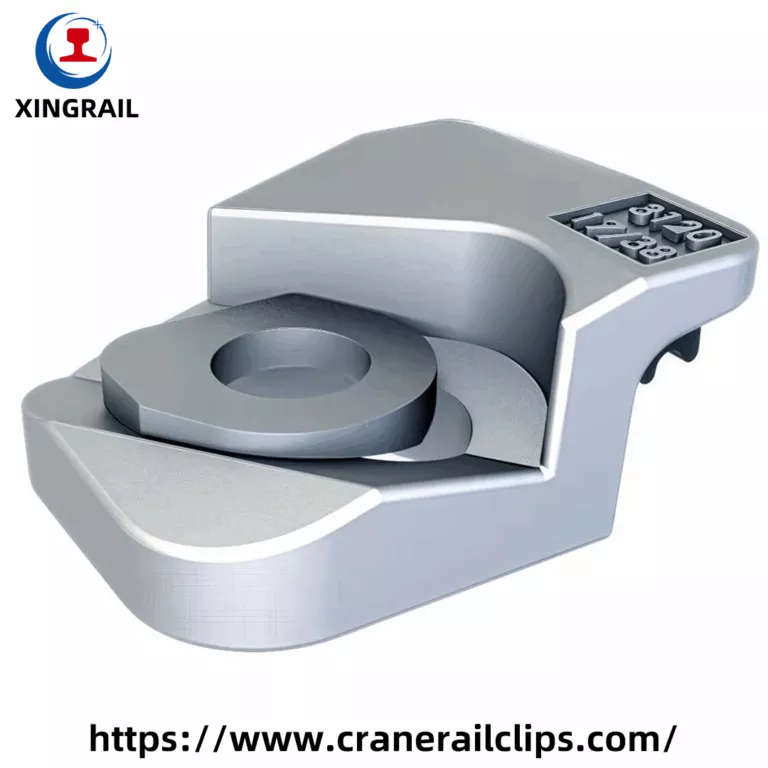
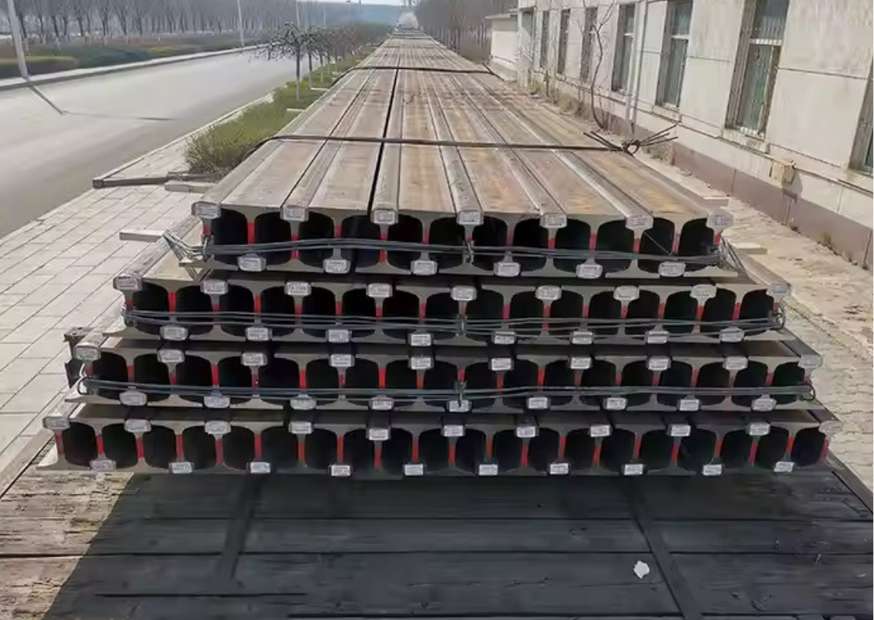
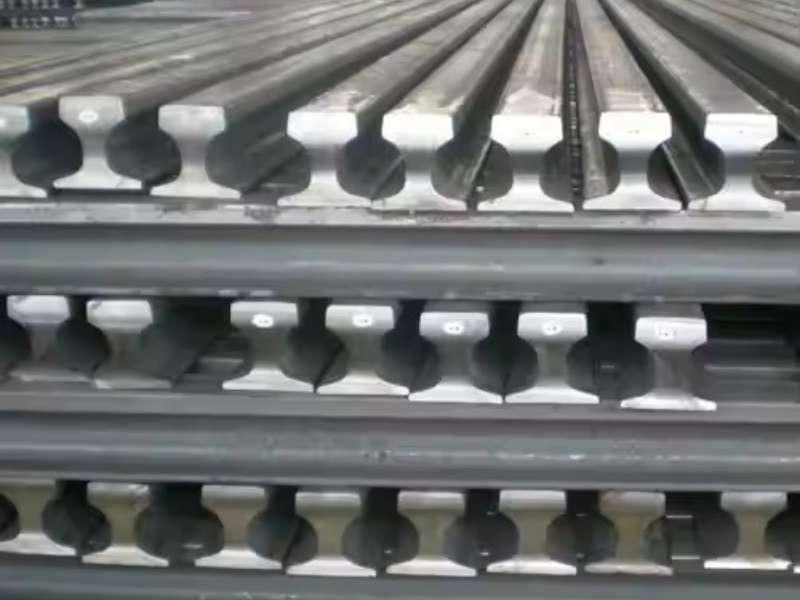
Rail fastenings are essential components in any railway track structure, serving the critical function of securing rails to sleepers or ties. This system ensures that rails remain in their correct position, maintain the proper gauge, and safely absorb the immense forces exerted by passing trains. The integrity and reliability of a track depend heavily on the quality and specifications of its rail fastenings, which include a variety of components like clips, spikes, bolts, and pads. These parts work together to provide elasticity, resist longitudinal movement, and ensure the overall stability of the railway line, making them fundamental to modern track engineering.
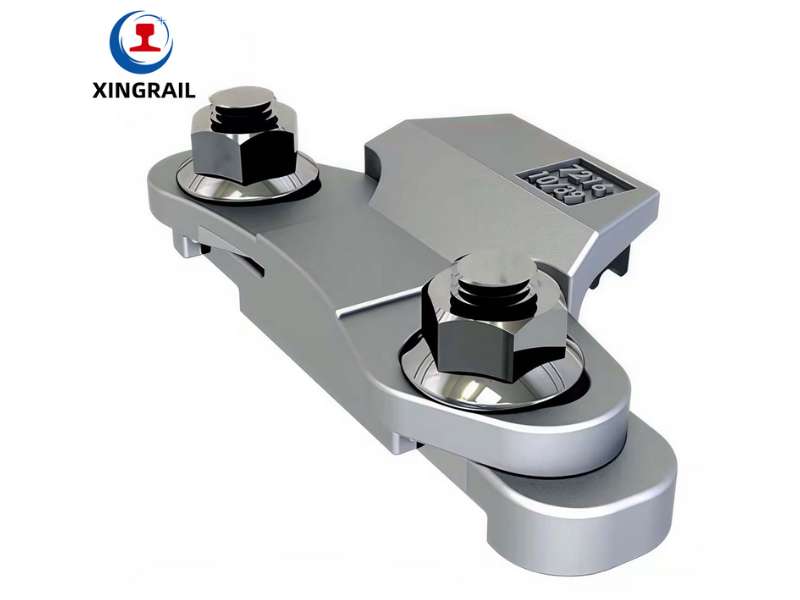
Rail Fastenings and Their Function
The primary role of rail fastenings is to hold the rail securely to the sleeper, preventing vertical, lateral, and longitudinal movement. A well-designed system provides a strong clamping force to keep the rail in gauge while also offering sufficient elasticity to absorb vibrations and shocks. This elasticity is crucial for reducing wear on both the track components and the rolling stock, contributing to a smoother ride and lower maintenance costs.
Different track conditions, such as high-speed lines, heavy-haul freight routes, sharp curves, or urban transit systems, demand different types of rail fastenings. For instance, a system used on a concrete sleeper for a high-speed passenger line will have different performance characteristics than one used on a wooden tie for a conventional freight line. The selection of the appropriate fastening system is a critical engineering decision that impacts the safety, longevity, and performance of the entire track structure.
Technical Specifications for Essential Rail Clips
Rail clips are a vital part of modern elastic fastening systems. They apply a consistent, spring-like clamping force to the rail foot, securing it to the tie plate or sleeper. This design allows for controlled rail movement due to thermal expansion and contraction while preventing excessive displacement. The specifications for these clips are stringent, ensuring they can withstand fatigue from millions of load cycles without losing their clamping force.
Many specifications are guided by standards from organizations like the American Railway Engineering and Maintenance-of-Way Association (AREMA). While AREMA standards primarily cover rail profiles (e.g., AREMA 115, 132, 136), the fasteners designed for them must match these profiles precisely. The material, typically spring steel, is chosen for its high yield strength and resilience.
Rail Clip Specification Table
Below is a generalized specification table outlining typical parameters for common rail clips used with various AREMA rail sections. The exact values can vary by manufacturer and specific system requirements.
|
Property |
E-Clip Series (e.g., e2055) |
SKL Series (e.g., SKL 14) |
Fastclip Series |
Application Rail Sections (AREMA) |
|
Material |
Spring Steel (60Si2MnA, 38Si7) |
Spring Steel (60Si2MnA, 38Si7) |
Spring Steel (60Si2MnA, 38Si7) |
Applicable to all |
|
Hardness (HRC) |
44-48 HRC |
44-48 HRC |
44-48 HRC |
Varies by specification |
|
Diameter |
18mm – 20mm |
13mm – 15mm |
Varies by design |
N/A |
|
Clamping Force |
> 8.5 kN |
> 9.5 kN |
10 – 12 kN |
Must meet track design requirements |
|
Fatigue Life (Cycles) |
> 3 million cycles |
> 5 million cycles |
> 5 million cycles |
Critical for high-traffic lines |
|
Surface Treatment |
Plain, Black Oxide, Zinc Plated |
Plain, Dacromet, Hot-Dip Galv. |
Plain, Dacromet, Hot-Dip Galv. |
Depends on environmental conditions |
|
Compatible Rail |
115RE, 119RE, 132RE, 136RE, 141RE |
115RE, 119RE, 132RE, 136RE, 141RE |
115RE, 119RE, 132RE, 133RE, 136RE, 141RE |
Designed for specific rail base widths |
These clips are engineered to perform under diverse and demanding conditions, from the heavy axle loads of freight trains on sections like AREMA 136 to the high speeds on passenger lines using AREMA 132 or 133 rail.
Diverse Types of Rail Fastenings and Systems
The evolution of railway technology has led to the development of numerous specialized rail fastening systems. Each system offers a unique combination of clamping force, elasticity, and ease of installation. The choice often depends on the type of sleeper (wood, concrete, or steel), the traffic characteristics, and the operational requirements of the line. Some of the most widely used systems include the E-clip, SKL, KPO, and Nabla systems.
E-Clip Fastening System
The E-clip system is one of the most common elastic fastening systems in the world. Named for its shape, which resembles a letter ‘E’, this clip is driven into a cast shoulder, which is either embedded in a concrete sleeper or attached to a steel tie plate on a wooden tie. The clip exerts pressure on the rail foot, holding it down.
Its simple design consists of the E-clip itself, a shoulder, a rail pad, and an insulator. The system is economical and effective, providing good longitudinal restraint. Installation and removal are straightforward with manual or hydraulic tools, making it a popular choice for a wide range of applications, from mainline tracks to industrial sidings.
SKL (Spannklemme) Tension Clamp System
The SKL fastening system, developed in Germany, is a highly engineered tension clamp system known for its excellent performance and durability. The “SKL” name comes from the German word “Spannklemme,” meaning tension clamp. A key feature is the screw-dowel combination used to secure it. A sleeper screw is driven into a plastic dowel embedded in the concrete sleeper, which then tightens the SKL clip against the rail foot.
This design provides a very high and reliable clamping force, making it suitable for high-speed rail and tracks with heavy traffic. The pre-assembly of components can also speed up the track-laying process. The system includes the SKL tension clamp, a guide plate (or angled guide plate), a sleeper screw, a plastic dowel, and a rail pad. Its robust design ensures long-term track stability and minimal maintenance.
KPO Fastening System
The KPO fastening system is a bolted clip system, often used in heavy-haul and conventional railway lines. It consists of a KPO clip (a type of clamp plate), a T-bolt, a nut, and a spring washer. The T-bolt is inserted into a hole in the tie plate, and the KPO clip is placed over the rail flange. Tightening the nut applies a strong clamping force onto the rail.
This system is known for its strength and rigidity. The bolted design provides a secure and adjustable fastening that can be easily re-tightened if necessary. While it may have more components than some other systems, its reliability makes it a preferred choice for tracks that experience high lateral forces, such as those on sharp curves or turnouts.
Nabla Fastening System
The Nabla fastening system features a unique blade-like clip, known as the Nabla blade or clip. This system is commonly used in France and other regions that have adopted French railway technology. The Nabla clip is secured with a bolt and a special nut that fits into a cast housing on the sleeper or tie plate. When tightened, the clip flexes and applies a consistent elastic force to the rail.
One of the main advantages of the Nabla system is its ability to maintain a constant clamping force over a long service life, even with component wear. The system also offers excellent insulation properties, making it suitable for tracks with signal circuits. Components typically include the Nabla blade, an insulating support block, a bolt, and a rail pad. Its design ensures both safety and acoustic dampening, which is beneficial in urban environments.