Among all railway track components, the steel rail and the fastening system that holds it are the most critical for ensuring the safety, durability, and performance of any railway line. This technical guide provides a detailed examination of these two specific railway track components: the rails themselves and the rail clips that form the core of the fastening system. Xingrail will explore the various specifications, material properties, and design principles that govern their use in different applications, from heavy-haul freight to high-speed passenger lines.
Rail Specifications: Key Railway Track Components
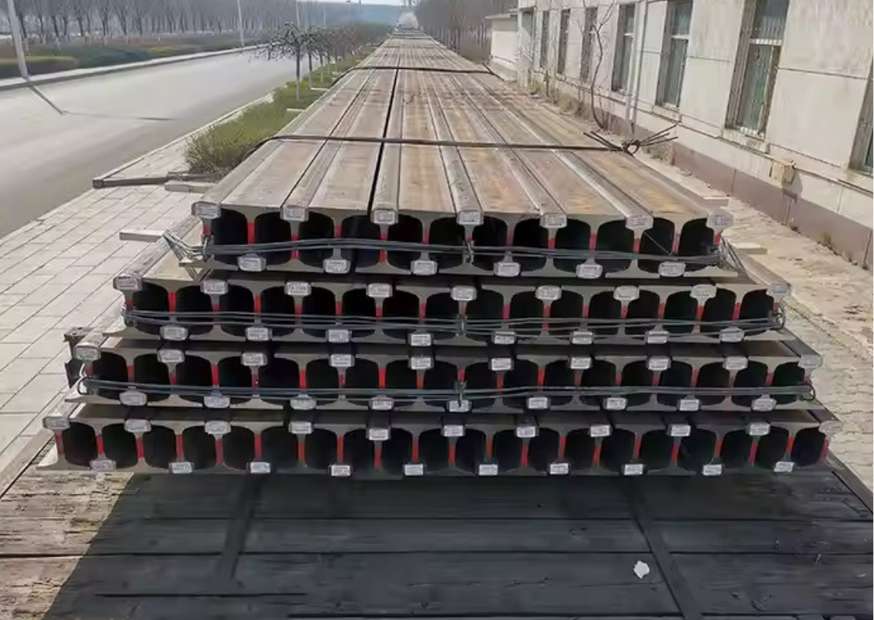
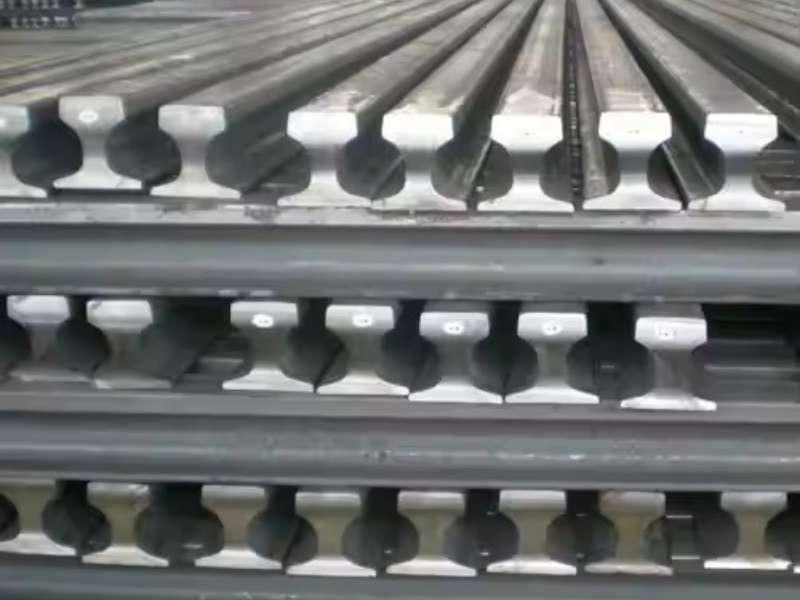
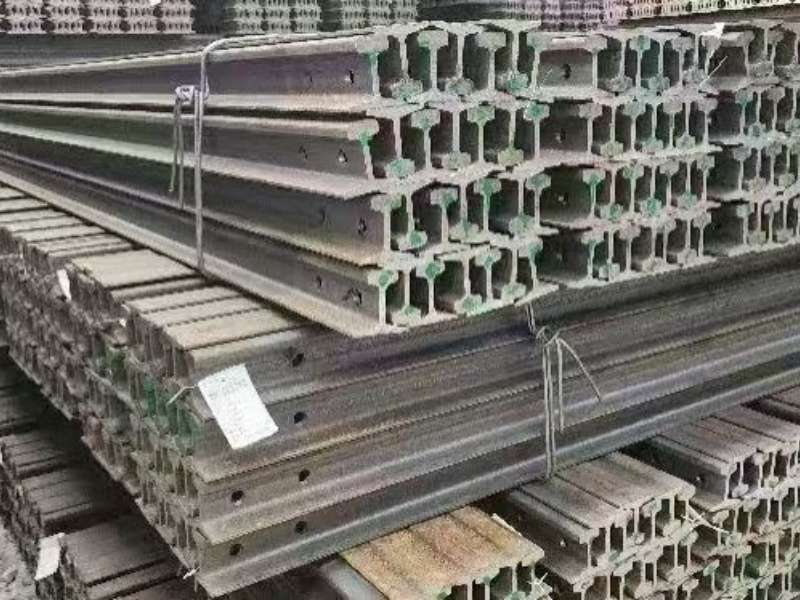
The steel rail is the primary load-bearing component in the track structure. Its profile (cross-sectional shape) and material composition are precisely engineered to withstand immense forces. The selection of a specific rail profile is determined by the intended application, considering factors like axle loads, traffic speed, and tonnage. The specifications for these essential railway track components are governed by international standards such as Europe’s EN 13674 and North America’s AREMA.
Rail Profiles and Dimensions
Rail profiles are typically identified by their weight per unit length, either in kilograms per metre (kg/m) or pounds per yard (lb/yd). A higher weight generally indicates a stronger, stiffer rail designed for more demanding service.
Heavy-Duty Rail Profiles (>55 kg/m)
These profiles are the standard for mainline freight and high-speed passenger routes. Their substantial mass and dimensions provide the strength needed to resist bending and wear under extreme loads.
|
Profile |
Mass (kg/m) |
Height (mm) |
Head Width (mm) |
Base Width (mm) |
Application |
|
60E1 (UIC60) |
60.21 |
172.0 |
72.0 |
150.0 |
High-Speed, Heavy Freight, Mixed-Traffic |
|
136 RE |
67.46 |
185.7 |
76.2 |
152.4 |
North American Heavy-Haul Freight |
|
R65 |
64.64 |
180.0 |
75.0 |
150.0 |
Russian Gauge Heavy-Haul Freight |
|
54E1 (UIC54) |
54.77 |
159.0 |
70.0 |
140.0 |
Mainline Passenger, General Freight |
Medium-Weight Rail Profiles (40-55 kg/m)
These versatile profiles are used for regional lines, light rail, metro systems, and industrial tracks. They offer a balance of strength and cost-effectiveness for moderate traffic conditions.
|
Profile |
Mass (kg/m) |
Height (mm) |
Head Width (mm) |
Base Width (mm) |
Application |
|
49E1 (S49) |
49.39 |
149.0 |
67.0 |
125.0 |
Regional Lines, Industrial Tracks |
|
50E1 |
50.46 |
153.0 |
70.0 |
140.0 |
Metro Systems, General Freight |
Rail Steel Grades and Material Properties
The steel used for rails is a critical factor in their performance. Modern rail manufacturing involves producing high-purity steel with specific alloying elements and heat treatments to achieve desired properties.
- Standard Grades (e.g., R220, R260): These are high-carbon steels with tensile strengths ranging from 780 to 980 MPa. They are suitable for tracks with moderate axle loads and traffic density, offering good toughness and baseline wear resistance.
- Premium Heat-Treated Grades (e.g., R350HT): These rails undergo a special heat treatment process on the rail head to increase hardness and strength significantly. With tensile strengths often exceeding 1175 MPa, they provide superior resistance to wear and fatigue. This makes them essential for high-speed lines and heavy-haul freight corridors.
- Alloyed Steel Grades: For the most extreme wear conditions, such as sharp curves under heavy loads, rails are produced with alloying elements like chromium (Cr). These premium grades offer the highest possible hardness and can dramatically extend the service life of the rail in critical locations.
Rail Clips: Essential Fastening Railway Track Components
Rail clips are engineered railway track components that secure the rail to the sleeper (tie). They are part of the larger fastening system and play a crucial role in maintaining track gauge, resisting powerful train forces, and in some cases, providing vibration damping. While they may seem like small parts, their performance is vital to track safety and stability. The design of a rail clip varies significantly based on the application.
Elastic Rail Clips for Mainline and High-Speed Track
Modern railways universally use elastic clips. Unlike rigid fastenings, these clips are designed to deform elastically as they are installed, applying a continuous, spring-like clamping force onto the foot of the rail.
Key Functions and Characteristics:
- Clamping Force: This is the downward force the clip exerts on the rail foot. It is essential for preventing the rail from lifting or rotating under load. High-speed and heavy-haul applications require very high clamping forces, often in the range of 12 kN to 25 kN per clip.
- Longitudinal Restraint: The fastening system must resist the powerful longitudinal forces caused by train acceleration, braking, and thermal expansion/contraction. High clamping force contributes directly to this restraint, preventing “rail creep.”
- Fatigue Resistance: A rail clip must endure millions of load cycles from passing trains without breaking or losing its clamping force. They are made from high-quality spring steel to ensure a long fatigue life.
- Electrical Insulation: In tracks with electric signaling, the fastening system must insulate the rail from the sleeper to prevent short circuits. The clip works in conjunction with plastic insulators and pads to achieve this.
Common Types of Elastic Rail Clips
While many designs exist, a few types have become industry standards due to their reliability and performance.
E-Clips (e.g., Pandrol e-Clip)
The “e-Clip” is one of the most widely used clip designs in the world. Its shape resembles the letter ‘e’ and is driven into a cast-iron shoulder that is typically cast into a concrete sleeper.
- Application: It is extremely versatile and is used in almost every type of railway, from heavy-haul freight to urban transit. The size and strength of the clip can be varied for different applications.
- Performance: It provides a very high and reliable clamping force and is known for its durability and ease of installation.
Screw-Based Clips (e.g., Vossloh W-System)
These systems use a threaded screw spike that is driven into a plastic dowel cast into the sleeper. The screw holds a tension clamp (the clip) that presses down on the rail.
- Application: Widely used on high-speed lines in Europe and Asia.
- Performance: This design allows for easy adjustment of the track and provides a very consistent and measurable clamping force. The system is often paired with an angled guide plate to provide excellent lateral support for the rail.
Fast-Clip Systems (e.g., Pandrol FASTCLIP)
This is a modern evolution of the clip system, designed for rapid, mechanized installation. The clips are pre-installed on the sleeper in the factory. During track laying, the rail is simply dropped into place, and the clips are pushed or driven sideways into their final locked position.
- Application: Increasingly used for new high-speed and mainline construction projects where speed of installation is a major factor.
- Performance: It offers the same high performance as traditional elastic clips but dramatically reduces track construction time and improves safety by minimizing manual labor on-site.
|
Clip Type |
Installation Method |
Dominant Application |
Key Advantage |
|
E-Clip |
Driven into a shoulder |
Heavy-Haul, Mixed-Traffic |
Robustness and Versatility |
|
Screw-Based Clip |
Screwed into a dowel |
High-Speed Passenger |
Adjustability, Consistent Force |
|
Fast-Clip |
Pre-installed, pushed into place |
New High-Speed Construction |
Speed of Installation |
Recommended Products for Railway Track Components
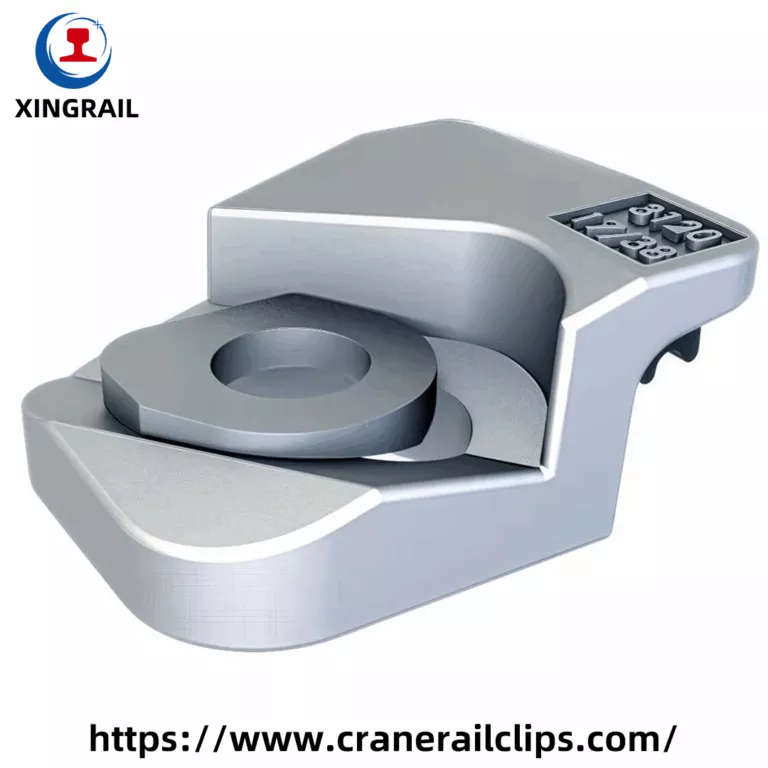
Selecting the appropriate steel rail is only part of building a durable track infrastructure. To ensure the safety and performance of your railway, you must secure those rails with a highly reliable fastening system. While the rail profile dictates the load-bearing capacity, your rail clips serve as the essential components that hold everything in place.
When choosing a rail clip, you must carefully match it to the physical base width of your specific steel rail. The fastener housing needs to sit completely flush against the rail foot. This precise fit ensures the clip delivers optimal downward clamping force. This constant pressure anchors the rail to the sleeper, resists the longitudinal forces that cause rail creep, and successfully neutralizes the heavy vibrations generated by passing trains.
To help you secure your railway track components, we have matched our premium heavy-duty rail clips with the standard rail profiles utilized in modern track construction. Review the table below to identify the correct fastening solution for your specific track dimensions.
|
Rail Type |
Base Width |
Height |
Weight |
Recommended Clips |
|
54E1 (UIC54) |
140.0 mm |
159.0 mm |
54.77 kg/m |
32 Series Bolted Rail Clips |
|
60E1 (UIC60) |
150.0 mm |
172.0 mm |
60.21 kg/m |
9 Series Welded Rail Clips |
|
136 RE |
152.4 mm |
185.7 mm |
67.46 kg/m |
9 Series Welded Rail Clips |
Frequently Asked Questions (FAQs)
- Why is matching the rail clip to the rail profile so critical?
Your rail clip only functions safely if it perfectly matches the physical footprint of your steel rail. The clip housing must seat flush against the rail flange. This flush fit guarantees the fastener delivers the maximum downward clamping pressure needed to prevent the rail from lifting or rotating under heavy dynamic loads. - Are 32 Series Bolted Clips suitable for medium-weight rails like the 54E1?
Yes. Railway engineers often use the 54E1 (UIC54) rail profile for mainline passenger and general freight routes. This rail features a base width of 140 mm, which perfectly matches the gripping range of our 32 Series Bolted Clips. These fasteners provide exceptional downward pressure while allowing track maintenance teams to easily loosen bolts for routine adjustments. - Which fastening system works best for heavy-duty 136 RE and 60E1 rails?
Heavy-haul freight and high-speed passenger routes require massive rail profiles like the 136 RE and 60E1. Because these heavy trains generate intense lateral and longitudinal forces, we recommend the 9 Series Welded Rail Clips. By welding these clips directly to the steel foundation, you create a permanent, unyielding structural anchor that perfectly accommodates the wider 150 mm to 152.4 mm rail bases. - How do high-quality rail clips maintain clamping force on railway tracks?
Premium rail clips utilize specialized spring steel that elastically deforms during installation. This elasticity allows the clip to apply a continuous, spring-like clamping force onto the rail foot. As heavy trains pass, the clip flexes slightly to absorb the massive shock and instantly snaps back into place, keeping the track secure without suffering from fatigue failure. - How do welded and bolted clips resist longitudinal forces and prevent rail creep?
Train acceleration, braking, and thermal expansion cause powerful longitudinal forces that attempt to push the rails forward, a phenomenon known as rail creep. High-quality clips, like the 9 Series and 32 Series, lock the rail tightly against the sleeper or baseplate. This immense downward clamping friction physically prevents the rail from sliding lengthwise, ensuring the entire track structure remains safely aligned.