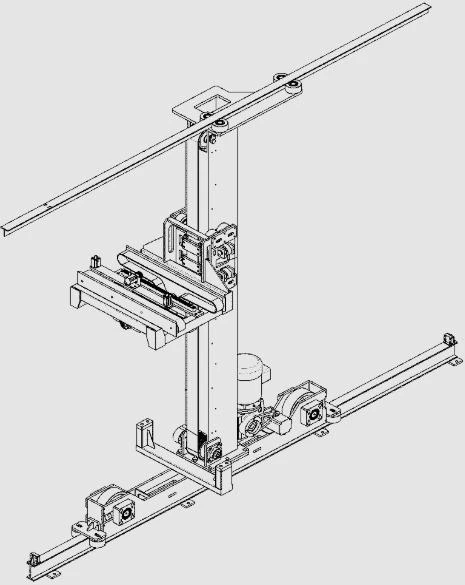
In modern automated high-bay warehouses, stacker cranes operate 24 hours a day, 7 days a week, at speeds of 160–240 m/min with acceleration rates of 0.5–1.5 m/s². These machines travel corridors reaching 25 to 45 meters in height. At that scale, even a 1 mm deviation at the floor rail translates into 10–20 mm of sway at the top of the mast — enough to trigger safety sensors, crash forks into racking, and bring entire automated operations to a halt.
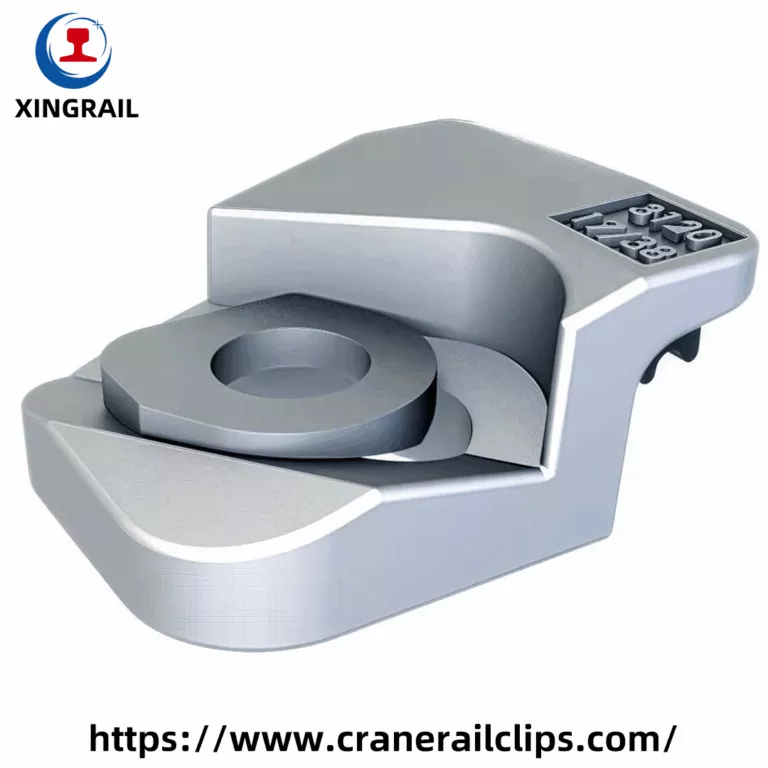
This is why ASRS rail clips are not a commodity fastener. They are precision-engineered components that hold the geometry of your entire automated warehouse stacker crane solution together. As a leading crane rail clips manufacturer, Xingrail designs every clip to meet the exact demands of high-bay stacker crane runways — from sub-millimeter tolerances to anti-loosening architecture built for millions of load cycles.
Engineering Tolerances: FEM 9.831 & DIN 15185 Standards
Standard overhead crane runways follow ISO 12488-1. ASRS stacker crane runways demand far more. FEM 9.831 and DIN 15185 define the benchmark:
- Track gauge deviation: ±1.0 mm maximum
- Vertical rail elevation: less than 0.5 mm per 2-meter span
- Longitudinal slope change: no more than 0.05%
These values are not negotiable. ASRS positioning sensors — laser, barcode, or encoder-based — are calibrated to tolerances in the sub-millimeter range. Any rail drift beyond FEM 9.831 limits causes sensor trips and unplanned shutdowns.
To achieve this, stacker crane rails must sit on continuous CNC-machined steel sole plates, leveled with a laser total station, and locked permanently with high-strength non-shrink epoxy grout. For a complete overview of installation methodology, refer to our crane rail mounting solutions engineering guide.
Xingrail ASRS Rail Fastening Systems: Adjustable, Precise, Certified
Why Adjustable Bolted Clips Lead the Industry
High-bay warehouses experience long-term building settlement. Fixed welded clips cannot compensate for this. Bolted rail fixing clips offer ±10 mm to ±15 mm of lateral adjustment through a machined eccentric or wedge slider — without open-flame cutting or welding. In enclosed logistics facilities governed by strict fire suppression rules and dust control requirements, this is not just convenient. It is mandatory.

Xingrail’s 3116 and 3220 series clips deliver:
- Self-locking wedge geometry: lateral vibrations convert into additional clamping force
- Shore A 75°±5° vulcanized elastomeric nose: continuously presses the rail base, dampening high-frequency vertical micro-bounce and reducing operational noise by 8–10 dB
- Full traceability: material certificates, dimensional inspection reports, and batch markings included as standard
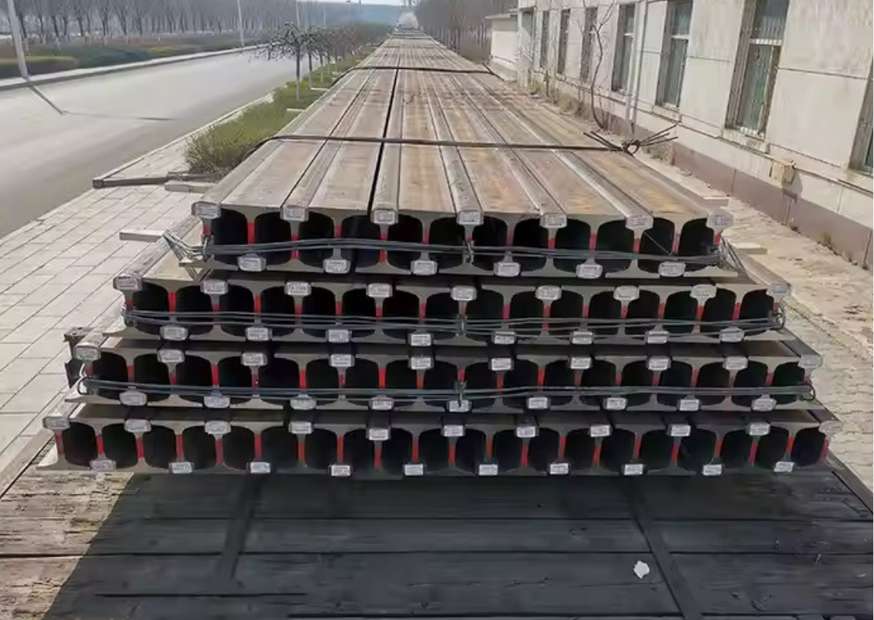
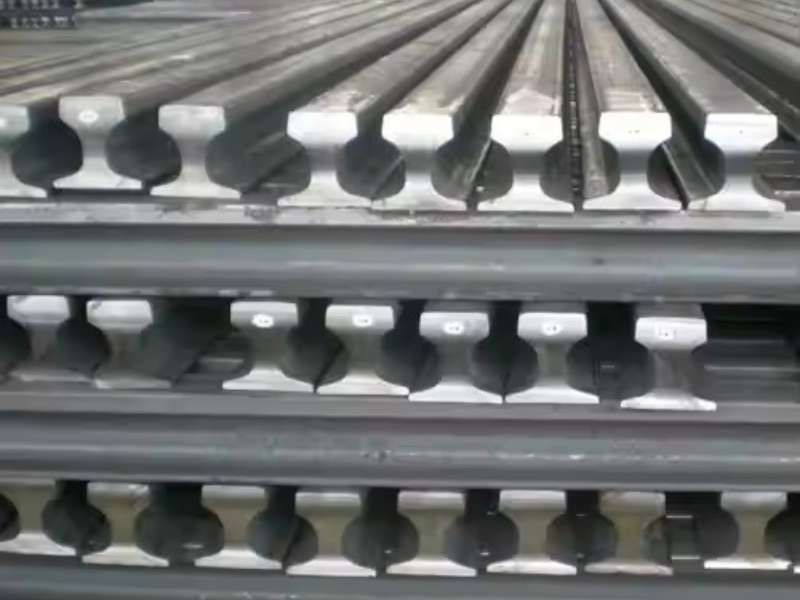
Use our rail clips configurator selector to input your stacker crane wheel load, speed, and rail section (A65 / A75 / A100 / 115RE) for instant clip spacing and bolt size recommendations.
Anti-Loosening Architecture for 24/7 High-Cycle Operation
A stacker crane performs hundreds of acceleration–deceleration cycles every shift. Cyclic dynamic shear loads attack every fastener joint. Standard flat-washer bolt assemblies will back off within weeks.

Xingrail clips address this with a two-stage anti-loosening system:
- Inclined self-locking wedge: transforms shear vibration into vertical clamping pre-load
- DIN 6796 Belleville conical spring washers (Grade 8.8 / 10.9 bolts): maintain constant axial bolt tension across thermal cycles and dynamic loading
The result: retorquing intervals extend from quarterly to biennial. For high-bay operations running three shifts, this reduces maintenance downtime significantly and lowers total cost of ownership over the warehouse lifecycle.
Continuous Steel-Reinforced Pad Integration
A bare rail sitting on a sole plate, even a precisely machined one, will wear over time. Micro-unevenness in the contact surface creates a hammering effect under stacker crane wheel loads. This accelerates rail base wear and disturbs optical sensor positioning.

Xingrail recommends installing a continuous steel-reinforced synthetic elastomeric pad (0.5 mm spring steel core, Shore A 75°±5°) between the rail base and the sole plate across the full runway length. This pad delivers three benefits:
- Eliminates rail bounce and micro-contact wear
- Compensates for residual surface irregularities after grout curing
- Reduces airborne noise by 8–12 dB

Installation sequence: coarse leveling with jacking screws → laser total station centerline calibration → final torque to specification (M20 bolts: 320 Nm) → epoxy grout fill and cure.
FAQs
Q1: Why are rail tolerances stricter for ASRS stacker cranes than standard overhead bridge cranes?
— ASRS stacker cranes have mast structures of 20–45 m. A 1 mm floor-level deviation produces 10–20 mm of mast-top oscillation — enough to trigger safety sensor trips and cause fork collisions with racking.
Q2: Which standards govern ASRS runway tolerances?
— FEM 9.831 and DIN 15185. They require track gauge tolerances within ±1.0 mm and vertical slope deviations below 0.05%.
Q3: Why choose bolted adjustable clips over welded clips for ASRS runways?
— Post-installation fine-tuning is essential after building settlement. Xingrail bolted clips provide ±10–15 mm of lateral adjustment without torch-cutting — critical in fire-regulated indoor logistics facilities.
Q4: How do Xingrail clips prevent loosening under stacker crane acceleration cycles?
— The inclined wedge geometry converts lateral vibration into clamping pre-load. Combined with DIN 6796 Belleville spring washers, bolt tension remains constant, pushing retorquing intervals from quarterly to biennial.
Q5: Are elastomeric pads mandatory under ASRS stacker crane rails?
— Yes. Continuous Shore A 75°±5° steel-reinforced pads are required. They dampen high-frequency travel vibration, compensate for sole plate micro-unevenness, and reduce operational noise by 8–12 dB — protecting optical positioning sensors and extending rail bed service life.