The CR 80 rail is a specialized crane rail profile predominantly used in heavy-duty industrial applications, particularly in markets following Indian Standards (IS). A thorough understanding of the CR 80 rail dimensions is essential for engineers, project managers, and procurement specialists involved in designing, constructing, and maintaining crane runways and other heavy-load tracks. This rail profile, governed by the IS 3443 standard, is specifically engineered to handle the immense vertical and lateral forces exerted by overhead cranes, gantry cranes, and other material handling equipment. Its robust design ensures stability, longevity, and safe operation under continuous, high-stress conditions. The specifications of this rail determine its compatibility with various fastening systems, including the critical rail clamps that secure it.

CR 80 Rail Specifications
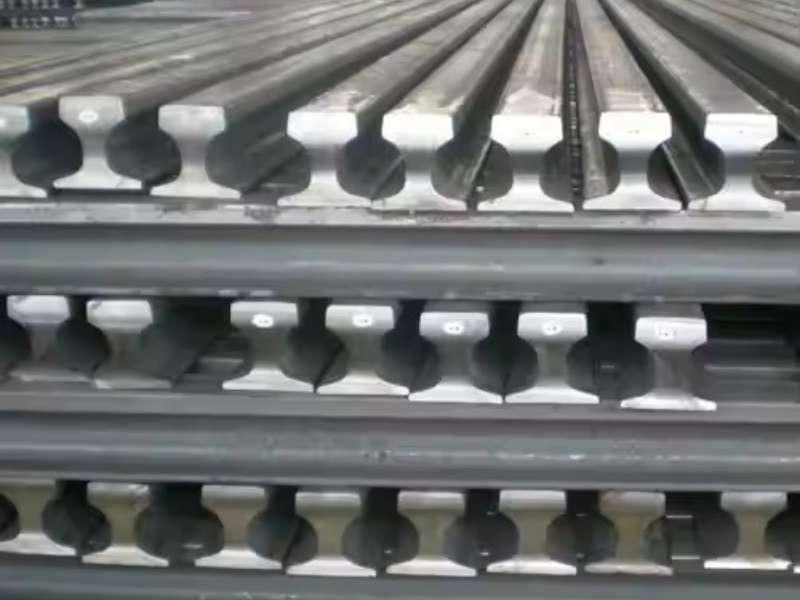
The CR 80 rail is defined by a comprehensive set of technical specifications outlined in standard IS 3443. This standard dictates not only the rail’s physical dimensions but also its material composition and mechanical properties. The designation “CR 80” typically refers to its head width, which is approximately 80 mm. Unlike standard railway tracks, crane rails like the CR 80 feature a wider head, a thicker web, and a broader base to provide a larger contact area for crane wheels and ensure greater stability.
Material composition is a critical aspect of its specification. CR 80 rails are manufactured from high-carbon steel, often with a chemical composition of 0.65-0.75% carbon and 1.0-1.3% manganese. This specific blend gives the rail a minimum tensile strength of around 850 MPa and a surface hardness of at least 250 BHN (Brinell Hardness Number). These properties are vital for resisting the intense wear and tear from heavy, slow-moving crane wheels, which can cause significant plastic deformation and surface fatigue on lesser-grade steel. The manufacturing process involves strict quality control to ensure a fine pearlitic microstructure, which contributes to its high strength and wear resistance.
When specifying a CR 80 rail, the crane rail steel grade matters as much as the profile — hardness and toughness determine how the rail wears under repeated wheel load.
Detailed CR 80 Rail Dimensions
The precise geometry of the CR 80 rail is fundamental to its function. Each part of its cross-section is designed to handle specific types of stress. The wide, flat head provides a stable running surface for the crane wheels, while its substantial depth helps distribute the load down into the web. The thick web acts as a strong vertical column, connecting the head to the base and resisting shear forces. The wide base distributes the total load over a larger area of the sole plate or concrete foundation, preventing localized pressure points and ensuring the entire assembly remains stable.
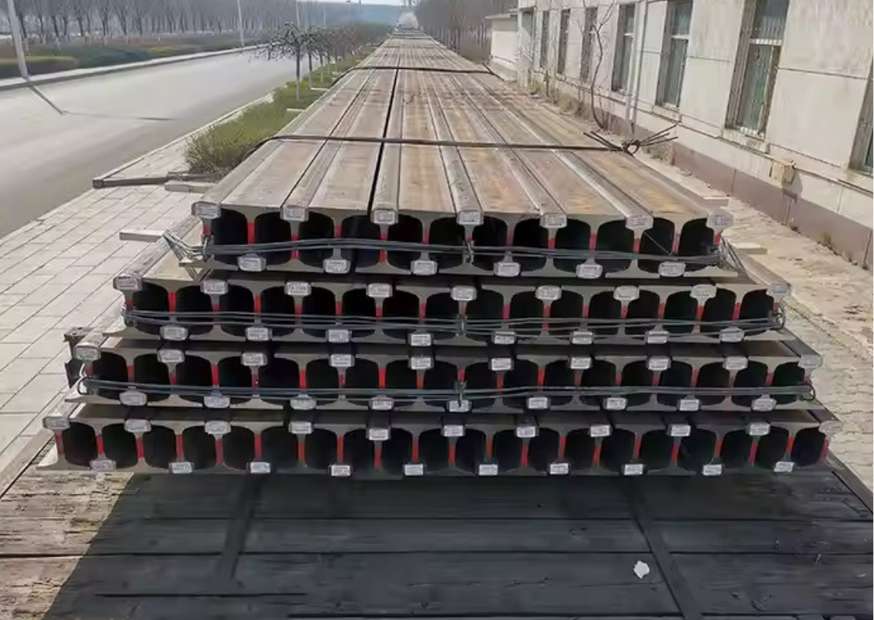
Adherence to these precise CR 80 rail dimensions is crucial for ensuring interoperability with other system components, such as rail clamps, pads, and sole plates. Any deviation from the standard can lead to improper seating of the rail, uneven wear, and potential derailment, posing significant safety and operational risks. For this reason, manufacturers provide detailed drawings and specification sheets that verify compliance with the IS 3443 standard. The standard length for these rails is often around 13 meters, although custom lengths can be produced for specific project requirements.
CR 80 Rail Specification Table
For quick reference and comparison, the key dimensions and properties of the CR 80 rail are summarized in the table below. These figures are the standard measurements that define the profile and are used for all engineering and installation calculations.
|
Property |
Value |
Unit |
|
Designation |
CR 80 / ISCR 80 |
– |
|
Governing Standard |
IS 3443 |
– |
|
Sectional Weight |
64.2 – 64.4 |
kg/m |
|
Head Width |
80 – 81.7 |
mm |
|
Rail Height |
130 |
mm |
|
Base Width |
130 |
mm |
|
Web Thickness |
32 – 35 |
mm |
|
Sectional Area |
~8206 |
mm² |
|
Moment of Inertia (Ix) |
~1896 |
cm⁴ |
|
Moment of Inertia (Iy) |
~373 |
cm⁴ |
|
Material Grade |
High-Carbon Steel (e.g., 880 Grade) |
– |
|
Tensile Strength (Min) |
850 |
MPa |
|
Hardness (Min) |
250 |
BHN |
These CR 80 rail dimensions and mechanical properties make it suitable for cranes with significant wheel loads, commonly found in steel mills, port facilities, and large manufacturing plants.
Rail Clamps for CR 80 Rail
Rail clamps are a fundamental component of the fastening system used to secure the CR 80 rail. Their function is to hold the rail firmly to its underlying support structure, which could be a steel sole plate or a concrete girder. A properly designed and installed clamp system prevents the rail from moving laterally, longitudinally, or vertically, which is essential for maintaining correct track alignment and gauge. Given the heavy and dynamic loads imposed by cranes, the choice of rail clamp is just as important as the rail itself.
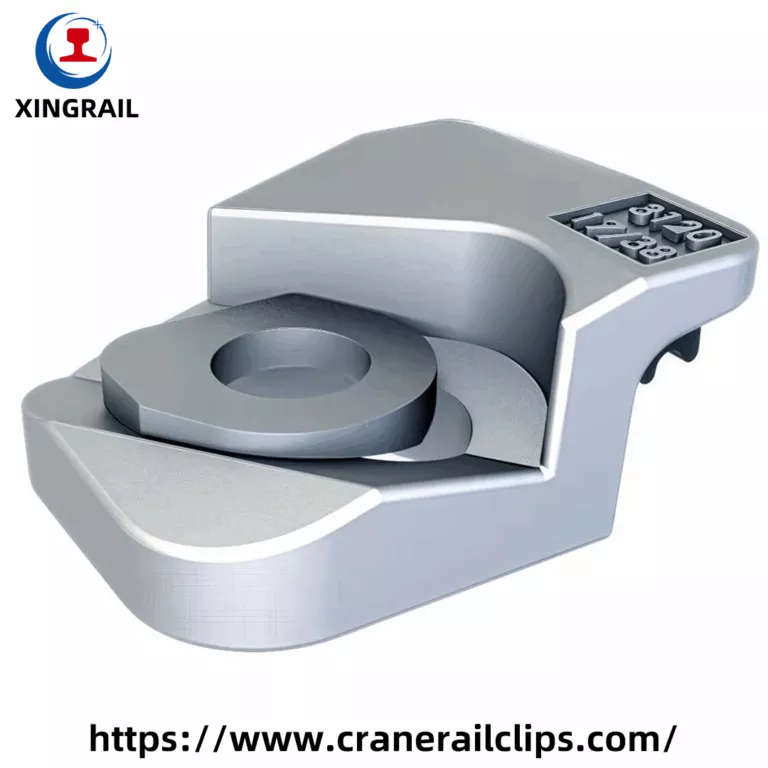
For CR 80 rails, several types of clamps are available, with the most common being double-bolt and single-bolt designs. These clamps work by pressing a forged or cast steel component against the foot of the rail. The pressure is applied by tightening bolts that pass through the clamp and into the support structure. To accommodate thermal expansion and contraction of the rail, some clamps are designed with an elastomeric “nose” or are used in conjunction with a resilient rail pad. This allows for slight longitudinal movement while maintaining a constant, high clamping force.
CR 80 Rail Clamp Specifications
The specifications for a CR 80 rail clamp are directly tied to the rail’s base dimensions. The clamp must be shaped to fit snugly against the angled foot of the CR 80 rail profile. A typical double-bolt CR 80 rail clamp is made from mild or forged steel and is designed to be used with M16 or M20 bolts.
Key specifications for a CR 80 rail clamp include:
- Material: Forged or cast steel, often galvanized or otherwise coated for corrosion resistance.
- Bolt Type: Typically double-bolt for maximum clamping force and security.
- Bolt Size: M16 or M20, depending on the required preload.
- Compatibility: Designed specifically to match the foot profile of the CR 80 rail.
- Installation Method: Can be bolted directly to a steel plate or anchored into concrete. Some systems allow for welding the base of the clamp to a steel support.
The clamping force must be sufficient to prevent rail movement under all operating conditions, including braking and acceleration of the crane. The installation torque for the bolts is a critical parameter specified by the clamp manufacturer to achieve the designed preload without over-stressing the components. Using the correct clamp ensures a safe, stable, and low-maintenance crane rail system. Without a secure fastening system, the integrity of the entire crane runway would be compromised, leading to premature wear on both the rail and the crane wheels, and posing a severe safety hazard.
Recommended Products for CR 80 Rail Dimensions
Securing your crane runway effectively requires a fastening system engineered to match your rail’s exact physical footprint. The CR 80 rail, governed by the IS 3443 standard, is built for heavy-duty industrial applications. To ensure this robust rail safely supports massive overhead cranes, you must pair it with the correct rail clamp.
When selecting a rail clip for the CR 80 profile, the most critical dimension is the base width. The CR 80 rail features a base width of 130 mm. Your rail clamp must sit perfectly flush against this angled foot to apply the maximum downward clamping force. This intense pressure pins the rail firmly to the steel sole plate or concrete foundation, preventing lateral shifting and neutralizing the severe dynamic forces generated by heavy, slow-moving crane wheels.
To help you build a resilient and stable crane rail system, we have matched our heavy-duty crane rail clips with the specific dimensions of the CR 80 rail profile. Review the table below to find the correct fastening solution for your project.
|
Rail Type |
Base Width |
Height |
Weight |
Recommended Clips |
|
CR 80 (ISCR 80) |
130.0 mm |
130.0 mm |
64.2 – 64.4 kg/m |
32 Series Bolted Rail Clips |
Frequently Asked Questions (FAQs)
- Why is the 130 mm base width critical when selecting clips for a CR 80 rail?
Your rail clip only functions correctly if it perfectly matches the rail’s foot profile. Because the CR 80 rail has a specific 130 mm base width, you must use a fastener engineered for this dimension. A precise fit ensures the clip housing sits flush against the flange, allowing it to apply the essential downward clamping force needed to secure the track. - Are 32 Series Bolted Clips suitable for the heavy-duty demands of CR 80 crane runways?
Yes. Engineers specify the CR 80 rail for high-stress environments like steel mills and port facilities. These heavy applications require secure fastening to handle immense wheel loads. The 32 Series Bolted Clips deliver exceptional double-bolt clamping force, successfully neutralizing the heavy braking and acceleration forces of massive gantry cranes. - How do bolted rail clips prevent the CR 80 rail from moving laterally?
Overhead cranes exert severe lateral and longitudinal forces on the track structure. High-quality bolted clips use forged steel components that press tightly against the angled foot of the CR 80 rail. When you tighten the bolts to the specified torque, the clip generates intense friction that locks the rail to the support structure, completely preventing unwanted movement. - Can I use resilient rail pads alongside rail clips on a CR 80 track system?
Absolutely. In fact, engineers highly recommend using resilient rail pads under the CR 80 rail base to distribute loads and reduce wear. Our premium rail clips accommodate this setup perfectly. They maintain a constant, high clamping force while allowing for the slight longitudinal movements caused by thermal expansion and contraction. - What happens if I install an improperly sized rail clamp on a CR 80 rail?
Installing a rail clamp that does not precisely fit the 130 mm base creates an immediate safety hazard. If the clamp fails to seat correctly against the rail foot, you will lose the necessary preload tension. The heavy crane wheels will quickly vibrate the loose rails out of alignment, leading to premature wear on both the rail and the wheels, and significantly increasing the risk of derailment.