Heavy cranes place extreme loads on rails, support beams, and fastening hardware. When the rail fixing system is weak, the whole runway suffers. Misalignment grows, vibration increases, and maintenance costs rise. That is why rail fixing systems for heavy cranes are a critical part of safe and efficient crane operation.
This guide explains how crane rail clips work, why welded and bolted systems matter, and how to choose the right solution for ports, shipyards, steel plants, warehouses, and other demanding sites. You will also see how XINGRAIL clip series fit into modern heavy crane rail fixing systems, including options for international rail standards such as DIN536, AREA, BS, China standard, Indian standard, GOST, SABS, and Australian standard rails.

What Are Welded Crane Rail Clips?
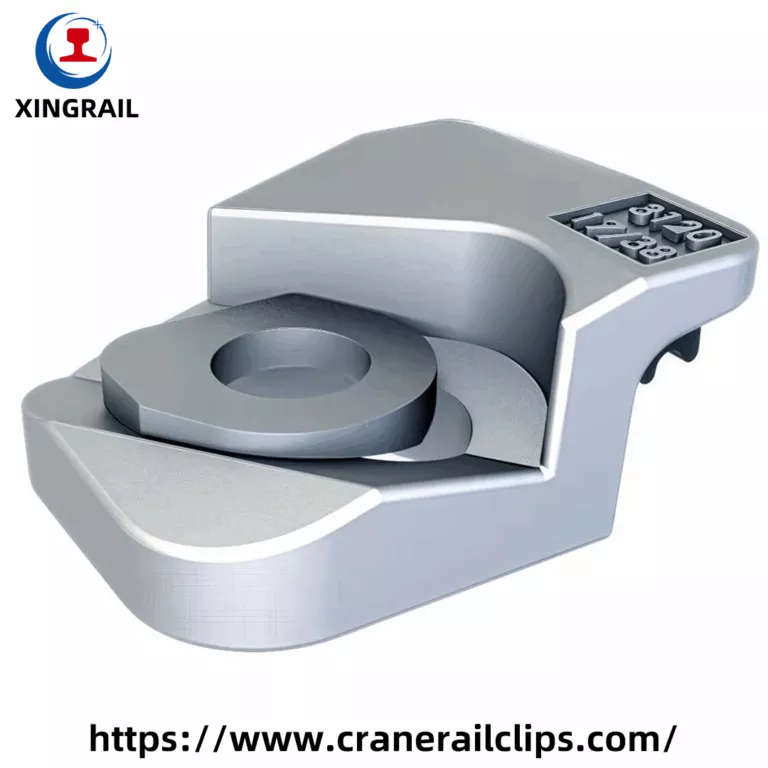
Welded crane rail clips are fastening components used to secure crane rails to runway beams or support structures. They are designed to hold the rail in place while allowing controlled movement caused by thermal expansion, wheel loads, and dynamic impact. In many crane rail fixing systems, the clip works together with bolts, rubber pads, sole plates, and support steel.
A typical welded clip system includes:
- a forged steel clip body
- a weldable base or saddle
- a fastening point that grips the rail flange
- an elastomer or resilient element in some designs
- optional shims or pads for load distribution
These clips are essential in rail fixing systems for heavy cranes because crane runways face repeated lateral loads, wheel impact, and vibration. A reliable clip keeps rail gauge and alignment stable. It also reduces the risk of rail creep, beam wear, and local fatigue cracking.
In industrial projects, welded crane rail clips are common where high load capacity, compact design, and long-term stability are priorities.
Common Challenges in Crane Rail Installation
Crane rail systems operate under conditions that standard track fasteners are not built to handle. Engineers and contractors usually face five main issues.
Rail Misalignment
Poor alignment causes uneven wheel loading, flange wear, and shock loads. Even small deviations can shorten rail and wheel life. Proper crane rail fixing clips help maintain rail position and allow fine horizontal adjustment during installation.
Vibration and Impact Loads
Heavy cranes generate constant vibration during travel, hoisting, braking, and skewing. In ports and steel mills, impact loads can be severe. Well-designed crane rail fastening clips reduce movement at the interface and improve load transfer to the beam.
Structural Fatigue
Repeated loading can damage welds, bolts, beam flanges, and base plates. Good crane rail fastening systems spread loads more evenly and lower stress concentration at fixing points.
Rail Movement
Thermal expansion, braking forces, and repeated wheel passage can cause rail creep and lateral shift. This is a major risk in long runway systems. Heavy crane rail fixing systems use engineered clips to control rail movement without over-restraining the rail.
Maintenance Difficulties
Fasteners that are hard to inspect or replace raise maintenance time and shutdown cost. Proper clip selection improves access, simplifies replacement, and supports predictable maintenance intervals.
Welded vs Bolted Crane Rail Clips
Both welded and bolted clips are widely used in rail fixing systems for heavy cranes, but they serve different site conditions.
Welded Crane Rail Clips
Welded clips are attached directly to the support steel by welding. They are often chosen for:
- high-load applications
- limited installation space
- retrofit work on existing steel structures
- harsh duty cycles with strong lateral forces
Welded systems provide a compact and robust solution. They are common in shipyards, heavy manufacturing plants, and container terminals.
Bolted Crane Rail Clips
Bolted clips are fixed using anchor bolts or threaded assemblies. They are often preferred when:
- easier replacement is needed
- site welding must be reduced
- accurate adjustment during installation is important
- the project uses pre-drilled sole plates or base plates
Bolted crane rail clips can simplify maintenance and make alignment work faster. They are often used in new runway construction and controlled installation environments.
In practice, the choice depends on beam design, rail type, installation method, and service duty. Both systems can perform well if matched correctly to the project.
Recommended XINGRAIL Crane Rail Clips
XINGRAIL offers product lines that suit many crane rail fixing systems for demanding industrial use. The main groups include:
- Bolted Rail Fixing Clips
- 31 Series Bolted Rail Fixing Clips
- 32 Series Bolted Rail Fixing Clips
- Welded Rail Fixing Clips
- 9 Series Welded Rail Fixing Clips
- 7 Series Welded Rail Fixing Clips
For engineers comparing options, the following models are relevant:
- XINGRAIL 3116/13/36
- XINGRAIL 3120/17/38
- XINGRAIL 3224/20/44
- XINGRAIL 3222/17/44
- XINGRAIL 3220/17/38
- XINGRAIL 9220/20/45
- XINGRAIL 9216/08/40
- XINGRAIL 9120/15/38
- XINGRAIL 9116/08/3
- XINGRAIL 7216/20/39
Technical Comparison Table
|
Model |
Base Material |
Surface Treatment |
Lateral Force Resistance |
Horizontal Adjustment |
Applications |
Special Features |
|
XINGRAIL 3116/13/36 |
Forged steel |
Corrosion-protected finish |
Medium to high |
Yes |
Light to medium heavy crane runways |
Compact bolted design |
|
XINGRAIL 3120/17/38 |
Forged steel |
Corrosion-protected finish |
High |
Yes |
Industrial overhead crane rails |
Stronger hold-down capacity |
|
XINGRAIL 3224/20/44 |
Forged steel |
Corrosion-protected finish |
High |
Yes |
Steel plants, ports, high-load runways |
Suited for heavier rail sections |
|
XINGRAIL 3222/17/44 |
Forged steel |
Corrosion-protected finish |
High |
Yes |
Heavy duty beam-mounted rails |
Good adjustment range |
|
XINGRAIL 3220/17/38 |
Forged steel |
Corrosion-protected finish |
High |
Yes |
General heavy duty use |
Balanced load capacity |
|
XINGRAIL 9220/20/45 |
Forged steel |
Corrosion-protected finish |
Very high |
Limited to moderate |
Welded runway systems |
Robust welded body |
|
XINGRAIL 9216/08/40 |
Forged steel |
Corrosion-protected finish |
Medium to high |
Limited to moderate |
Compact welded installations |
Space-saving profile |
|
XINGRAIL 9120/15/38 |
Forged steel |
Corrosion-protected finish |
High |
Limited to moderate |
Shipyard and gantry crane rails |
Strong clamp action |
|
XINGRAIL 9116/08/3 |
Forged steel |
Corrosion-protected finish |
Medium |
Limited |
Retrofit welded rail systems |
Useful for lighter sections |
|
XINGRAIL 7216/20/39 |
Forged steel |
Corrosion-protected finish |
High |
Limited to moderate |
Heavy gantry and runway beam use |
Durable welded clip option |
In many projects, the 31 and 32 Series fit bolted crane rail fixing systems, while the 9 and 7 Series support welded installations where space and load demand favor a weld-on solution.
For more detail on this subject, see crane rail clamps and rail fixing systems for industrial cranes.
Compatible Crane Rails and Track Standards
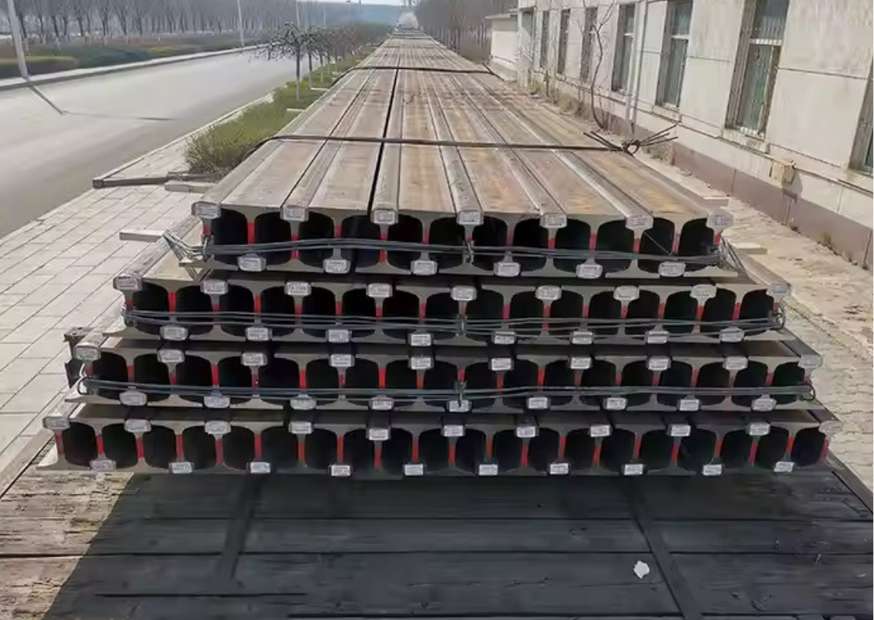
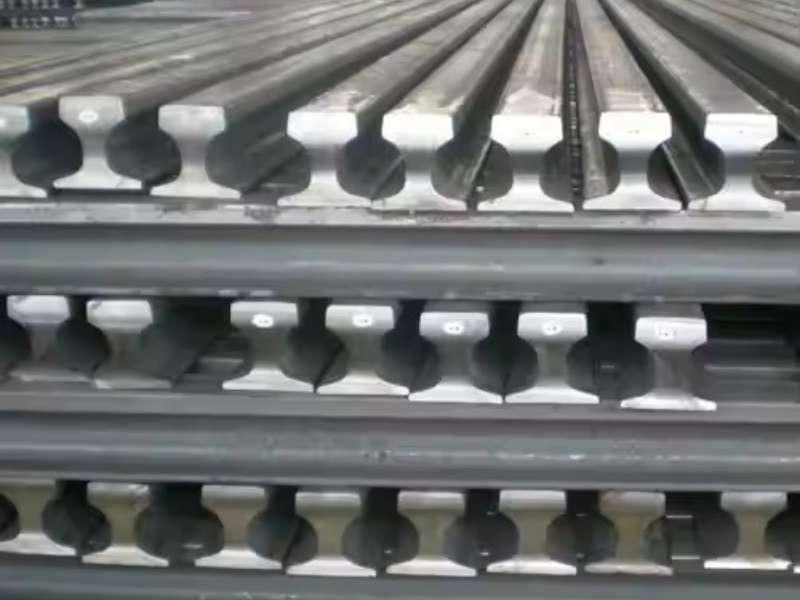
A good clip system must match both the rail profile and the operating load. XINGRAIL solutions can be specified for a wide range of international standards used in rail fixing systems for heavy cranes, including:
- DIN536 crane rails
- AREA crane rails
- BS railway tracks
- China standard rails
- Indian standard rails
- GOST rails
- SABS rails
- Australian standard rails
This compatibility matters for multinational projects and equipment upgrades. Ports may use DIN536 sections such as A45, A55, A65, A75, A100, A120, and A150. Older industrial plants may use AREA or BS profiles. Regional infrastructure projects may require Chinese, Indian, GOST, or SABS rail sections.
The clip must match:
- rail head and flange geometry
- base width
- wheel load and lateral force
- support beam design
- corrosion environment
Typical Applications of Welded Crane Rail Clips
Welded crane runway rail clips are widely used in industries where cranes handle heavy loads and operate around the clock.
Container Ports
Container cranes face strong braking forces, wind loads, and repeated travel cycles. Welded clips provide durable restraint for long runway systems.
Shipyards
Shipyard gantry cranes and transfer cranes work in corrosive coastal conditions. Strong welded clips help keep rails secure under heavy dynamic loads.
Steel Mills
Heat, scale, impact, and high wheel loads make steel plants one of the toughest settings for heavy duty crane rail clips. Forged welded clips are often chosen for long service life.
Automated Warehouses
Automated crane systems need accurate alignment and low maintenance. Reliable crane rail support clips help maintain repeatable travel paths.
Mining Facilities
Mining cranes often work in dusty and abrasive conditions. Robust forged steel crane rail clips improve durability and reduce unplanned shutdowns.
Heavy Manufacturing Plants
Large process cranes require stable runway geometry. Welded clips help control movement and improve runway reliability.
Installation Best Practices for Crane Rail Clips
Correct installation is just as important as product choice.
Welding Procedures
For weld-on clips, use qualified welding procedures that match the beam material and site conditions. Avoid excessive heat input that may distort the support steel. Inspect weld quality before rail loading.
Bolting Methods
For bolted systems, check anchor position, thread condition, and seating surface. Tighten bolts in sequence to ensure even load transfer.
Tightening Torque
Always follow the manufacturer’s torque range for the clip and bolt size. Under-tightening allows movement. Over-tightening may damage hardware or reduce resilience.
Rail Alignment
Use precision surveying tools to set line, level, gauge, and elevation. Crane rail alignment clips and adjustable bolted systems are useful during final correction.
Inspection and Maintenance
Inspect clips, pads, welds, bolts, and rail seat condition at planned intervals. Replace worn components before they affect rail geometry.
Why Forged Crane Rail Clips Improve Durability
Forged clips outperform many cast or fabricated alternatives in demanding crane rail fixing systems.
Their main benefits include:
- higher material strength
- better grain flow and toughness
- improved fatigue resistance
- stronger response to shock loading
- longer service life in vibrating environments
For heavy cranes, these benefits matter. A forged clip is better able to resist repeated load cycles, absorb vibration, and maintain clamping force over time. That is why many engineers specify forged steel crane rail clips for mission-critical runways.
Heavy Duty Welded Crane Rail Clips for Gantry Cranes
Gantry cranes and container cranes create large lateral and uplift forces, especially during skewing, wind exposure, and uneven wheel loading. In these cases, rail fixing systems for heavy cranes must provide both strength and stability.
Welded clips such as XINGRAIL 9220/20/45 and XINGRAIL 7216/20/39 are well suited to gantry crane applications where robust fixing and compact installation are required. These clips support secure rail retention on runway beams and help reduce rail shift under repeated heavy service.
How to Install Welded Crane Rail Clips on Crane Runway Beams
A typical installation process follows these steps:
- Inspect the beamfor straightness, weld condition, and surface cleanliness.
- Position the railwith the correct pads, sole plates, or bearing strips if specified.
- Set initial alignmentfor gauge, centerline, and elevation.
- Place the clipsat the required spacing along the rail.
- Tack weld the clip baseswhile checking rail position.
- Complete final weldingusing approved procedures.
- Recheck alignmentafter welding to confirm no movement occurred.
- Load test or inspectbefore the crane returns to service.
- Document torque, weld records, and measurementsfor future maintenance.
This method helps maintain consistency across long runway installations.
Best Welded Crane Rail Clips for DIN536 Crane Rails
DIN536 rails are common in crane systems because they are designed for high wheel loads. Typical sizes include A45, A55, A65, A75, A100, A120, and A150. The right clip depends on rail base width, beam design, and expected lateral force.
For smaller to medium DIN536 sections, welded models such as XINGRAIL 9216/08/40 or XINGRAIL 9120/15/38 may be suitable. For larger sections and heavier service, XINGRAIL 9220/20/45 can offer a stronger option. On bolted systems, XINGRAIL 3116/13/36, 3120/17/38, and 3224/20/44 can be considered where adjustment and replaceability are priorities.
FAQ – Welded Crane Rail Clips
What are welded crane rail clips used for?
They secure crane rails to runway beams and help control lateral movement, vibration, and alignment under heavy wheel loads.
What is the difference between welded and bolted crane rail clips?
Welded clips attach directly to the support steel, while bolted clips use anchors or bolts. Welded clips are compact and robust. Bolted clips are easier to adjust and replace.
How strong are welded crane rail clips?
Strength depends on model, rail size, weld quality, and beam design. Heavy duty forged models are built to resist high lateral forces and repeated dynamic loading.
Are welded crane rail clips suitable for DIN536 crane rails?
Yes. Many welded clip designs are compatible with DIN536 profiles, including common sizes from A45 to A150, when selected correctly.
How many crane rail clips are required per meter of rail?
The spacing depends on rail section, wheel load, support design, and manufacturer guidance. Engineers should confirm clip spacing during runway design.
Reliable rail fixing systems for heavy cranes are essential for safe crane travel, stable alignment, and long runway life. Whether you choose welded or bolted solutions, the goal is the same: control rail movement, reduce fatigue, and simplify maintenance.
For demanding projects, crane rail clips, crane rail fastening clips, and other engineered crane rail fixing systems provide the strength and flexibility needed across ports, shipyards, steel mills, and heavy industrial plants. XINGRAIL’s bolted and welded series, including the 31, 32, 9, and 7 Series, offer practical options for a wide range of rail standards and operating conditions.
The next step is to match the rail profile, runway beam, load case, and maintenance plan to the correct clip model. That approach will give your crane runway the durability and performance it needs.