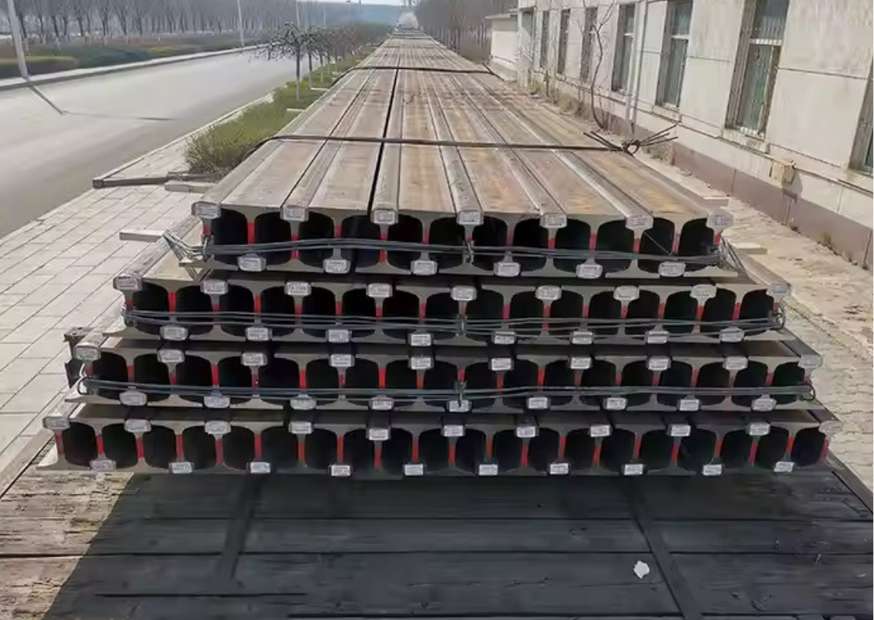
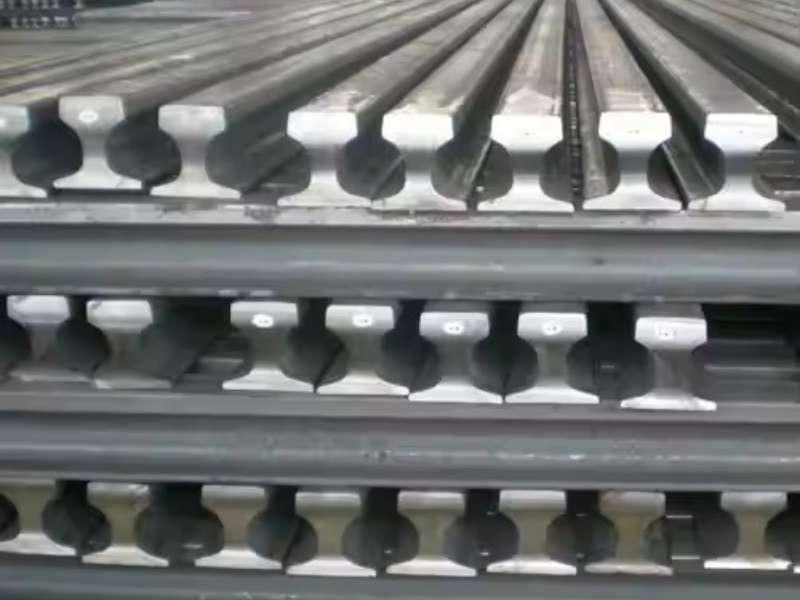
The railway line weight per metre is a critical parameter in the design and construction of any railway system. It fundamentally defines the track’s capacity, durability, and suitability for specific applications. This measurement, typically expressed in kilograms per meter (kg/m) or pounds per yard (lb/yd), directly influences how much load a track can safely support. It ensures the long-term performance and safety of the railway infrastructure.
Rail Weight Per Meter Specifications
Understanding rail weight per meter specifications and the railway line weight per metre is necessary for track engineering. Rail is measured by its mass over a standard length. For example, a 60 kg/m rail means that one meter of that rail weighs 60 kilograms. Heavier rails generally provide greater strength and durability. This increased mass helps distribute the immense forces exerted by trains over a wider area of the track structure. Therefore, heavy-duty mainlines and high-speed networks require significantly heavier rails than light rail or industrial sidings. The choice of rail weight impacts the entire track system.
A heavier railway line weight per metre specification translates to a more robust and resilient track. For instance, common rail profiles like the 60E1 (often referred to as 60 kg/m) are standard for mainline and high-speed tracks in Europe. In North America, profiles like the 136RE (136 lb/yd, approximately 67.5 kg/m) serve a similar purpose for heavy-haul freight lines.
|
Rail Profile |
Nominal Weight (kg/m) |
Nominal Weight (lb/yd) |
Typical Application |
|
33E1 (BS 68) |
33.8 kg/m |
68 lb/yd |
Light rail, cranes |
|
45E1 (BS 90A) |
45.3 kg/m |
90 lb/yd |
Industrial lines, secondary routes |
|
50E6 (U50) |
50.4 kg/m |
101 lb/yd |
Mixed traffic lines, metro systems |
|
54E1 (UIC54) |
54.77 kg/m |
110 lb/yd |
Mainlines, freight routes |
|
60E1 (UIC60) |
60.34 kg/m |
121 lb/yd |
High-speed, heavy-haul mainlines |
|
115RE |
56.9 kg/m |
115 lb/yd |
Mainline, heavy freight (North America) |
|
136RE |
67.5 kg/m |
136 lb/yd |
Heavy-haul freight lines (North America) |
|
75 kg/m |
75.0 kg/m |
151 lb/yd |
Special heavy-duty applications |
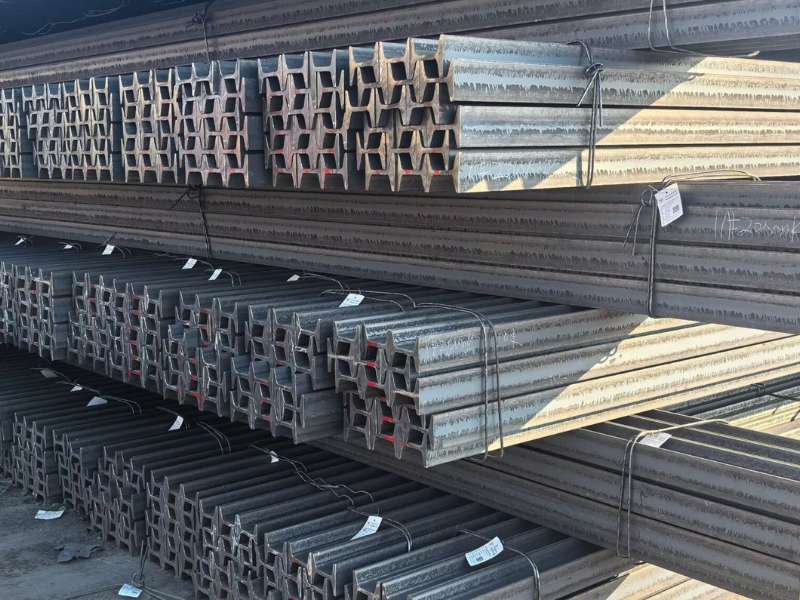
Railway Track Weight Per Meter
The overall railway track weight per meter is influenced by the intended use of the line. The railway line weight per metre selected for a track depends on several key factors. These factors include the maximum axle load of the trains, the planned operational speed, and the expected traffic density. A light rail system with smaller vehicles and lower speeds can effectively use lighter rails, such as those around 40-50 kg/m. Conversely, a mainline track that must support heavy freight trains with high axle loads and frequent service requires a much heavier and more durable railway line weight per metre, often 60 kg/m or more.
For example:
- Light Rail and Tramways: Typically use rails from 40 kg/m to 50 kg/m. The focus here is on balancing cost with sufficient durability for lighter passenger vehicles.
- Mainline Passenger and Mixed Traffic: Commonly employ rails in the 54 kg/m to 60 kg/m range. This provides a good balance for both passenger and moderate freight operations.
- Heavy-Duty Freight and High-Speed Rail: Almost exclusively use rails of 60 kg/m or heavier. The immense dynamic forces from high speeds and heavy axle loads necessitate the strongest available rail profiles.
Related: Indian railway track gauge, railway track weight per meter and rail size and weight chart guide.
Rail Weight Standards by Region
Rail weight standards and the designated railway line weight per metre vary significantly across different geographical regions. These differences stem from historical developments, local industrial needs, and dominant traffic types. European standards, governed by the International Union of Railways (UIC), often favor profiles like 54E1 (UIC54) and 60E1 (UIC60). In contrast, North American standards, set by the American Railway Engineering and Maintenance-of-Way Association (AREMA), specify rail in pounds per yard, with 115RE, 136RE, and 141RE being common for mainline freight. Asian countries often adopt either European, American, or their own unique standards depending on the project’s origins and operational goals. For instance, Japan’s Shinkansen high-speed network uses a 60 kg/m railway line weight per metre.
|
Region |
Common Standards |
Typical Mainline Rail Weights |
Measurement Unit |
|
Europe |
EN, UIC |
54 kg/m, 60 kg/m |
Kilograms per meter (kg/m) |
|
North America |
AREMA |
115 lb/yd, 136 lb/yd, 141 lb/yd |
Pounds per yard (lb/yd) |
|
Asia |
JIS, GB, IRS |
50 kg/m, 60 kg/m, 75 kg/m |
Kilograms per meter (kg/m) |
|
Australia |
AS |
47 kg/m, 53 kg/m, 60 kg/m |
Kilograms per meter (kg/m) |
|
Russia (CIS) |
GOST |
R65 (64.7 kg/m) |
Kilograms per meter (kg/m) |
Rail Weight for High-Speed Railway Lines
For high-speed railway lines, the selection of the railway line weight per metre is a matter of paramount importance for safety and performance. High speeds, often exceeding 300 km/h (186 mph), generate extreme dynamic forces and vibrations. Heavier rails, typically 60 kg/m or more, are necessary to provide the necessary stability and rigidity. This substantial mass helps absorb vibrations. A heavier rail also provides a larger head surface for the wheel-rail contact. This reduces contact stress and wear on both the wheel and the rail itself. Furthermore, the inherent strength of a heavier railway line weight per metre ensures the track geometry remains stable under the punishing conditions of high-speed operation.
You can use below rail weight calculator. This tool allows you to input specific parameters or select standard rail types to instantly retrieve weight data.
Rail Weight Calculator
Frequently Asked Questions (FAQs)
- What is the standard rail weight per meter?
Standard rail weights for heavy-duty and high-speed tracks typically range from 50 kg/m to 75 kg/m. However, the specific “standard” depends heavily on the application and region. - How is rail weight measured?
Rail weight is measured as mass per unit of length. The most common units are kilograms per meter (kg/m) in regions using the metric system and pounds per yard (lb/yd) in North America and some other areas. - What rail weights are used for mainline tracks?
Mainline tracks generally use rail weights of 60 kg/m (or the imperial equivalent, like 136 lb/yd) or higher. This ensures the track has sufficient durability and load-bearing capacity for frequent and heavy traffic. - Why is rail weight important for high-speed trains?
Heavier rails are important for high-speed rail because they provide stability, reduce track vibrations, and ensure overall safety at high velocities. The increased mass helps maintain precise track geometry under significant dynamic loads. - What factors influence rail weight selection?
Several key factors influence the selection of rail weight. These include the maximum axle load of the vehicles, the designed train speed, the volume of traffic, and the specific type of railway application (e.g., freight, passenger, light rail, or industrial).