Knowing DIN 536 A100 crane rail dimensions is important when specifying one for a heavy-duty project. This reference details A100 rail parameters, from dimensions to mechanical qualities. We shall detail the A100 rail’s dimensions, standard length, and weight per meter. We’ll also analyze technical data like the section modulus to ensure you have all the information you need for engineering and procurement of this durable DIN 536 crane rail.
DIN 536 A100 Rail Dimensions and Their Applications
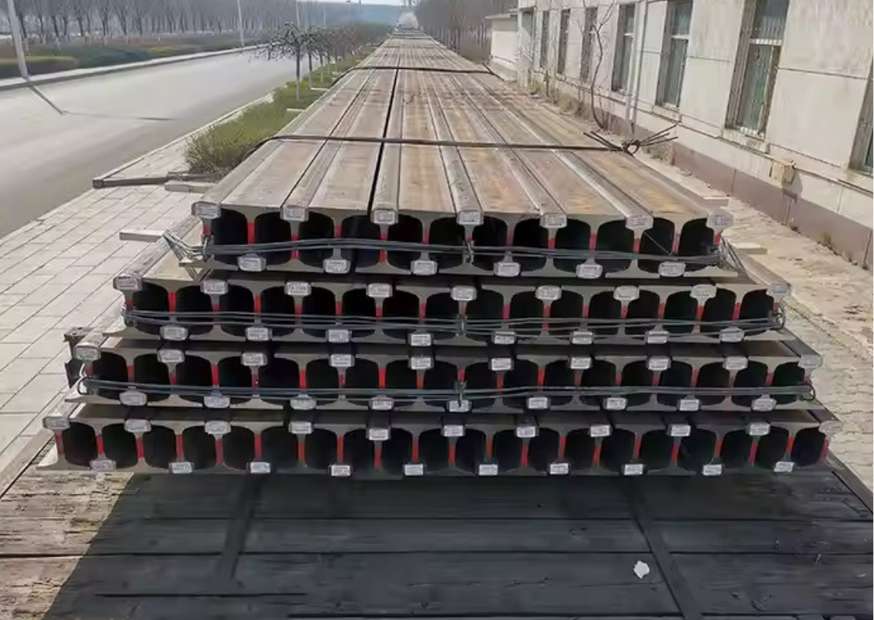
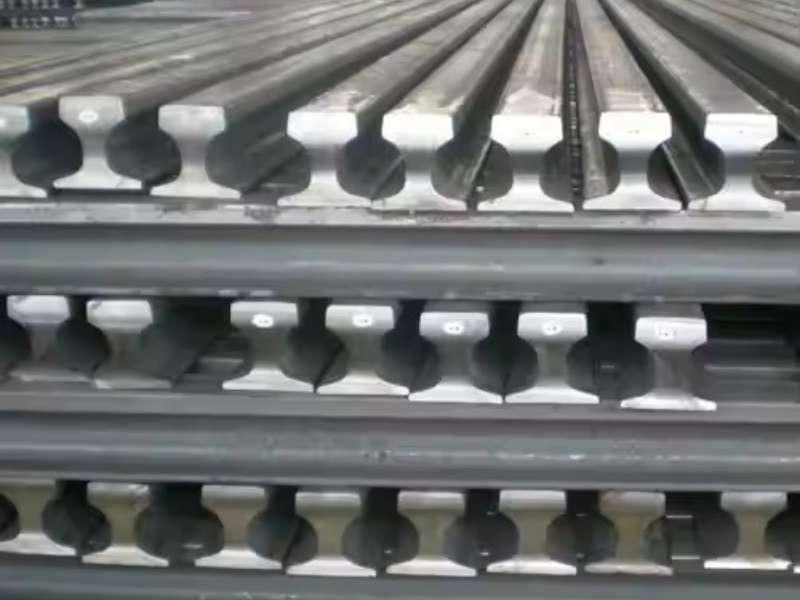
A100 rail dimensions match DIN 536. These standards include 100 mm rail head width, 100 mm height, and 200 mm base width. Web thickness is 60 mm. Crane wheel and fastening system compatibility depends on these measurements. Furthermore, the nominal A100 rail weight is 74.3 kg/m. This large mass stabilizes it under load. Engineers create strong industrial rails using these exact a100 rail specifications. The normal A100 rail length is 12 meters. Thus, the DIN 536 A100 crane rail is predictable and reliable in major construction and industrial projects due to its regular proportions.
The DIN 536 crane rail is excellent for high-stress environments due to its strong shape. It’s found in container ports, steel mills, and automated warehouses with heavy loads. The A100 rail’s mechanical qualities support these demanding applications. The material has a minimum tensile strength of 880 N/mm² and a minimum elongation of 8%. Keeping track integrity over time requires high section modulus. This rail type is ideal for heavy-duty gantries, overhead cranes, and industrial track systems due to its weight, strength, and size. Its construction provides durability and safety under heavy use.
What Are the Specifications of DIN 536 A100 Rail Dimensions?
DIN 536 A100 crane rails meet high German industrial standards. Core A100 rail parameters are 100 mm head, 100 mm height, and 200 mm base. Additionally, the rail web is 60 mm thick. The a100 rail specifications ensure industrial standardization and interchangeability. Important data includes the A100 rail weight of 74.3 kilogram per meter. This massive mass supports hefty lifting. Most A100 rail comes in 12-meter sections. This length makes on-site handling and installation easier. Anything requiring a sturdy DIN 536 crane rail starts with these numbers.
In addition to physical parameters, engineers value A100 rail mechanical qualities. The rail has a minimum tensile strength of 880 N/mm². Its elongation percentage is at least 8%. Maintaining crane system structural integrity requires a high section modulus. Overall, these criteria form a sturdy rail profile. The A100 is ideal for demanding industrial track systems worldwide because to its unique features.
How Much Does a DIN 536 A100 Rail Weigh?
Mass is key to the a100 rail specifications. The nominal A100 rail weight is 74.3 kg/m, or 150 pounds per yard. This weight is due to its large cross-sectional area, obtained from A100 rail dimensions. Weight is important for heavy-duty applications because it provides stability and load-bearing capacity. Thus, a 12-meter DIN 536 A100 crane rail weighs about 892 kg. To ensure safety and structural integrity, planners must account for this large mass throughout transportation, logistics, and installation. The weight per meter is necessary for din 536 crane rail projects.
Rail performance and mechanical qualities depend on weight. High mass gives the rail a strong section modulus. Track alignment and deformation prevention depend on its intrinsic strength. The weight of a crane runway system is also important in foundation design. Engineers must guarantee the structure can support the rails, crane, and payload. Understanding the A100 rail’s weight per meter is important to the crane system’s engineering and safety study.
Partner with Xingrail for DIN 536 Crane Rail Solutions
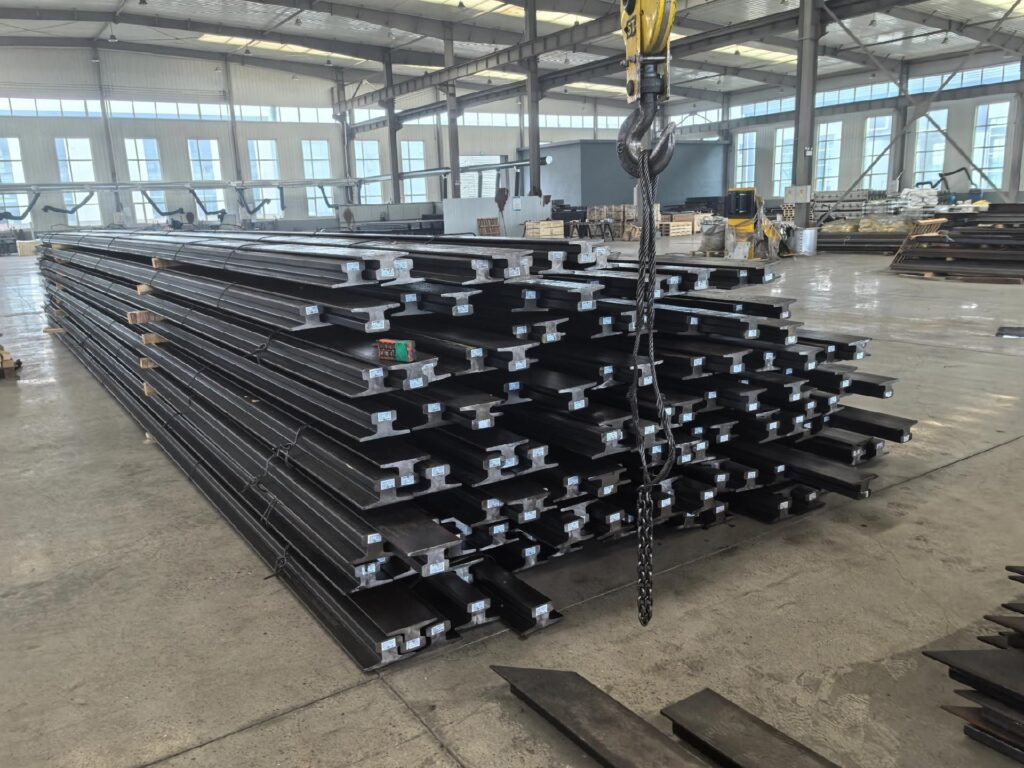
Xingrail is your DIN 536 A100 crane rail supplier for your project. We offer complete solutions based on accurate A100 rail measurements. Our crew guarantees every rail fulfills strict head, height, and base standards. Our logistics team delivers normal 12-meter lengths to your worksite despite the A100 rail’s 74.3 kg/m weight. We understand how important these nuances are for project success. We provide complete a100 rail specifications transparency. For continuous quality and performance, our inventory fully follows the DIN 536 crane rail standard.
We go beyond supplying materials. Technical support from Xingrail helps you understand DIN 536 crane rail. Tensile strength, elongation %, and other A100 rail mechanical parameters can be answered by us. Our experts can also explain the section modulus’s importance for your crane system. Partnering with us gives you access to high-quality products and industry expertise. We handle everything from specs to crane rail delivery.
Related: Australian railway standards.
Recommended Products for DIN 536 A100 Rails
Engineering a heavy-duty crane runway requires more than just selecting the right steel profile. The DIN 536 A100 crane rail handles massive loads in high-stress environments like container ports and steel mills. To keep this track secure, you must pair its precise dimensions with a heavy-duty fastening system.
The most critical measurement for selecting your rail clip is the rail’s base width. The A100 rail features a very wide 200 mm base. Your fastening clip must sit completely flush against this broad flange to apply the maximum downward clamping force, known as toe load. This heavy friction securely anchors the 74.3 kg/m rail to the underlying structure, preventing lateral shifting and neutralizing severe dynamic vibrations from overhead cranes.
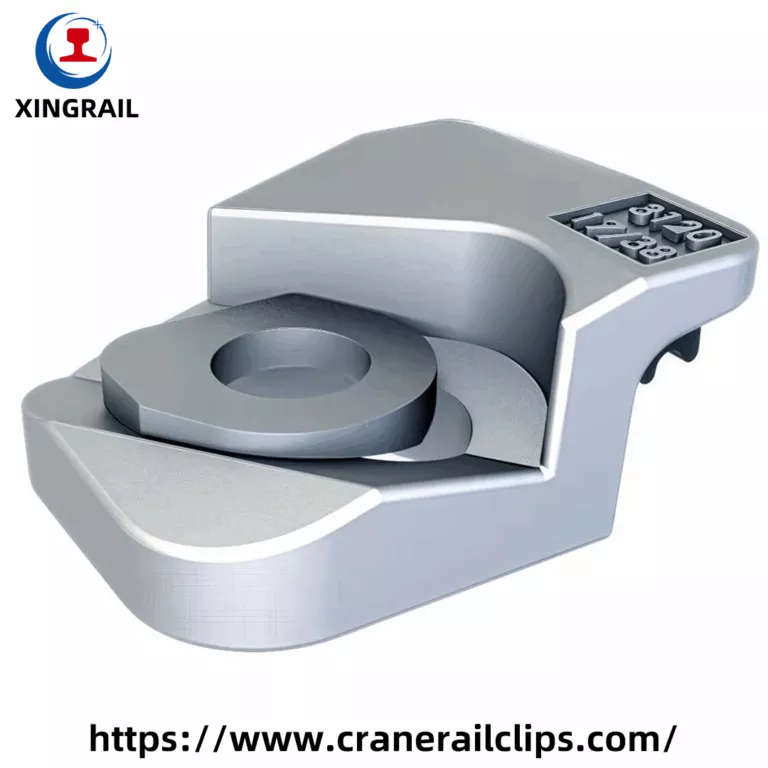
To help you build a resilient industrial track system, we have paired our heavy-duty crane rail clips with the precise specifications of the DIN 536 A100 profile. Review the table below to find the correct fastening solution for your exact rail dimensions.
|
Rail Type |
Base Width |
Height |
Weight |
Recommended Clips |
|
DIN 536 A100 |
200.0 mm |
100.0 mm |
74.3 kg/m |
9 Series Welded Rail Clips |
Frequently Asked Questions (FAQs)
- Why does the wide 200 mm base of an A100 rail require 9 Series Welded Clips?
Engineers deploy A100 rails specifically for heavy-duty gantries and overhead cranes that transport massive payloads. These heavy operations generate extreme lateral forces that attempt to push the rails apart. You weld the 9 Series clips directly to the underlying steel plates to create a permanent, rigid anchor. This structural bond securely grips the wide 200 mm rail base and successfully neutralizes intense vibrations. - How does the 74.3 kg/m mass of the A100 rail dictate my rail clip selection?
The massive weight and high section modulus of the A100 rail give it incredible structural stability, but it still transfers immense dynamic loads into the foundation. Your rail clip must match the physical footprint of the 200 mm base to apply the precise clamping force needed. A precise fit ensures the fastener works with the heavy rail mass to stop longitudinal rail creep and lateral shifting. - Do elastic fastening systems work well with rigid DIN 536 crane rails?
Yes. As heavy cranes travel over A100 rails, the massive wheel loads cause the steel to vibrate aggressively. Our 9 Series clips utilize a specialized elastic design that flexes to absorb these intense shocks. They continuously spring back to their original shape, pressing down heavily on the rail foot and pinning the heavy steel firmly against the support structure. - What happens if I install a mismatched rail clip on an A100 industrial track?
Installing a rail clip that fails to precisely match the 200 mm base of an A100 rail creates an immediate derailment risk. If you place a clip engineered for a narrower base onto this heavy crane rail, the fastener housing will fail to seat flush against the flange. You will instantly lose the essential toe load clamping force, allowing heavy cranes to rattle the rails loose. - Can the 9 Series Welded Clips handle the extreme environments of steel mills using A100 rails?
Absolutely. Steel mills and container ports expose track components to high stress and continuous heavy loads. The 9 Series Welded Clips feature a robust, heavy-duty wedge-action design. As dynamic lateral forces push against the clip, the internal geometry forces the fastening components to clamp down even tighter, ensuring the A100 rail maintains perfect alignment under demanding industrial conditions.