Heavy businesses need overhead crane rail systems for efficient material movement. Understanding overhead crane rail system design and function is important for crane rail alignment. This handbook covers crane rail installation, material durability, and safety criteria for industrial application. Explore how expert approaches optimize overhead crane rails, tracks, and support structures and how crane rail systems maximize operational efficiency. Find everything needed for alignment, dependability, and performance.
For fastener guidance on 75 mm DIN 536 A-series runways, our guide to clips for A75 rail covers dimensions and clamp selection.
For fastener guidance on 80 mm crane runways, see our CR80 rail fastening guide.
For fastener guidance on 100 mm crane runways, our guide to clips for CR100 rail covers dimensions and clamp selection.
For fastener guidance on 120 mm crane runways, our CR120 rail clip selection guide covers the heavy-duty clamp options for the heaviest GB crane rail.
What Are the Main Overhead Crane Rail Types?
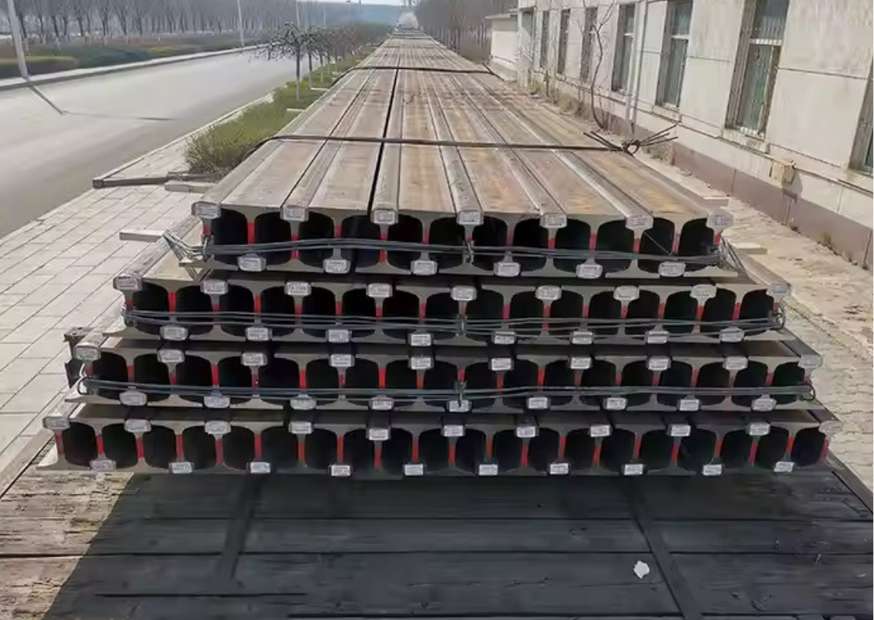
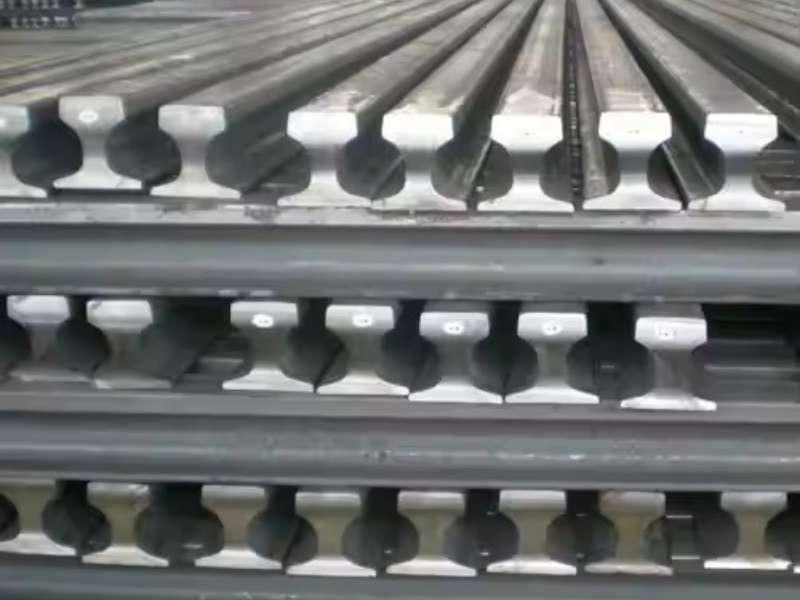
Industrial material handling requires durable and reliable overhead crane rail types. The top-running rail, mounted on runway beam top flanges, supports enormous loads and ensures a continuous overhead crane track. Many heavy-duty applications employ these rails because they provide excellent crane rail support and accommodate large capacity. Both versions benefit from accurate crane rail alignment for optimal performance and longevity.
Speciality rails for industrial needs are also popular. They use innovative crane rail welding processes for durability in harsh environments. For safety and performance, crane rail maintenance and routine inspections are addressed when building an effective crane rail system. To accommodate unusual layouts, certain industries use rails with flexible designs. Overhead crane rails are strong and versatile, whether they are used for lightweight applications or complex operations. Understanding your operation’s installation criteria and long-term performance goals ensures safe and efficient workflows when choosing a type.
Why Is Weight Important in Industrial Applications?
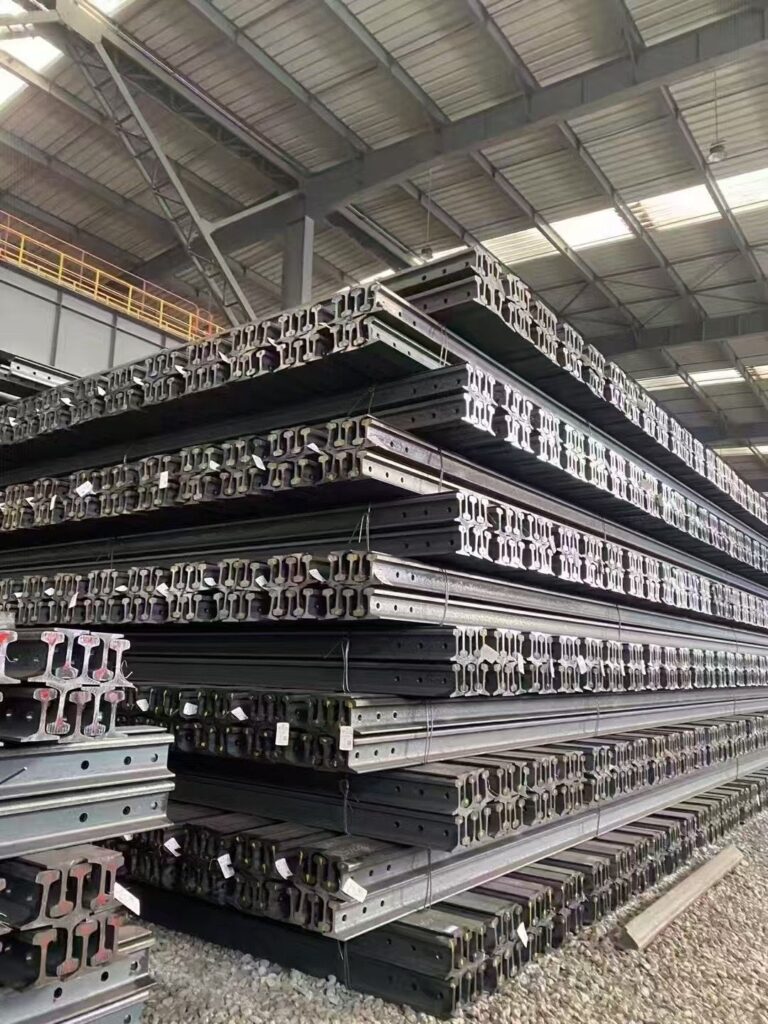
Weight affects an overhead crane rail’s ability to withstand industrial pressures while maintaining safety and efficiency. The crane rail system’s dynamic loads are supported by it. Heavy-duty crane rail installation uses heavier rails to support high-capacity weights and rigorous use. Optimized rail weights balance usefulness and cost in lighter-load systems. Crane rail maintenance ensures the rail’s performance matches its capacity and prevents wear from inappropriate weights.
In order to ensure perfect crane rail alignment and reliable crane rail support, the weight of the overhead crane rail is also important. Misalignment between rail weight and overhead crane track design can compromise safety and efficiency. Rail welding requires specific techniques to enable solid joining in tough industrial conditions, thus weight matters. Crane rail design must consider these elements to match rail weight to application needs and ensure durability. These factors ensure that overhead crane rails work well in manufacturing and heavy material handling.
How Do You Select the Right for Your Industry?
Selecting an overhead crane rail for industrial use entails assessing your operational needs. Heavy-duty applications require crane rail systems built for heavy loads and frequent use. Considering overhead crane track length, load capacity, and crane rail alignment helps find viable options. Crane rail support must also endure operational stresses and ensure smooth crane movement. High-demand businesses benefit from crane rail welding and other expert installation methods.
Matching crane rail selection with maintenance and safety needs is important. For industries with time-sensitive procedures, integrated overhead crane rails decrease downtime. Effective inspection and crane rail maintenance schedules extend their longevity. Specialized crane rail designs simplify and preserve reliability for lesser loads or space-constrained settings. Using high-strength steels helps the rail resist wear via extended use. Selecting a rail that fits environmental and operational circumstances ensures optimal performance and safety.
What Is the Lifespan of System?
Quality of materials, design, and crane rail maintenance methods affect the longevity of an overhead crane rail system. Strong materials like carbon or manganese steel let overhead crane rails endure severe weights and wear. The longevity of a system can also be increased by using effective crane rail installation methods including precise crane rail alignment and secure crane rail welding. Regular system check prevents minor difficulties from escalating.
The longevity of overhead crane rails depends on regular maintenance. Cleaning, re-alignment, and replacing worn parts reduce crane rail support stress. Environmental issues including severe temperatures and corrosion affect the crane rail system’s durability. Custom crane rail design incorporates application-specific elements to ensure rail system efficiency throughout time. Industries can maximize crane rail system lifespan and performance with excellent installation, regular maintenance, and operational conditions.
Quality Overhead Crane Rail from Xingrail
Xingrail is a reliable supplier of overhead crane rail solutions that fulfill industrial standards. The business specializes in producing robust crane rail systems that are designed for maximum performance and lifespan.
At Xingrail, we understand the critical role overhead crane rails play in industrial efficiency and safety. Our expertise in design, manufacturing, and installation ensures every system meets the highest standards. We deliver durable, precision-engineered solutions customized for diverse applications. Whether for heavy-duty operations or specialized requirements, our commitment to quality and innovation sets us apart. With Xingrail, you get reliable performance, extended system lifespan, and unmatched support tailored to your industry’s needs.
Overhead Crane Rail Types and Their Specific Uses in Industry
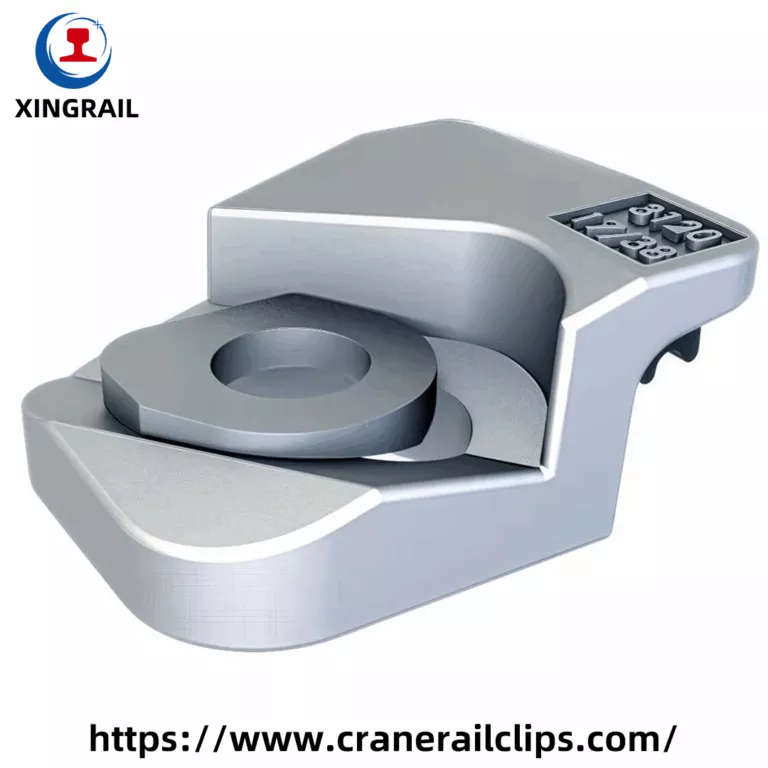
Overhead crane rails are essential for efficient material handling in industrial environments. These rails require robust fastening systems like crane rail clips to ensure stability, alignment, and durability under heavy loads. Below is a detailed table showcasing the specifications of crane rail clips designed for overhead crane rail systems:
|
Clip Type |
Material |
Clamping Force (kN) |
Fatigue Life (Cycles) |
Rail Compatibility |
Application |
|
Pandrol e2007 |
60Si2MnA |
9.0 – 11.0 |
≥ 3 Million |
QU70, QU80, QU100, QU120 |
High-speed and heavy-duty crane systems |
|
SKL 14 |
38Si7 |
10.0 – 12.0 |
≥ 5 Million |
UIC60, QU100 |
Heavy-duty and high-speed applications |
|
Weldable Clip |
Q235 Steel |
Adjustable |
Dependent on bolt tension |
QU70, QU80, QU100, QU120 |
Industrial tracks and crane rails |
For more detail on this subject, see crane rail welded fixing clips, rail fixing hardware for cranes, gantry rail clip solutions and port crane rail fixings.
Related Products and Internal Links
For more detailed information about specific crane rail clips, you can explore the following resources:
- Crane Rail Clips for Overhead Crane Runway Guide
- Welded Crane Rail Clips: Complete Guide for Gantry Cranes
- Welded Crane Rail Clips: Engineering Guide & Solutions
- Crane Rail Clips for Industrial Cranes Guide
FAQs About Crane Rail Clips for Overhead Crane Rails
- What are the main types of overhead crane rails?
Overhead crane rails include top-running rails and specialty rails designed for heavy-duty and complex industrial applications. - Why are crane rail clips important for overhead crane systems?
Crane rail clips secure the rail to its support structure, maintaining alignment, preventing movement, and absorbing vibrations to ensure system stability. - What materials are used in crane rail clips?
High-grade spring steel, such as 60Si2MnA or 38Si7, is commonly used for its elasticity and durability. - How do crane rail clips accommodate different rail profiles?
Crane rail clips are designed to match the specific dimensions and forces of the rail profile, ensuring proper clamping force and stability. - What is the lifespan of crane rail clips in overhead crane systems?
With proper maintenance, crane rail clips can last for decades, but they should be inspected regularly and replaced if they show signs of wear or corrosion.
Deep-Dive Technical Notes
Gantry Crane Rails and How to Get the Track Right
Rail Head Width Beats Rail Weight
Engineers often specify by kilograms per metre. That habit comes from railway work, where bending strength decides the answer. For a gantry crane on a continuously supported runway, the deciding factor is contact stress at the head. Wheel load divided by the effective bearing width gives you the number that predicts head crushing. A 74 kg/m A100 rail with a 100 mm head handles a heavier wheel than a 60 kg/m train rail with a 72 mm head, even though the weight difference looks small. A quick sanity check many designers use: effective bearing width equals rail head width plus twice the head depth, and the wheel diameter should be at least 20 to 25 times the head width for heavy service. If the wheel is too small for the rail, the contact patch shrinks and the head flows sideways over time. The DIN 536 standard sets the geometry for the A-series and remains the reference point for most port and heavy industry projects.
Common Rail Profiles for Gantry Cranes
Three families cover most projects worldwide. DIN 536 A-series (Europe and global ports) The most widely used crane rail family. Sizes run from A45 up to A150. Head width matches the number, so A100 has a 100 mm head.
| Profile | Head width | Height | Base width | Weight |
| A55 | 55 mm | 65 mm | 150 mm | 31.8 kg/m |
| A65 | 65 mm | 75 mm | 175 mm | 43.1 kg/m |
| A75 | 75 mm | 85 mm | 175 mm | 56.2 kg/m |
| A100 | 100 mm | 95 mm | 200 mm | 74.3 kg/m |
| A120 | 120 mm | 105 mm | 220 mm | 118.0 kg/m |
| A150 | 150 mm | 150 mm | 220 mm | 150.1 kg/m |
QU series (China GB/T 53) QU70, QU80, QU100 and QU120. Taller and narrower than DIN profiles, with head widths from 70 mm to 120 mm. QU100 and QU120 are common on Chinese-built port and steel mill cranes. CR / ASCE series (North America) CR104, CR135 and CR175, quoted in pounds per yard. Heavy, wide-headed, and matched to AISE and CMAA runway practice. Some quay cranes also run on standard track rail such as 60E1 (UIC60) or 115RE, especially where the crane rail shares a corridor with rail traffic. That works only when wheel loads stay moderate. Full tables for every profile sit in the rail weight complete guide, and a side-by-side comparison lives on the crane rail sizes page.
Overhead Crane Rails: A Comprehensive Guide
Overhead Crane Rail Maintenance
Maintaining overhead crane rails is necessary for ensuring their longevity and optimal performance. Regular inspections are the foundation of effective maintenance. Technicians check for wear, misalignment, and damage along the rails. Cleaning the rails to remove debris and lubricating critical components help prevent operational disruptions. Common maintenance practices include tightening loose rail clips and replacing worn-out overhead crane rail accessories. Technicians also inspect the rail joints and welds to ensure structural integrity. Addressing minor issues promptly prevents them from escalating into costly repairs or replacements. Identifying and resolving common issues, such as rail misalignment or uneven wear, is important. Misalignment often results from improper installation or heavy usage. Technicians use alignment tools to correct these issues.