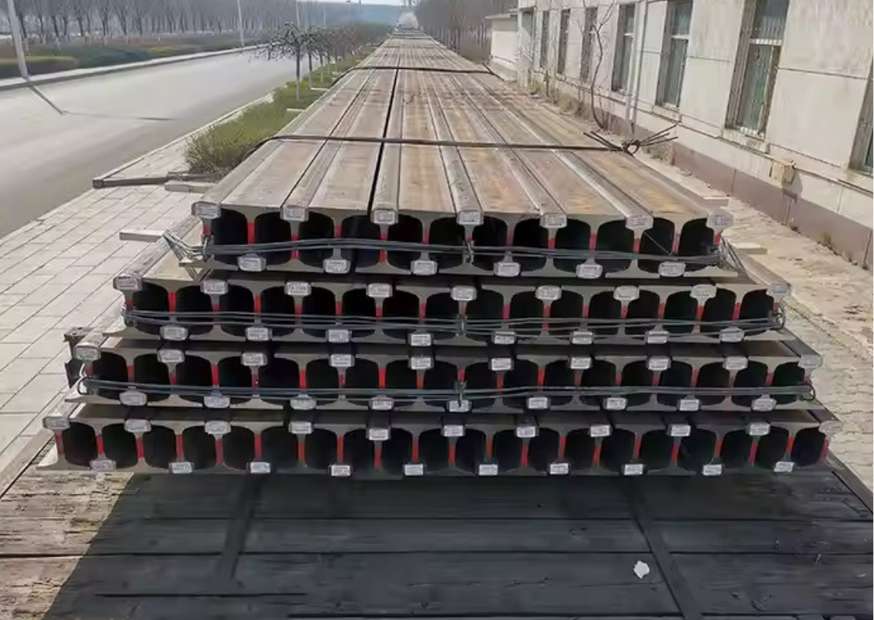
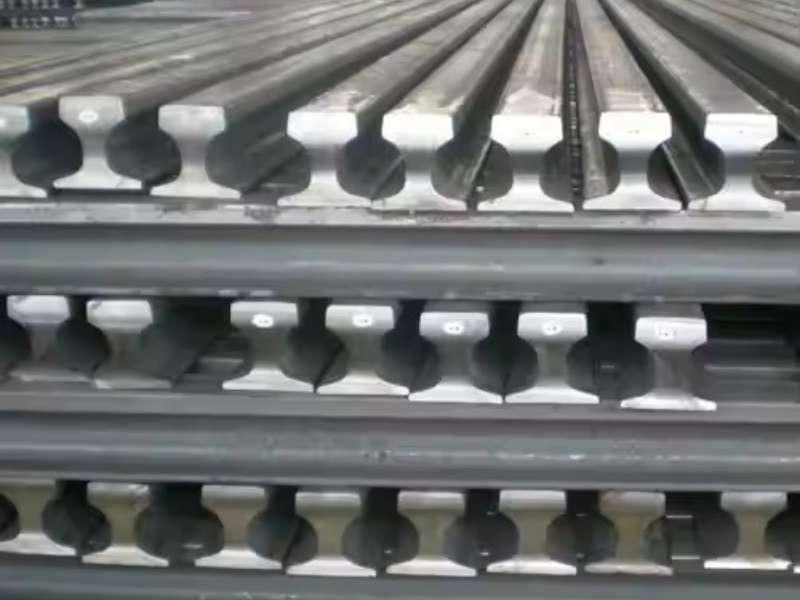
Selecting the appropriate crane rail is fundamental for the safety and efficiency of overhead crane systems, port operations, and industrial gantries. A precise understanding of crane rail dimensions is essential for engineers and project managers to ensure the runway can support immense, repetitive loads while maintaining stability and alignment. Unlike standard railway tracks, crane rails feature a much stockier profile, characterized by a wider and thicker head, a robust web, and a broad base. This specialized design distributes the concentrated wheel loads from heavy machinery, preventing premature wear and structural failure. This guide provides detailed specification tables and information on the various standards governing crane rails and the clips used to fasten them.

Crane Rail Dimensions
Several international standards dictate the specific profiles and material properties of crane rails. These standards ensure interchangeability and consistent quality for industrial applications worldwide. The most prominent standards include the German DIN 536, the American Society for Testing and Materials (ASTM) A759, and various Chinese (YB/T) and Japanese (JIS) specifications. Each standard offers a range of profiles to suit different load capacities and operational demands. A detailed chart of crane rail dimensions is crucial for proper system design.
DIN 536 Crane Rail Dimensions
The DIN 536 standard from Germany is one of the most widely adopted for crane rails globally. It specifies “A” series profiles, which are flat-bottomed rails with a characteristic wide head and thick web. These rails are known for their excellent stability and load-bearing capacity.
|
Profile |
Height (mm) |
Base Width (mm) |
Head Width (mm) |
Web Thickness (mm) |
Nominal Weight (kg/m) |
|
A45 |
55 |
125 |
45 |
24 |
22.10 |
|
A55 |
65 |
150 |
55 |
31 |
31.80 |
|
A65 |
75 |
175 |
65 |
38 |
43.10 |
|
A75 |
85 |
200 |
75 |
45 |
56.20 |
|
A100 |
95 |
200 |
100 |
60 |
74.30 |
|
A120 |
105 |
220 |
120 |
72 |
100.00 |
|
A150 |
150 |
220 |
150 |
80 |
150.30 |
North American Crane Rails (ASTM A759)
In North America, crane rails are often specified by their weight in pounds per yard (lbs/yd). These profiles are designed to withstand the rigorous demands of steel mills, shipyards, and other heavy industrial environments.
|
Profile (lbs/yd) |
Height (mm) |
Base Width (mm) |
Head Width (mm) |
Web Thickness (mm) |
Nominal Weight (kg/m) |
|
104 CR |
127.0 |
127.0 |
63.5 |
25.4 |
51.61 |
|
105 CR |
131.8 |
131.8 |
65.1 |
23.8 |
52.09 |
|
135 CR |
146.1 |
131.8 |
76.2 |
31.8 |
66.90 |
|
171 CR |
152.4 |
152.4 |
101.6 |
31.8 |
84.88 |
|
175 CR |
152.4 |
152.4 |
102.4 |
38.1 |
86.84 |
Chinese Crane Rails (YB/T 5055-2014)
The Chinese “QU” series of crane rails are used extensively throughout Asia and in many international projects. They are designated by their head width in millimeters (e.g., QU70 has a 70 mm wide head). These rails are specifically designed for gantry cranes and other heavy-duty applications.
|
Profile |
Height (mm) |
Base Width (mm) |
Head Width (mm) |
Web Thickness (mm) |
Nominal Weight (kg/m) |
|
QU70 |
120 |
120 |
70 |
28 |
52.80 |
|
QU80 |
130 |
130 |
80 |
32 |
63.69 |
|
QU100 |
150 |
150 |
100 |
38 |
88.96 |
|
QU120 |
170 |
170 |
120 |
44 |
118.10 |
Specifications for Crane Rail Clips
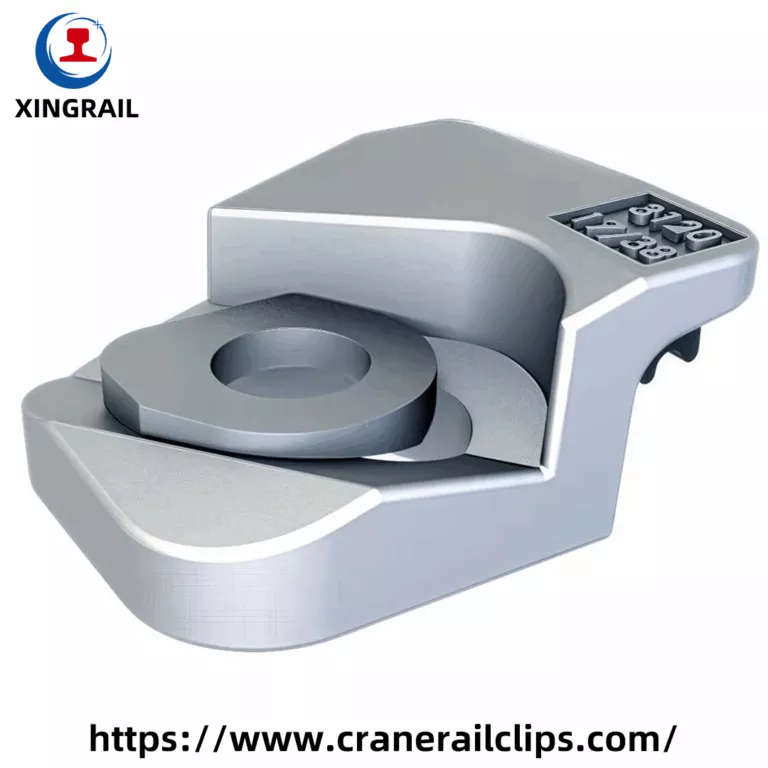
Crane rail clips are specialized fastening components designed to secure the rail to its support structure, which can be a steel girder or a concrete foundation. Unlike standard railway fasteners, crane rail clips must allow for slight controlled movement of the rail to accommodate thermal expansion and contraction, while firmly preventing excessive lateral and vertical displacement. This is achieved through either bolted or welded clip designs.
The primary functions of crane rail clips are:
- To maintain rail alignment and gauge.
- To transfer lateral loads from the crane wheels to the underlying structure.
- To prevent rail uplift and rollover.
- To provide a secure clamping force without over-stressing the rail.
Types of Crane Rail Clips
Crane rail clips can be broadly categorized into two main types: bolted clips and welded clips.
- Bolted Rail Clips: These clips are fixed to the support structure using bolts, typically J-bolts or T-bolts. They often feature an elastomeric “nose” that presses against the rail foot, providing a consistent clamping force. This design facilitates easy adjustment, inspection, and replacement. Bolted clips are highly versatile and widely used in many crane runway systems.
- Welded Rail Clips: As the name suggests, the base of these clips is welded directly to the steel support girder. This creates a very strong and secure connection. A separate top component is then bolted to the welded base to clamp the rail. Welded clips offer excellent resistance to high lateral loads but require specialized labor for installation and are more permanent than bolted alternatives.
Materials and Properties of Crane Rail Clips
To withstand the immense forces involved, crane rail clips are manufactured from high-strength materials.
- Clip Body: The main body of the clip is typically made from ductile cast iron or forged steel. Common materials include Spheroidal Graphite (SG) iron (e.g., GGG-50) or high-grade carbon steel (e.g., S355JR). These materials offer a good balance of strength, ductility, and fatigue resistance.
- Elastomeric Components: The rubber nose or pad used in many clips is made from synthetic elastomers like chloroprene or a specialized rubber compound. This component must resist oil, ozone, and wear while providing consistent pressure on the rail.
- Bolts and Hardware: Bolts are usually high-tensile steel, Grade 8.8 or 10.9, to ensure they can be torqued to the required specification without yielding. Surface treatments like hot-dip galvanizing or zinc plating are common to protect against corrosion.
Common Crane Rail Clip Specifications
The selection of a rail clip depends heavily on the rail profile, the expected wheel loads, and the design of the support structure. Below are typical specifications for common clip series.
Gantrex Welded Clip Series
Gantrex is a leading manufacturer, and their welded clips are a benchmark in the industry.
|
Clip Model |
Max. Lateral Load (kN) |
Bolt Size |
Vertical Adjustment (mm) |
Suitable Rail Profiles |
|
Gantrex 9220 |
200 |
M24 |
15 |
A120, A150, 175CR |
|
Gantrex 7124 |
120 |
M24 |
10 |
A100, 135CR |
|
Gantrex 4120 |
70 |
M20 |
6 |
A65, A75, 105CR |
Bolted Clip Specifications
Bolted clips are available in a wide range of designs, often customized for specific rail profiles.
|
Feature |
Specification |
|
Clip Material |
Forged Steel (Q345B) or Ductile Iron (QT500-7) |
|
Bolt Grade |
Grade 8.8 or 10.9 |
|
Bolt Size |
M20, M24 |
|
Clamping Force |
Varies by design, typically 25-50 kN |
|
Lateral Adjustment |
10-20 mm |
|
Surface Finish |
Black Oxide, Hot-Dip Galvanized, Dacromet |
Choosing the correct clip and understanding its specifications is just as important as referencing the crane rail dimensions. An improperly secured rail can lead to misalignment, excessive wear on both the rail and crane wheels, and ultimately, a catastrophic system failure. Proper installation, including applying the correct bolt torque and ensuring full contact between the clip and rail foot, is crucial for long-term performance and safety.
Recommended Products for Crane Rail Systems
Selecting the correct rail fastening system is just as crucial as choosing the right crane rail profile. The precise dimensions of a crane rail—particularly the base width and flange thickness—determine exactly which rail clip you need. When you match the clip to the exact dimensions of your track, you guarantee a perfect fit, maximize the clamping force, and ensure the long-term stability of your crane runway.
Using an improperly sized clip can lead to insufficient pressure, allowing the rail to shift under the massive lateral and vertical loads generated by overhead cranes. To help you build a secure industrial runway, we have matched our heavy-duty crane rail clips to the most common DIN, ASTM, and Chinese crane rail dimensions.
Review the table below to find the ideal fastening solution based on your specific crane rail measurements.
|
Rail Type |
Base Width |
Height |
Weight |
Recommended Clips |
|
DIN 536 A100 |
200.0 mm |
95.0 mm |
74.3 kg/m |
7 Series Welded Rail Clips |
|
QU80 Rail |
130.0 mm |
130.0 mm |
63.7 kg/m |
9 Series Welded Rail Clips |
|
135 CR Rail |
131.8 mm |
146.1 mm |
66.9 kg/m |
32 Series Bolted Rail Clips |
|
175 CR Rail |
152.4 mm |
152.4 mm |
86.8 kg/m |
9 Series Welded Rail Clips |
Frequently Asked Questions (FAQs)
- Why are 7 Series Welded Clips recommended for DIN A100 crane rails?
The DIN A100 rail features a very broad 200 mm base and a squat profile designed for intense, slow-moving gantry loads. Securing such a wide base requires a clip engineered specifically for massive horizontal forces. The 7 Series Welded Clips feature a robust base that welds directly to the supporting steel girder. This creates an unyielding bond that easily spans the wide rail foot, preventing the rail from shifting laterally during heavy lifting operations. - How does the 152.4 mm base width of a 175 CR rail dictate the use of 9 Series clips?
The 175 CR is an exceptionally heavy North American crane rail used in demanding environments like steel mills and shipyards. Its wide 152.4 mm base and immense weight require maximum hold. The 9 Series Welded Clips are heavy-duty fasteners designed to match this broad geometry. They provide extreme horizontal resistance and feature an elastomeric nose that applies consistent downward pressure, accommodating the rail’s thermal expansion while keeping the wide base locked in place. - Are bolted solutions like the 32 Series suitable for North American 135 CR rails?
Yes, the 32 Series Bolted Rail Clips are an excellent choice for the 135 CR rail. With a base width of 131.8 mm, the 135 CR fits perfectly within the design tolerances of the 32 Series. These forged steel bolted clips provide a high clamping force while offering the flexibility of easy lateral adjustments. This makes them ideal for crane runways where maintenance teams need to realign the track periodically to correct gauge widening. - What makes the 9 Series Welded Clips ideal for QU80 crane rails?
The QU80 rail is a standard Chinese profile widely used in international gantry crane projects. It has a symmetrical 130 mm base and height. Because overhead cranes subject the track to harsh, repetitive lateral thrusts, you need a fastener that will not loosen over time. The welded base of the 9 Series eliminates the risk of bolts backing out under vibration. It creates a permanent, maintenance-free connection that safely transfers the crane’s wheel loads into the underlying structure. - Why is it essential to check the rail foot thickness before installing these clips?
While base width determines if the clip housing will fit, the thickness of the rail foot dictates the required toe height of the clip. If a crane rail’s foot is thicker than the clip’s design tolerance, tightening the clip will overstress the metal and cause it to yield or snap. If the foot is too thin, the rubber nose will not make full contact, resulting in zero clamping force. Our recommended clip series account for the exact height and thickness dimensions of these specific crane rails to guarantee a safe, lasting grip.