Industrial engineers, crane manufacturers, and overhead lifting facility managers must understand crane rail measurements. Crane rail dimensions affect load capacity, safety margins, and operating efficiency across industries. From millimeter rail size charts to crane rail specs, these measures dictate structural requirements and maintenance schedules. This thorough book discusses crane rail size, standard size rail weight tables, and crane rail profiles used in manufacturing, construction, and logistics globally.
What Are the Standard Crane Rail Dimensions?
Most crane rail profiles weigh 30 to 175 pounds per yard. Crane rail specifications also include the A75, A100, A120, and A150 profiles for specified load capacities and operations. This rail size chart in mm displays these profiles with specific measurements: A75 and A150 rails are 152mm tall with 150mm and 171mm bases, respectively. The typical size rail weight chart shows that lighter crane rails sustain loads up to 15 tons while heavier profiles can support 100 tons. Engineers choose crane rail sizes based on maximum wheel loads, crane capacity, and operational frequency for optimal performance and safety.
Industries use varied crane rail profiles for operating and load needs. industrial facilities use A100 or A120 rails for moderate-capacity overhead cranes, whereas steel mills and heavy industrial operations use A150 or bespoke profiles for extreme-duty applications. The link between crane rail size and load capacity follows stringent technical calculations, and improper rail dimensions might cause premature wear, structural failure, or safety problems. When choosing crane infrastructure, accurate railroad rail size tables are needed. The crane rail specification procedure also analyzes span length, runway beam design, and environmental conditions to ensure the chosen rail dimensions offer enough structural support during its lifespan.
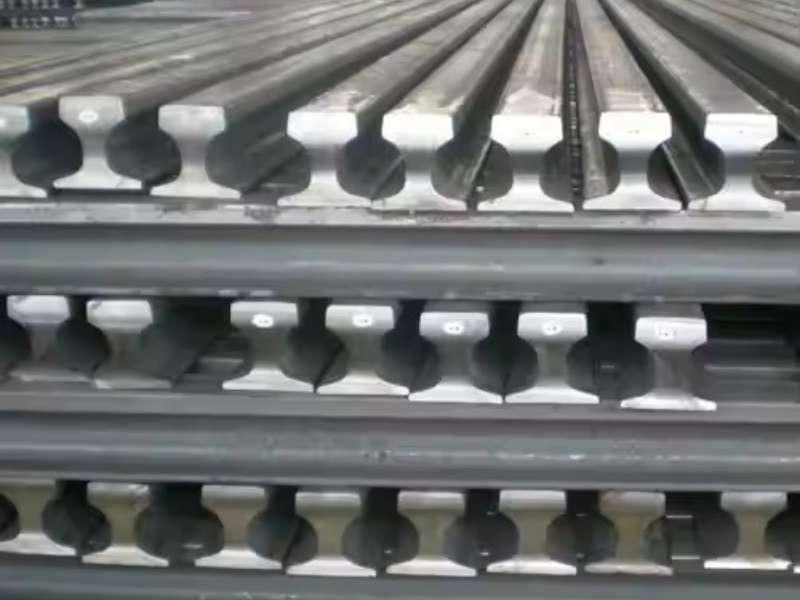
For flush, embedded runways, the grooved rail profile cuts a flangeway into the head so the running surface sits level with the floor.

Crane Rail Sizes and Their Applications in Crane Systems
Choosing the right crane rail size is important for its intended use. Lighter rail profiles like A45 or A55 on a normal size rail weight chart are suitable for smaller overhead cranes in workshops or light industries. Under 20 tons can be loaded on these rails. Shipyards, steel industries, and container terminals need larger rails. In these conditions, engineers specify sturdy profiles like A120 or A150. Gantry cranes that hoist hundreds of tons require stronger and more stable sections to handle tremendous wheel loads. Crane rail specification depends on maximum capacity and operational intensity.
Engineers consider more than load while determining crane rail size. Crane duty cycle, travel speed, and runway support structure affect the decision. Engineering calculations require precise measurements from a rail size chart, especially one in mm. Crane rail size impacts system longevity and maintenance. Undersized rails wear fast and present safety risks, while big rails increase material costs.
How Do Crane Rail Sizes Impact Performance?
Crane rail dimensions affect crane performance, safety, and efficiency in industrial applications. Larger crane rail profiles provide better strength and stability for heavy-duty operations. A150 rails can carry far larger wheel loads than A75 profiles. Proper crane rail specification optimizes wheel-rail contact. Poor rail sizing causes premature failure, high maintenance costs, and safety problems, hence engineers use standard size rail weight tables to match rail dimensions with crane capacities.
Rail dimensions affect operational performance, especially load capacity and smoothness. Railroad rail size charts show that heavier crane rails resist deflection under dynamic stress. Relevant crane rail dimensions reduce vibration and noise during operation. Automotive manufacturing plants use medium-duty rails, whereas steel mills and shipyards use heavy-duty ones. To pick the best rail size chart specifications for high-performance operation, crane capacity, duty cycle, and environmental conditions are considered.
How Are ASCE Rail Dimensions Different from Others?
ASCE crane rail measurements varies from other rail standards due to their design technique and dimensional criteria. ASCE rail profiles differ geometrically from European A-series or DIN specifications in standard size rail weight tables. Comprehensive rail size charts show that ASCE rails have a broader head-to-base ratio and various web thickness requirements. In addition, ASCE crane rail regulations use inch-based measures rather than metric systems. Crane rail size is determined by ASCE load distribution calculations and safety criteria for North American industry. Thus, engineers must carefully check railroad rail size charts to guarantee ASCE rails and crane systems with different standards are compatible.
Performance and load-bearing capacities of ASCE crane rails varies from foreign equivalents due to structural variances. In thorough rail size comparisons across standards, ASCE rails have higher weight-per-foot ratios for equal load capabilities. Deflection resistance and structural performance are further affected by ASCE and other crane rail specifications’ different moment of inertia and section modulus values. Due of these dimensional differences, ASCE-compliant industries need specific mounting hardware and installation techniques. When switching between ASCE and international standards, crane rail size selection becomes more complicated.
For safe and efficient operations, knowing crane rail dimensions is essential. We covered rail sizing basics from standard profiles to ASCE specs. Proper rail selection affects crane performance and longevity.
Choosing crane rail dimensions is complicated, and Xingrail understands. Your load requirements, duty cycles, and operational conditions are analyzed by our engineers. We calculate wheel loads and structural support precisely. This optimizes rail performance for your application.
We provide detailed rail size charts and specifications. Our team matches rail dimensions to crane capacity. We accept metric and imperial measurements. A-series profiles, ASCE standards, and custom applications are our specialties.
Xingrail provides proven manufacturing, steel mill, and container terminal solutions. Eliminating rail selection guesswork. For safe and efficient crane rail dimensions, choose Xingrail. Get crane rail specifications advice from us today.
For more detail on this subject, see rail clips installation, types of rail clamps for cranes, crane rail clip specifications and welded and bolted rail clamps for cranes.
Deep-Dive Technical Notes
Crane Rail Types Features And Benefits
What Are the Different Types of Crane Rails?
Crane rail types serve diverse industrial needs. ASCE rails, developed by the American Society of Civil Engineers, are widely used for their standardized design and compatibility with heavy-duty operations. QU rails, known for their quenched and tempered properties, provide exceptional strength and durability. DIN rails, ensure precision and reliability in demanding industrial setups. Similarly, MRS rails cater specifically to mining operations. UIC rails, standardized by the International Union of Railways, support global rail systems with their consistent quality and adaptability. P-type rails and KP rails are designed for specialized applications. JIS rails, are recognized for their precision and efficiency in various industries. Square rails, with their simple yet effective design, are often used in applications requiring straightforward installation and maintenance.
Crane Rail Profiles
Heavy-Duty Crane Rail Profiles for Demanding Operations
For the most demanding environments, heavy-duty crane rail profiles are required. These profiles are designed to withstand extreme loads, high frequencies of use, and harsh operating conditions found in ports, steel production, and bulk material handling facilities. Profiles such as the A150 from the DIN standard and the CR175 from the ASTM standard are prime examples. These heavy-duty crane rail profiles feature a very large head width, a thick web, and a substantial base. This robust construction provides maximum stability and durability. The use of high-strength steel with specific chemical compositions and hardness properties further enhances their performance. These rails can handle wheel loads exceeding 100 tons. The investment in heavy-duty profiles pays off through increased operational uptime, enhanced safety, and reduced need for frequent rail replacement.
Comprehensive Guide To Selecting the Right Crane Rail Standard
Ensuring crane rail compliance
Compliance with crane rail specifications is multifaceted. Start using supplies from trusted vendors who can guarantee crane rail specifications. The crane rail installation method requires qualified technicians. These specialists should follow welding and alignment rules. Routine crane rail inspections are necessary after installation. Wear, misalignment, and fatigue are detected before major failures by regular inspections. Proactive maintenance with full documentation is the best strategy to maintain safety and operational integrity and gives a credible record of compliance.
Alignment and welding technique importance
Quality crane rail installation is as important as material selection. Crane rail standards include welding and alignment for system integrity. For instance, crane rail dimensions must be exact across the runway to avoid wheel flange wear and tracking. Specific welding rules provide strong, flawless rail junctions. Stress areas from poor alignment or welding can cause rail cracks and derailment. For safe crane operation and system durability, follow these installation standards.