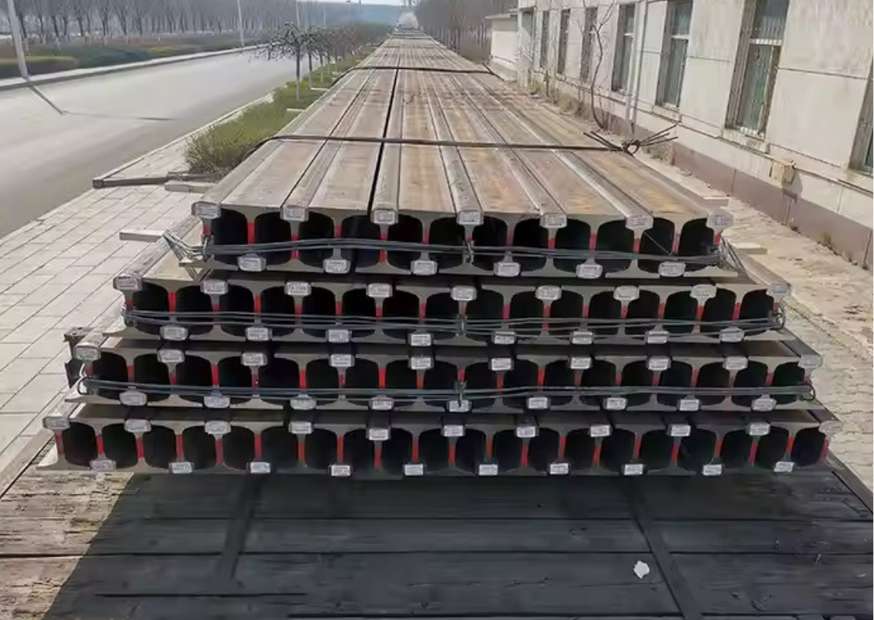
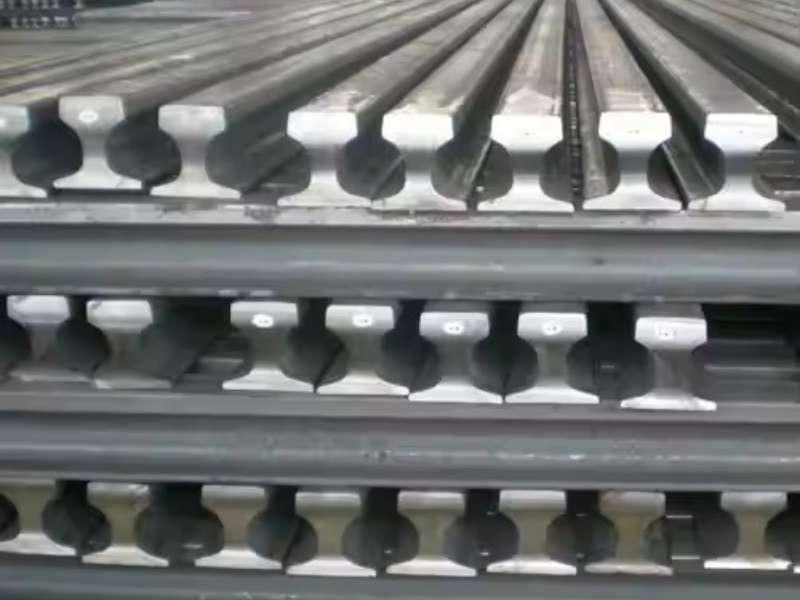
Understanding rail infrastructure requires deep knowledge of specifications, specifically regarding rail weight by type and size. Whether you are an engineer planning a heavy-haul freight line or a procurement specialist sourcing materials for a light industrial track. This guide breaks down the complexities of rail classifications.
Rail Weight Chart by Type
Rail classifications vary significantly based on their intended application. Standards organizations like the American Society of Civil Engineers (ASCE) and the American Railway Engineering and Maintenance-of-Way Association (AREMA) have established specific profiles.
The following table provides a clear rail weight chart by type.
|
Rail Type |
Section Name |
Weight (lbs/yd) |
Height (inches) |
Base Width (inches) |
Head Width (inches) |
|
Light Rail |
12 lb ASCE |
12.00 |
2.00 |
2.00 |
1.00 |
|
Light Rail |
30 lb ASCE |
30.00 |
3.125 |
3.125 |
1.6875 |
|
Industrial |
60 lb ASCE |
60.00 |
4.25 |
4.25 |
2.375 |
|
Mainline |
100 lb RE |
101.50 |
6.00 |
5.375 |
2.6875 |
|
Heavy Haul |
136 lb RE |
136.20 |
7.3125 |
6.00 |
2.9375 |
|
Heavy Haul |
141 lb AB |
141.00 |
7.3125 |
6.00 |
3.00 |
Selecting the correct rail type impacts safety and longevity. Heavy-haul lines require robust profiles like the 136 lb RE to withstand immense pressure, while a 30 lb ASCE rail suffices for temporary mining carts.
Rail Weight Per Yard by Size
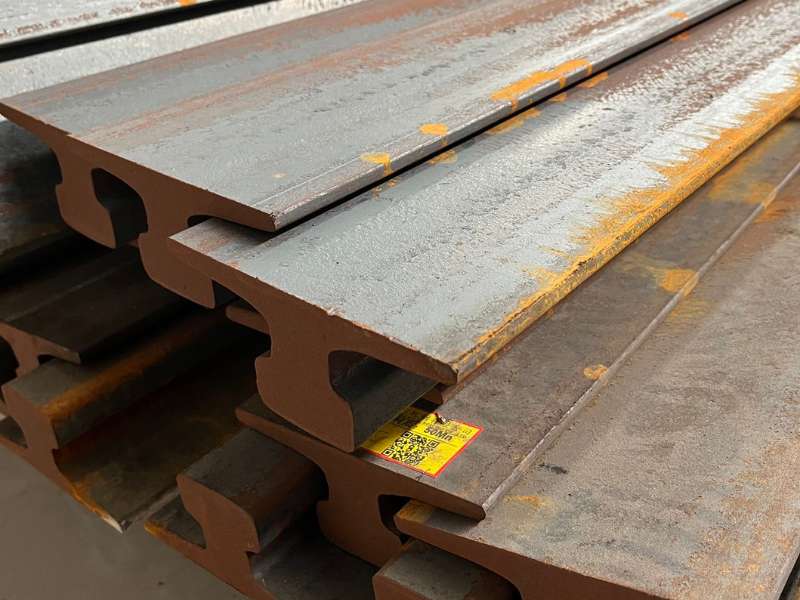
In North America, the standard unit of measurement for rail is pounds per yard. This metric directly correlates to the strength of the track section. When you see a reference to “136 lb rail,” it means a single yard of that rail weighs approximately 136 pounds.
Understanding rail weight per yard by size is necessary for determining the structural integrity of a railway. Heavier rails generally possess a taller cross-section and a wider base. This geometry distributes the load of the train wheels more effectively across the ties and ballast.
For example:
- 85 lb Rail: Common in older regional lines or light freight. It offers moderate strength but limits axle loads.
- 115 lb Rail: A standard size for many transit systems and regional freight lines. It balances cost with durability.
- 136 lb & 141 lb Rail: These are the workhorses of modern Class I railroads. They handle axle loads exceeding 32 tons.
Size dictates durability. A heavier rail resists deformation and wear much better than a lighter counterpart.
ASCE Rail Weight Specifications
The American Society of Civil Engineers (ASCE) developed some of the earliest standards for rail sections. While many heavier ASCE sections have been superseded by AREMA standards for mainline use, ASCE rail weight specifications remain the gold standard for light rail and industrial applications.
ASCE rails are typically lighter. You often find these in crane runways.
Detailed ASCE Specifications Table
|
Rail Section |
Weight (lbs/yd) |
Height (in) |
Base (in) |
Head (in) |
Web (in) |
|
20 lb ASCE |
20.0 |
2.625 |
2.625 |
1.3125 |
0.25 |
|
40 lb ASCE |
40.0 |
3.50 |
3.50 |
1.875 |
0.3125 |
|
60 lb ASCE |
60.0 |
4.25 |
4.25 |
2.375 |
0.375 |
|
80 lb ASCE |
80.0 |
5.00 |
5.00 |
2.50 |
0.44 |
|
85 lb ASCE |
85.0 |
5.1875 |
5.1875 |
2.5625 |
0.44 |
Engineers favor these profiles for their versatility. A 40 lb ASCE rail, for instance, is perfect for overhead crane systems where the load is significant but not comparable to a freight train.
TEE Rail Weight Dimensions
TEE rail refers to the standard “T” shape of the rail cross-section. This design optimizes the strength-to-weight ratio. Analyzing TEE rail weight dimensions reveals why this shape became the global standard.
The flat bottom base provides stability, while the narrow web reduces weight without sacrificing vertical strength. The head is thick to withstand the wear of steel wheels.
TEE Rail Dimensions and Weights
|
TEE Section |
Weight (lbs/yd) |
Area (sq in) |
Moment of Inertia (in⁴) |
Section Modulus (in³) |
|
115 lb RE |
114.7 |
11.25 |
65.6 |
18.0 |
|
132 lb RE |
132.1 |
12.95 |
88.2 |
22.4 |
|
136 lb RE |
136.2 |
13.35 |
94.9 |
23.9 |
|
175 lb CR |
175.0 |
17.14 |
132.0 |
32.0 |
Heavy-duty environments utilize these rails extensively. The 175 lb CR (Crane Rail), for example, features an extra-wide head to support massive gantry cranes in ports and steel mills.
Rail Weight Standards Comparison
Rail networks are global, but standards vary by region. A rail weight standards comparison highlights the differences between American, European, and Asian specifications.
In the USA, we use pounds per yard. In Europe and China, the standard is kilograms per meter (kg/m). This difference can cause confusion during international procurement.
Regional Comparison Table
|
Region |
Standard |
Unit |
Common Heavy Rail |
Approx Conversion |
|
North America |
AREMA |
lbs/yd |
136 lb RE |
67.4 kg/m |
|
Europe |
EN 13674 |
kg/m |
60 E1 (UIC 60) |
121 lb/yd |
|
China |
GB 2585 |
kg/m |
60 kg |
121 lb/yd |
|
Russia |
GOST |
kg/m |
R65 |
131 lb/yd |
These standards affect compatibility. You cannot easily mix a UIC 60 rail with a 136 lb RE rail without specialized compromise joints, as the profiles differ in height and head curvature.
Rail Weight and Axle Load Capacity
The primary factor driving the choice of rail weight by type and size is the axle load. Heavier trains exert tremendous force on the track structure. If the rail is too light, it will bend, crack, or fail prematurely.
The relationship between rail weight and axle load capacity is linear. Heavier rails support higher axle loads.
- Under 60 lb Rail: Suitable for light loads, typically under 10 tons per axle. Used for mining carts or light cranes.
- 85 lb – 100 lb Rail: Can support axle loads around 20-25 tons. Suitable for light freight and transit.
- 115 lb – 141 lb Rail: Designed for heavy axle loads of 32.5 tons (standard US freight) to 40 tons (heavy haul mining).
Matching rail weight to the expected load ensures safety. Running a modern freight car on an old 80 lb rail invites derailment risks and rapid track degradation.
For more detail on this subject, see rail size chart and rail weight per metre.
Rail Weight by Country and Type
Different nations have standardized on specific rail weights to suit their unique logistical needs. Examining rail weight by country and type offers insight into global railway infrastructure.
- USA: The freight network is dominated by 136 lb and 141 lb rails to support massive double-stack trains.
- Germany: The high-speed ICE network utilizes 60 E2 profiles (roughly 60 kg/m) which prioritize precision and smoothness over raw bulk.
- Australia: The heavy-haul iron ore lines in the Pilbara region use some of the heaviest rails in the world, often exceeding 68 kg/m (approx. 137+ lbs/yd) to handle extreme tonnage.
- India: The vast Indian Railways network relies heavily on 60 kg and 52 kg rails for its broad gauge lines.
Heavy-Duty Rail Weight Analysis
For applications demanding extreme durability, we perform a heavy-duty rail weight analysis. These rails go beyond standard freight requirements. They serve in ports, steel mills, and power plants.
Heavy-duty rails, such as the 171 lb or 175 lb crane rails, differ from standard transport rails. They feature a much thicker web and a wider base. This design absorbs the shock loading from crane wheels lifting tons of cargo.
Key Heavy-Duty Types:
- CR 104: Weighs 104 lbs/yd but has a squat profile for stability.
- CR 175: The titan of crane rails.
The benefit of these heavy sections is resistance to crushing. Standard transport rails might experience head flow (deformation of the metal) under the concentrated point loads of a crane wheel, whereas CR sections are built to resist this specific stress.
Rail Weight and Size Calculator
Engineers often need to calculate the total weight of a rail shipment or verify the weight of an unknown section. A rail weight and size calculator simplifies this process.
You can calculate rail weight manually if you know the cross-sectional area and the density of steel (typically 0.2833 lbs/in³).
Formula:
Weight (lbs/yd) = Area (in²) × 10.2
Note: The factor 10.2 is derived from the density of steel and the conversion from inches to yards.
Step-by-Step Calculation Guide:
- Measure Dimensions: Measure height, base, and head width to identify the rail section.
- Find the Area: Refer to a standard table to find the cross-sectional area for that profile.
- Apply Formula: Multiply the area by 10.2.
For example, a rail with an area of 10 square inches would weigh approximately 102 lbs per yard.
Industrial Rail Weight Specifications
The industrial settings utilize a mix of ASCE and specialized rail profiles. </span>Industrial rail weight specifications focus on compactness and ease of installation.
Facilities like warehouses and factories often embed rails into concrete floors. This requires rails that are not excessively tall.
Common Industrial Rails:
- 12 lb to 20 lb: Used for sliding doors and automated storage retrieval systems.
- 40 lb to 60 lb: Used for transfer cars and light manufacturing lines.
The specifications for these rails prioritize the base width. A wider base allows for easier mounting directly to floor surfaces or light steel beams without complex tie plates.
Rail Weight Calculator
For precise calculations regarding specific rail clips and assemblies, digital tools are invaluable. You can access a specialized tool to assist with this.
You can use below rail weight calculator. This tool allows you to input specific parameters or select standard rail types to instantly retrieve weight data.
Rail Weight Calculator
Common Questions and Answers
- What is the standard rail weight per yard?
Rail weight varies by application, but common sizes for main lines are 115 lb, 132 lb, and 136 lb per yard. Light industrial rails often weigh between 12 lb and 60 lb per yard. - How do you calculate rail weight by size?
You can calculate rail weight by multiplying the cross-sectional area of the rail (in square inches) by 10.2. - What are ASCE rail weight specifications?
ASCE rail specifications cover lighter rail sections ranging from 12 lb/yd to 85 lb/yd. These specs define the height, base width, and head geometry for rails used primarily in industrial and light haulage applications. - Why is rail weight important?
Rail weight determines the track’s strength, stiffness, and axle load capacity. Heavier rails can support heavier trains and resist wear better. - What is the heaviest rail weight used?
In standard railway operations, 141 lb and 155 lb rails are among the heaviest. However, specialized crane rails can weigh up to 175 lbs per yard to support massive industrial loads.
Recommended Products Based on Rail Weight and Size
Selecting the right rail weight and size is critical for supporting your expected axle loads, but your track is only as strong as its fastening system. The weight and base dimensions of your rail directly dictate which rail clip series you must use.
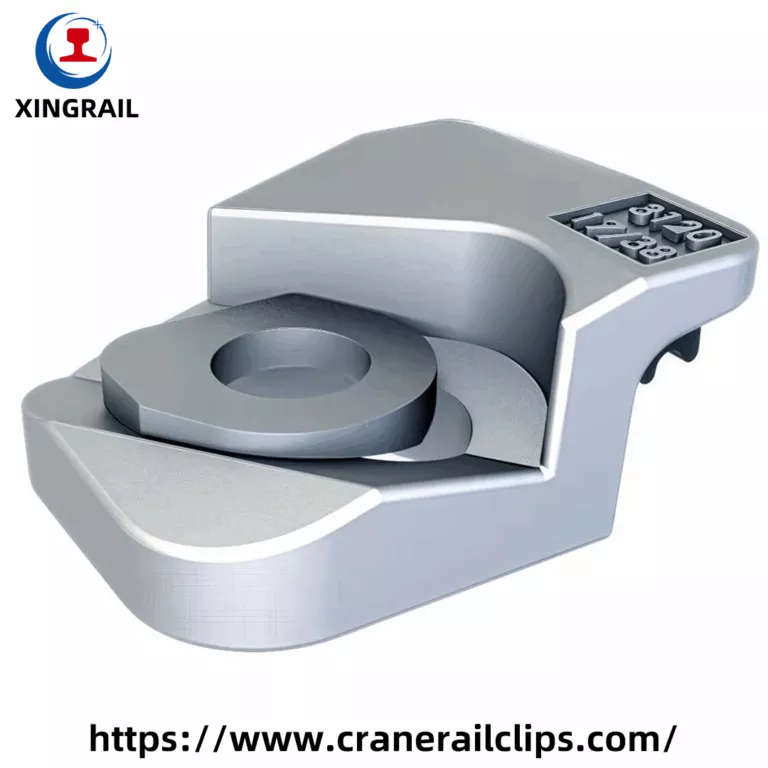
Heavier rail profiles, designed for massive freight loads, feature wider bases and require heavy-duty welded clips to prevent track movement. Lighter industrial rails have narrower bases that pair perfectly with flexible bolted clip systems. Matching your exact rail dimensions to the correct clip guarantees maximum clamping force (toe load) and prevents dangerous gauge widening. To help you build a secure and stable railway, we have paired our premium crane rail clips with the most common rail weights and sizes.
Review the table below to find the ideal fastening solution for your specific track requirements.
|
Rail Type |
Base Width |
Height |
Weight |
Recommended Clips |
|
ASCE 85 lb |
5.1875 in (131.8 mm) |
5.1875 in (131.8 mm) |
85 lb/yd |
31 Series Bolted Rail Clips |
|
115 lb RE |
5.50 in (139.7 mm) |
6.625 in (168.3 mm) |
115 lb/yd |
32 Series Bolted Rail Clips |
|
132 lb RE |
6.00 in (152.4 mm) |
7.125 in (181.0 mm) |
132 lb/yd |
9 Series Welded Rail Clips |
|
136 lb RE |
6.00 in (152.4 mm) |
7.313 in (185.7 mm) |
136 lb/yd |
9 Series Welded Rail Clips |
Frequently Asked Questions (FAQs)
- Why do heavy-haul rails like the 136 lb RE require the 9 Series Welded Clips?
Rails weighing 136 lbs per yard carry extreme axle loads, often exceeding 32 tons. These massive loads generate intense vibration and severe lateral stress that can easily rattle standard bolts loose. The 9 Series Welded Clips solve this by welding directly to the steel baseplate. This creates a permanent, rigid bond that handles the intense dynamic forces of heavy freight without losing grip. - How does the rail base width dictate my choice of rail clip?
Every rail clip features a housing designed to sit perfectly flush against a specific base width. For example, the 115 lb RE rail has a 5.5-inch base, which exactly matches the design profile of the 32 Series clips. If you try to force a clip onto a base width it was not designed for, the elastomeric nose will not make proper contact, and you will lose the downward pressure needed to secure the track. - Are the 31 Series Bolted Clips suitable for lighter industrial rail weights?
Yes. Industrial tracks and moderate transit lines often utilize lighter rails like the ASCE 85 lb profile, which has a narrower 5.1875-inch base. The 31 Series Bolted Clips are precisely engineered for these dimensions. They deliver the ideal clamping force to support lighter axle loads while giving maintenance teams the convenience of an adjustable bolted system. - What happens if I use a smaller clip series on a heavy 132 lb rail?
Using an undersized clip on a heavy 132 lb rail creates a dangerous structural failure. Heavier rails have thicker, wider bases (6.00 inches for the 132 RE). A clip meant for a lighter rail will not fit over this thick flange. Tightening the fastener will bend or snap the clip body, entirely eliminating your track’s lateral support and greatly increasing the risk of a derailment. - How do these clips handle the vibrations generated by different rail weights?
As train weight increases, so does the shock transferred into the track. Both our bolted (31 and 32 Series) and welded (9 Series) clips utilize high-grade spring steel. This allows the clips to act elastically. When a heavy axle load passes over the rail, the clip flexes slightly to absorb the impact, and then immediately returns to its original shape to maintain a constant, firm hold on the rail foot.