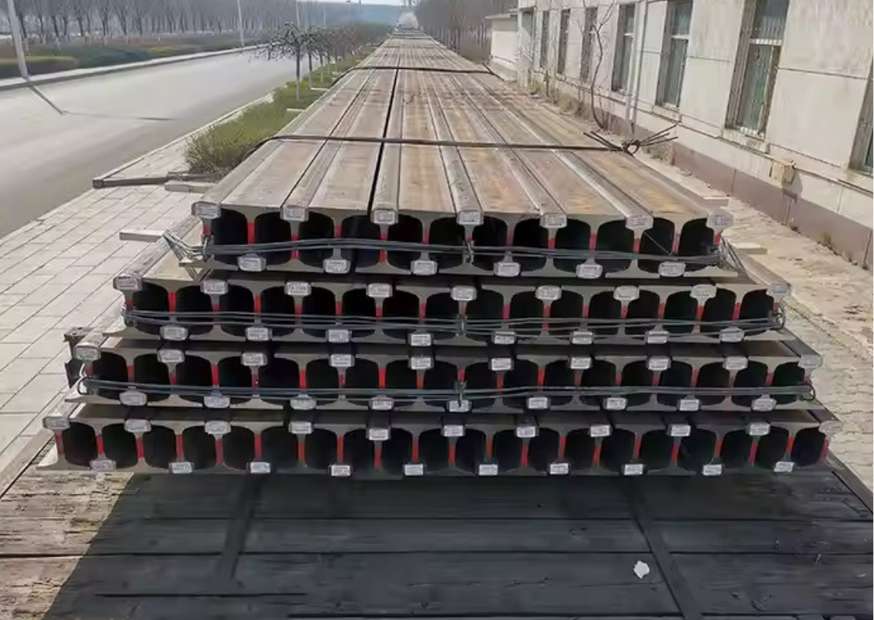
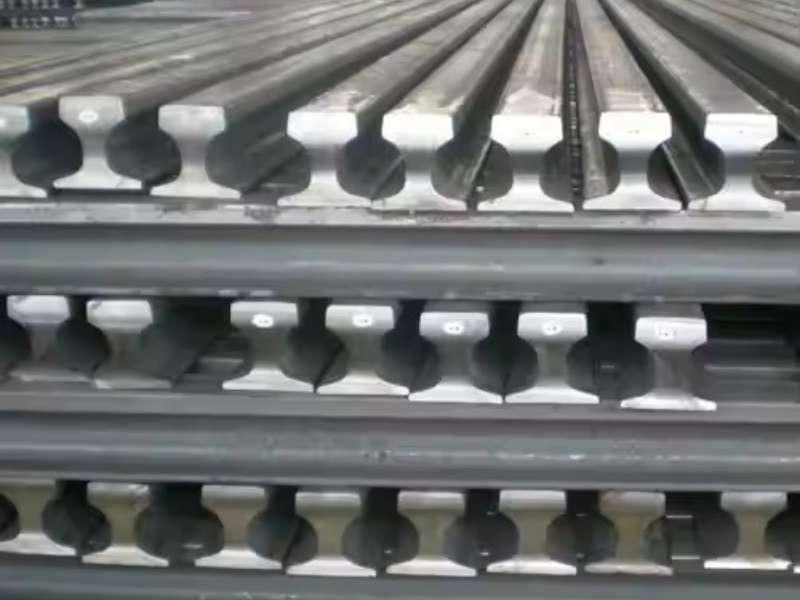
Engineers and railway planners rely on precise measurements to ensure track safety. One of the most critical metrics in track design is railroad rail weight per foot. This measurement determines the load a track can handle and influences maintenance schedules. We will explore the specific calculations, industry standards, and the important relationship between rail weight and train performance.
Railroad Rail Weight Per Foot
You must understand how the industry measures rail density. Most suppliers list rail weight in pounds per yard (lb/yd). However, structural engineers often need the railroad rail weight per foot for specific load calculations. This difference requires a simple conversion. You divide the yard weight by three to get the foot weight.
Common rail weights in the United States include the 115 lb/yd profile. This rail weighs approximately 38.33 lb/ft. Another standard profile is the 136 lb/yd rail. This heavier option weighs approximately 45.33 lb/ft.
The Conversion Formula:
$$Weight (lb/ft) = Weight (lb/yd) \div 3$$
Engineers use this formula daily. It helps them estimate the total steel tonnage required for a project. Accurate weight calculations prevent budget overruns and ensure the infrastructure meets safety codes.
Rail Weight and Axle Load Capacity
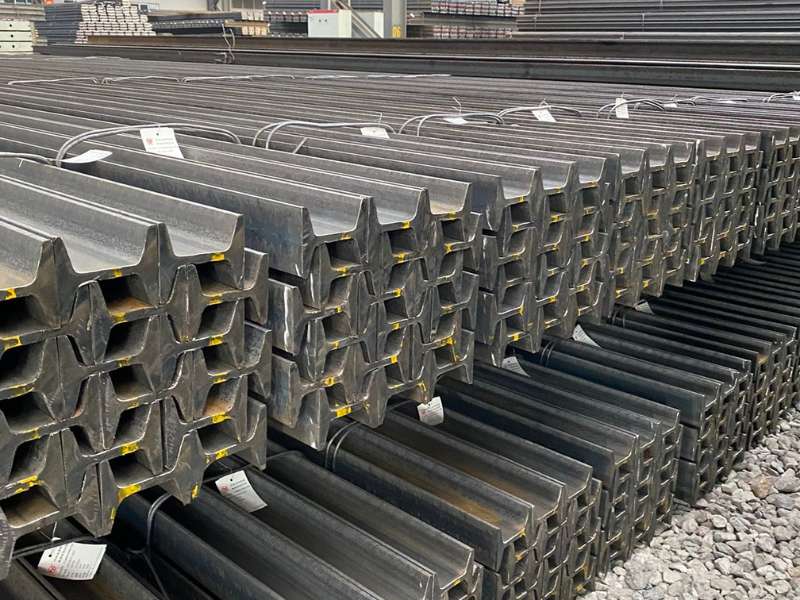
Rail weight directly impacts the axle load capacity of a railway line. Heavier rails support heavier trains. The rail acts as a beam that distributes the wheel load to the ties and ballast below. A light rail will bend excessively under a heavy load. This bending causes rapid metal fatigue and potential track failure.
For instance, a 115 lb/yd rail typically supports axle loads around 33 tons. In contrast, a 136 lb/yd rail can handle axle loads exceeding 39 tons. Heavy-haul freight lines require these higher capacities. Operators must match the rail weight to the train axle loads. This matching ensures operational efficiency. It also prevents premature wear on the wheels and the track infrastructure.
AREA Rail Weight Specifications
The American Railway Engineering Association (AREA) establishes standards for rail design in North America. These standards ensure different manufacturers produce compatible rails. Uniformity remains important for maintenance crews who replace sections of track.
Common AREA Rail Weights:
- 115RE: This profile balances weight and strength. Regional railroads and transit agencies use it frequently.
- 136RE: Class I railroads prefer this heavier profile. It withstands the stress of long, heavy freight trains.
- 140RE: This is a robust standard for high-tonnage lines. It offers superior durability against wear.
These standards dictate the exact dimensions of the rail head, web, and base. Adherence to AREA specifications guarantees the rail fits standard tie plates and fasteners. This standardization maintains safety across the national rail network.
Rail Weight Conversion Chart
Global railway projects often mix measurement systems. You might encounter specifications in kilograms per meter (kg/m) alongside pounds per yard. The following chart clarifies these equivalents for common rail profiles.
|
Rail Weight (lb/yd) |
Equivalent (kg/m) |
|
90 |
44.6 |
|
100 |
49.6 |
|
115 |
57 |
|
132 |
65.5 |
|
136 |
67.5 |
|
141 |
70 |
This table simplifies the procurement process. It helps project managers compare international products with domestic standards effectively.
High-Speed Rail Weight Standards
High-speed rail systems demand exceptional stability. Trains on these lines travel at speeds exceeding 180 mph. Consequently, engineers prefer heavier rails to minimize vibration. The standard profile for many high-speed lines is the UIC60 rail. This rail weighs 60 kg/m (approximately 121 lb/yd).
Heavier rails maintain their geometry better than lighter ones. They resist the dynamic forces exerted by fast-moving trains. Japan’s Shinkansen and France’s TGV systems utilize these heavy rail standards. The extra mass dampens noise and provides a smoother ride for passengers. Safety regulations for high-speed travel mandate these robust profiles to prevent derailments.
Railroad Track Weight Per Foot
The steel rail is only one component of the total track structure. The railroad track weight per foot includes the rails, the crossties (sleepers), the fasteners, and the ballast. Understanding the total dead load helps engineers design bridges and elevated structures.
Example Calculation:
- Rails: Two 115 lb/yd rails weigh roughly 77 lb/ft combined.
- Ties: A standard concrete tie weighs about 600-800 lbs. Spaced at 24 inches, this adds 300-400 lbs per foot.
- Ballast: The crushed stone adds significant mass.
A typical track section might weigh over 500 lbs per linear foot when you include all components. Factors influencing this total include the tie material (wood vs. concrete) and the depth of the ballast. Bridge engineers must account for this total weight during the design phase.
UIC60 Rail Weight Details
The UIC60 rail is a dominant standard in Europe and Asia. Its specifications prioritize aerodynamics and structural integrity. The “60” refers to its mass of 60 kilograms per meter.
Key Applications:
- Heavy-Duty Railways: The thick web supports massive vertical loads.
- High-Speed Lines: The wide head profile ensures excellent wheel contact.
UIC60 rails compare favorably to American 132RE or 136RE profiles. They offer similar strength characteristics. However, the cross-sectional geometry differs slightly. Maintenance teams cannot mix UIC60 and AREA rails without special transition joints. Using the correct profile ensures the longevity of the wheelsets.
Heavy-Duty Rail Weight Specifications
Freight railroads push track materials to their limits. Heavy-duty rails must survive millions of gross tons annually. Standards like the 140RE or the massive 155 lb/yd rail serve these extreme environments.
Characteristics:
- Taller Head: Provides more metal to wear down before replacement is necessary.
- Thicker Web: Resists shear forces from heavy axle loads.
- Wider Base: Distributes weight over a larger area of the tie.
Mining railroads often use these profiles. They transport iron ore or coal in massive quantities. The benefit of heavy-duty rail lies in its lifecycle cost. Although the initial investment is higher, the rail lasts longer. This durability reduces track downtime and maintenance expenses significantly.
Railroad Track Strength Analysis
Track strength depends on more than just the weight of the steel. The quality of the material is very important. Modern steel manufacturing uses vacuum degassing to remove impurities. This process creates harder, more durable rails.
Factors Affecting Strength:
- Rail Weight: Heavier rails resist bending.
- Steel Metallurgy: Heat-treated rails resist surface cracking.
- Track Design: Proper tie spacing improves load distribution.
Engineers analyze track strength using finite element analysis (FEA). They simulate train loads to identify potential weak points. Regular maintenance ensures the track retains its design strength. Crews grind the rail surface to remove small cracks. They also replace ballast to maintain drainage. These actions preserve the structural integrity of the railway.
Rail Weight Calculator
Calculating the total weight of a rail order is a standard task for procurement managers. A rail weight calculator simplifies this process.
How to Calculate Manually:
You can determine the weight of a rail shipment with a simple formula.
Total Weight = Length (yards) \times Weight (lb/yd)
For linear feet:
Total Weight = Length (feet) \times (Weight [lb/yd] \div 3)
Example:
You need 1,000 feet of 136 lb/yd rail.
- Convert the weight: 136 \div 3 = 45.33\text{ lb/ft}.
- Multiply by length: 1,000 \times 45.33 = 45,330\text{ lbs}.
Accurate calculations ensure logistics teams book the correct number of trucks or railcars for delivery. Always double-check your unit conversions before finalizing an order.
You can use below rail weight calculator :
Rail Weight Calculator
For more detail on this subject, see rail size and weight chart guide and how much railroad track weighs.
FAQs
How much does a railroad rail weigh per foot?
Railroad rails typically weigh between 25 lb/ft (75 lb/yd) and 45 lb/ft (136 lb/yd). The exact weight depends on the specific rail type and its intended application.
What is the heaviest rail weight used in railroads?
The heaviest rail weight currently in use is approximately 155 lb/yd (51.67 lb/ft). Engineers reserve this profile primarily for heavy-duty freight lines carrying massive loads.
Why is rail weight important?
Rail weight determines the strength and durability of the track. It affects the track’s ability to support heavy loads and accommodate high speeds safely.
What is UIC60 rail?
UIC60 rail weighs 60 kg/m. Railway systems worldwide use this profile commonly for high-speed and heavy-duty operations.
How do you convert rail weight from pounds per yard to pounds per foot?
You divide the weight in pounds per yard by 3. For example, 115 lb/yd divided by 3 equals 38.33 lb/ft.
Recommended Products for Different Rail Weights
Calculating your railroad rail weight per foot is an essential step in track design, as it determines the total load your railway can support. However, heavier rails designed for high-speed trains or massive freight loads also require substantially stronger fastening systems to hold them in place.
While the rail weight tells you how much steel you have, it is the physical dimension of the rail—specifically the base width—that dictates which rail clip you must install. To secure your track safely, you must pair your rail profile with a clip designed to perfectly hug its exact base footprint. When the fastener sits flush against the rail foot, it applies the maximum downward clamping force (toe load) needed to pin the heavy steel to the sleeper and absorb intense dynamic vibrations.
To help you secure your track infrastructure, we have matched our heavy-duty crane rail clips with the most common AREA and UIC rail profiles categorized by their weight specifications. Review the table below to find the correct fastening solution for your exact rail dimensions.
|
Rail Type |
Base Width |
Height |
Weight |
Recommended Clips |
|
115 RE |
5.500 in (139.7 mm) |
6.625 in |
115 lb/yd (38.33 lb/ft) |
32 Series Bolted Rail Clips |
|
132 RE |
6.000 in (152.4 mm) |
7.125 in |
132 lb/yd (44.00 lb/ft) |
9 Series Welded Rail Clips |
|
136 RE |
6.000 in (152.4 mm) |
7.313 in |
136 lb/yd (45.33 lb/ft) |
9 Series Welded Rail Clips |
|
UIC 60 |
150.0 mm |
172.0 mm |
60.21 kg/m (121 lb/yd) |
9 Series Welded Rail Clips |
Frequently Asked Questions (FAQs)
- Does the railroad rail weight per foot determine which rail clip series I need?
No, the weight of the rail alone does not dictate your clip selection. You must choose your fasteners based entirely on the cross-sectional dimensions of your rail profile, specifically the base width. While heavier rails tend to have wider bases, you must always match the clip geometry to the exact base measurement to ensure a secure fit. - Why do heavy 136 RE and UIC 60 rails require 9 Series Welded Clips?
Railways use exceptionally heavy profiles like the 136 RE and UIC 60 to support massive axle loads and high-speed trains. These operations generate extreme dynamic forces that actively try to push the rails apart. You weld the 9 Series clips securely to the underlying steel plates to create a permanent, rigid anchor. This robust bond firmly grips the wide base of these heavy rails and safely resists intense lateral stress. - Are 32 Series Bolted Clips suitable for moderate weight 115 RE tracks?
Yes. Track engineers frequently deploy the 115 RE profile (weighing 38.33 lb/ft) for regional mainlines experiencing moderate traffic. This rail features a base width of 5.500 inches. The 32 Series Bolted Clips fit this exact footprint perfectly. They deliver exceptional downward clamping force while giving maintenance teams the flexibility to loosen the bolts easily for routine track alignment. - How do elastic rail clips protect heavy-duty rail structures?
When heavy freight trains travel over the track, the massive axle loads cause the steel rails to bend and vibrate aggressively. Our elastic fastening systems utilize premium spring steel components that flex to absorb these intense shocks. They continuously press down heavily on the rail foot, pinning the steel firmly against the sleeper and preventing the track from shifting under the weight. - What happens if I install a mismatched rail clip on a heavy-duty railway?
Using a rail clip that fails to match your rail’s specific base dimensions creates a severe safety hazard. If you place a clip engineered for a narrow 5.5-inch base onto a wider 6.0-inch heavy rail, the clip housing will not seat properly. You will instantly lose the essential toe load clamping force. The massive weight of passing trains will quickly shake the unsecured rails loose, widening the track gauge and severely increasing the risk of derailment.