The different gauges of Australia’s railway system reflect its history and needs. Australia’s transport infrastructure is determined by its railway gauges. Why does Australia have multiple railway gauges, and how do they affect train operations? The history of Australian railway gauge standards and conversions shows its problems and innovations. This blog, Xingrail explores Australia’s railway gauge landscape, from track diameters to standard gauge adoption.
What Is the Standard Railway Gauge in Australia?
Australian railway gauge is 1,435 millimeters. This gauge streamlines freight and passenger travel across states. However, Australia’s railway system uses broad and narrow gauges. The 1,600-millimeter broad gauge is mostly found in Victoria and South Australia. Western Australia and Queensland use narrow gauge at 1,067 millimeters. These discrepancies in railway gauges Australia reflect early railway network decisions.
The existence of different railway gauges in Australia has created operational issues, such as the necessity for gauge conversion and transshipment at break-of-gauge locations. This affected train operations and raised freight and passenger costs. Despite these obstacles, efforts to standardize railway track sizes Australia have advanced, with standard gauge rail Australia linking key cities. Understanding Australian railway gauge history explains why these variances remain and how they affect the country’s transport system.

Where Is the Broad Railway Gauge Used in Australia?
The 1,600-millimeter railway gauge is mostly utilized in southeast Australia. Victorian metropolitan and regional railways use this gauge widely. Older South Australian rail networks use broad gauge. These regions adopted broad gauge early in railway development to improve stability and carry bigger loads. Unfortunately, other states picked different railway gauges Australia for their.
Broad gauge rail Australia demonstrates the historical difficulties of uniting the country’s rail systems. While Victoria and portions of South Australia still use broad gauge, efforts to standardize railway track sizes Australia have gradually introduced standard gauge in critical corridors. The goal of this change is to improve connection and decrease operational inefficiencies caused by Australian rail gauge differences. After these advances, wide gauge remains a major element of these states’ railway infrastructure.
How Do Standard and Broad Railway Gauges Differ in Australia?
Standard railway gauge in Australia is 1,435 millimeters, while broad gauge is 1,600. Train design, operation, and infrastructure depend on gauge width. Using standard gauge rail tracks simplifies interstate freight and passenger transit. In contrast, broad gauge rail in Australia exists mostly in Victoria and parts of South Australia due to early railway network decisions.
Broad gauge trains are more stable, especially when carrying big loads or moving at high speeds. The coexistence of different railway gauges Australia has caused operational issues. These changes have also affected railway track sizes Australia. Australian rail gauge differences remain a distinctive element of the country’s railway history.
Reliable Supplier of Purchasing Australian Standard AUS Railway Tracks: Xingrail
As a trusted provider of Australian standard AUS railway tracks, Xingrail meets the railway industry’s diversified needs. We manufacture high-quality tracks for various Australian railway gauges to local standards. While Australian rail gauges present challenges, our expertise in railway track sizes allows us to tailor solutions for each network’s unique needs.
Recommended Products for Australian Railway Gauges
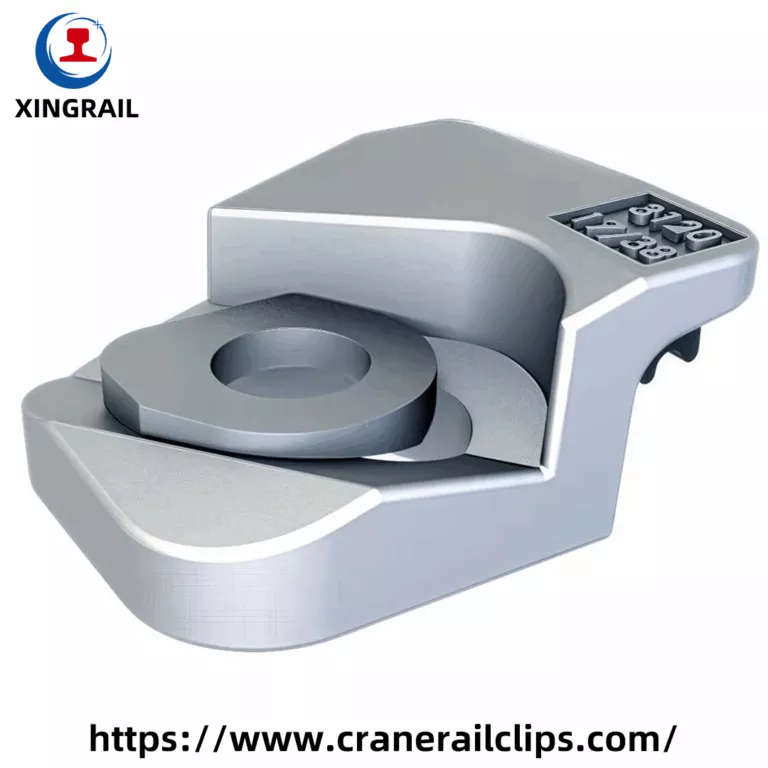
Whether you are working on a 1,435 mm standard gauge line connecting major Australian cities or maintaining a 1,600 mm broad gauge network in Victoria, the track’s stability relies entirely on your fastening system. The specific rail gauge dictates the distance between the tracks, but the rail clips anchor the track to the sleepers and prevent lateral shifting under heavy loads.
To effectively hold your specific track gauge, you must match the rail clip exactly to the dimensions of the rail profile used on your network. Using a fastener that does not sit flush against the rail’s base width will eliminate your clamping force, leading to dangerous gauge widening. To help you secure your Australian railway infrastructure, we have paired our premium crane rail clips with the rail profiles most commonly found across standard, broad, and narrow gauge networks.
Review the table below to find the correct fastening solution based on your rail measurements.
|
Rail Type |
Base Width |
Height |
Weight |
Recommended Clips |
|
ASCE 85 lb |
131.8 mm |
131.8 mm |
42.2 kg/m |
31 Series Bolted Rail Clips |
|
115 RE Rail |
139.7 mm |
168.3 mm |
56.9 kg/m |
32 Series Bolted Rail Clips |
|
UIC 60 (60E1) |
150.0 mm |
172.0 mm |
60.3 kg/m |
9 Series Welded Rail Clips |
|
136 RE Rail |
152.4 mm |
185.7 mm |
67.5 kg/m |
9 Series Welded Rail Clips |
For a deeper look at the subject, see rail gauge by country and rail gauge by country.
Frequently Asked Questions (FAQs)
- Does the specific Australian rail gauge determine which rail clip series I need?
No, the track gauge (such as 1,435 mm or 1,600 mm) does not directly determine the clip type. Your rail profile dimensions—specifically the base width and rail foot thickness—dictate the required clip. A standard gauge track and a broad gauge track that both utilize a UIC 60 rail will both require the 9 Series Welded Clips to properly secure the 150.0 mm rail base. - How do 9 Series Welded Clips support standard gauge freight corridors?
Standard gauge freight networks across Australia carry immense loads that generate severe lateral forces. The 9 Series Welded Clips feature a base housing that welds permanently to the underlying steel plate. This creates a rigid structural bond that stops heavy rails (like the 136 RE) from moving laterally, safely locking the track at the required 1,435 mm width. - Are the 32 Series Bolted Clips suitable for Victoria’s broad gauge networks?
Yes. Many regional lines and industrial segments use the 115 RE rail profile, which has a 139.7 mm base width perfectly matched to the 32 Series Bolted Clips. Bolted systems provide heavy-duty clamping force while allowing maintenance crews to make slight lateral adjustments. This flexibility makes it easier to keep the 1,600 mm broad gauge perfectly aligned over decades of use. - Can I use the 31 Series Bolted Clips on narrow gauge tracks in Queensland or Western Australia?
Absolutely. Narrow gauge networks (1,067 mm) frequently utilize lighter rail profiles, such as the ASCE 85 lb rail, which features a 131.8 mm base. The 31 Series Bolted Clips are precisely engineered to fit this narrower footprint, delivering the ideal downward toe load to secure the track safely for regional and industrial transport. - What happens to the track gauge if I install a rail clip with the wrong base dimensions?
If you install a clip designed for a narrow 131.8 mm base onto a wider 152.4 mm rail, the fastener will not sit flush. This completely eliminates the essential clamping force. Without a firm downward grip, the dynamic vibrations from passing trains will push the rails outward. This immediately widens the track gauge and creates a severe derailment hazard. Always verify your rail profile dimensions before installing clips.