Rail gauges vary worldwide due to historical, geographical, and economic causes. Countries use varied train track dimensions to suit their demands. Standard gauge predominate in some locations, whereas broad and narrow gauge dominate in others. Dual-gauge tracks are needed to solve international railway interoperability issues caused by country-specific rail gauges. In this article, Xingrail explores why standard, broad, and narrow gauges exist and the significant operational challenges they create for international rail travel and freight.
What Is Rail Gauge?
Railway track rail gauge is the distance between two parallel rails’ inner surfaces. This measurement affects train track width and rolling stock compatibility across areas. Standard gauge (1,435 millimeters) is the most extensively used gauge worldwide, however broad and narrow gauges are also employed. These differences in train track dimensions reflect historical, geographical, and economic considerations that affected railway development in different countries.
Country rail gauge typically shows infrastructure variations. European rail gauges differ, with Western Europe using standard gauge and Russia using broad gauge. Cross-border railway operations require gauge conversion systems or dual-gauge tracks due to these variances.
Rail gauge affects operational efficiency. Integrating with global networks costs more for countries with distinct railway gauges. Railway gauges around the world show how engineering decisions have influenced transportation systems.

Why Do Rail Gauges Vary by Country?
National rail gauges vary due to historical, geographical, and economic causes. Engineers designed train track dimensions for local demands in early railway systems. Narrow gauge was used in mountainous areas to cut expenses and overcome difficult terrain. Flat terrain regions preferred wider gauges for larger loads and speedier speeds. These decisions reflected temporal considerations and shaped country-specific train gauges.
Colonial influence also shaped railway gauges. Colonial nations often forced their desired train track width on their colonies. British colonies used standard gauge, whereas Spanish and Russian areas used broad gauge. Modern railway systems, especially in mixed-influence regions, are affected by this legacy. Rail gauge in Europe contrasts Western Europe’s standard gauge with Eastern Europe’s broad gauge.
Economic factors exacerbated these inequalities. Countries with limited resources chose narrower gauges to save money, while wealthier nations chose larger gauges for performance. National security considerations impacted certain selections, as unusual gauges could prohibit foreign trains from using domestic tracks.
What Are the Most Common Railway Gauges Around the World?
Standard gauge, wide gauge, and narrow gauge are the most common railway gauges around the world. High-speed rail and freight transport use 1,435 millimeter standard gauge. The US, China, and much of Europe use standard gauge rail. Unanimity improves international connectivity and logistics.
Broad gauge, over 1,520 millimeters, is another popular rail size nationally. It is common in India, Russia, and South America. Larger loads and higher stability make broad gauge excellent for freight and passenger services in these areas. However, its incompatibility with standard gauge systems affects international railway operations.
Mountainous and underdeveloped countries use narrow gauge, usually under 1,067 millimeters. Japan, South Africa, and Southeast Asia adopt narrow gauge for its cost-effectiveness and ability to negotiate difficult terrain. Narrow gauge is practical for several applications despite its speed and capacity limits. Train track dimensions represent the different needs and priorities of railway systems globally.
How Does Rail Gauge Affect Train Operations?
Rail gauge determines rolling stock compatibility with railway tracks. High-speed trains and freight services run well on standard gauge, utilized in many nations. Gauge conversion systems or transshipment facilities are needed for interoperability in regions with various train track dimensions. These changes complicate and cost operations, especially in mixed rail gauge locations.
Track width affects train stability and capacity. For freight-intensive regions, broad gauge systems are more stable and support greater loads. Narrow gauge systems are cost-effective and ideal for difficult terrain, but they limit speed and capacity. These trade-offs emphasize the relevance of country-specific rail gauge selection for operational purposes. Additionally, gauge choice affects infrastructure design.
Global railway gauges reflect engineering priorities that affect train performance and connection. Cross-border operations in Europe are complicated by standard gauge and broad gauge. In Europe, train track gauges vary. Optimizing train operations and addressing compatibility issues requires knowing rail gauge by country.
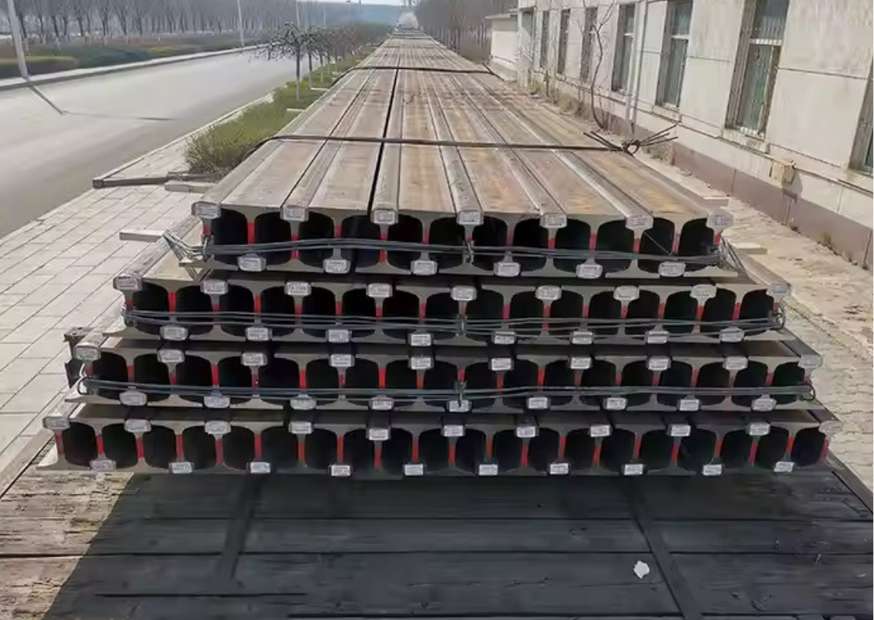
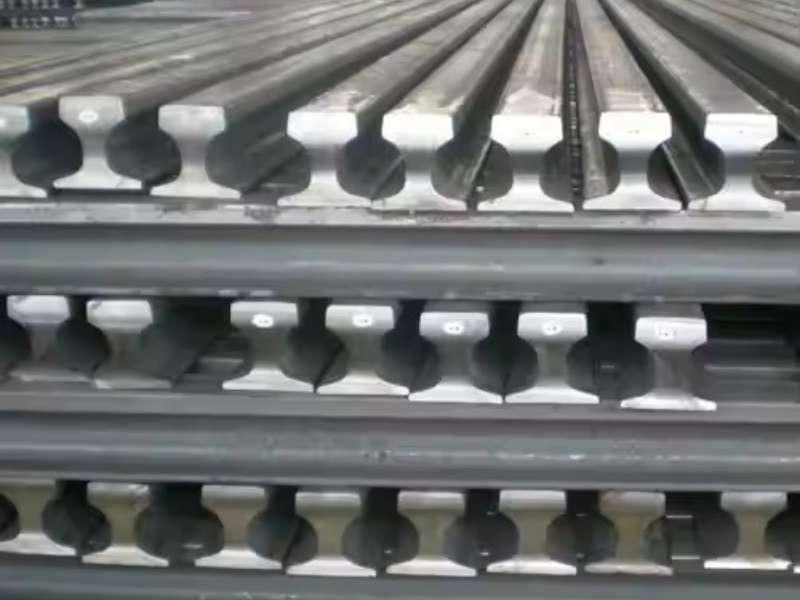
Xingrail knows the importance of rail gauge in global railway operations. We proudly supply steel rails of various widths to meet global rail system needs with our expertise in designing and manufacturing high-quality railway fasteners. Our products ensure safety, durability, and smooth performance for standard, broad, and narrow gauge tracks. Please buy railway tracks from us, a trusted rail partner. Experience the Xingrail difference with a quote today.
Recommended Products for Global Rail Gauges
While countries around the world utilize different rail gauges to meet their specific historical and geographical needs, securing those diverse tracks requires universal engineering principles. Whether you operate a standard gauge network in Europe, a broad gauge freight line in India, or a narrow gauge system in mountainous terrain, your track gauge simply dictates the distance between the two parallel rails. It does not determine your fastening system.
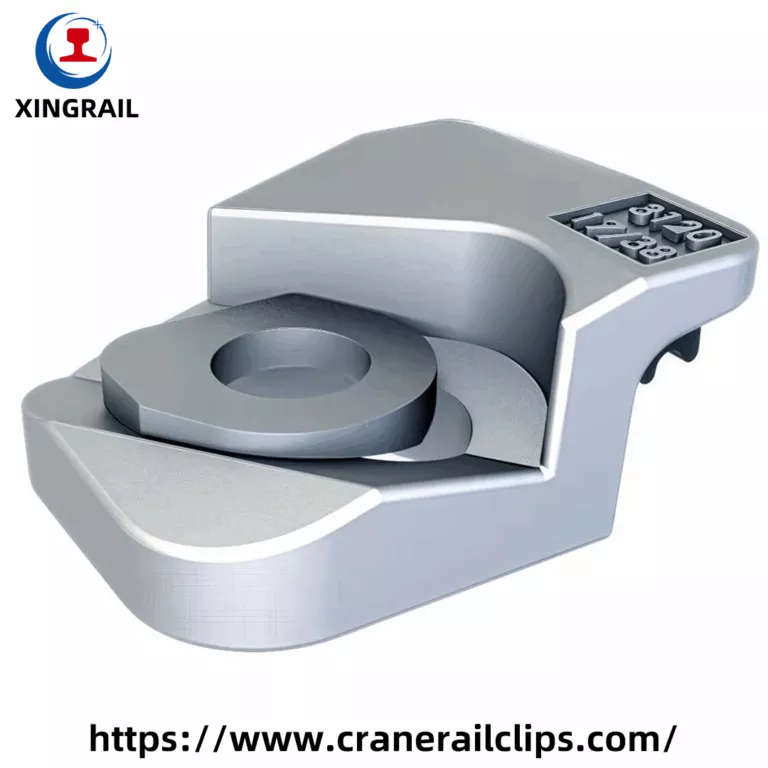
To safely support high-speed trains and heavy freight loads, you must match your rail clips directly to the physical base width of your specific rail profile. Your rail clip must sit completely flush against the rail foot. This precise fit allows the fastener to apply continuous downward clamping pressure, known as toe load. This heavy clamping force anchors the steel rail firmly to the baseplate or sleeper, actively absorbing severe dynamic vibrations and preventing the intense lateral thrust of passing trains from altering your specific train track dimensions.
To help you secure your international railway infrastructure, we have paired our premium rail clips with the common global rail profiles utilized across various gauge networks. Review the table below to find the correct fastening solution for your specific track dimensions.
|
Rail Type |
Base Width |
Height |
Weight |
Recommended Clips |
|
UIC 54 (54E1) |
140.0 mm |
159.0 mm |
54.77 kg/m |
32 Series Bolted Rail Clips |
|
115 RE |
139.7 mm |
168.3 mm |
56.90 kg/m |
32 Series Bolted Rail Clips |
|
UIC 60 (60E1) |
150.0 mm |
172.0 mm |
60.21 kg/m |
9 Series Welded Rail Clips |
|
136 RE |
152.4 mm |
185.7 mm |
67.50 kg/m |
9 Series Welded Rail Clips |
For more detail on this subject, see standard gauge versus broad gauge.
Frequently Asked Questions (FAQs)
- Does my country’s specific rail gauge dictate which rail clip I should install?
No. The rail gauge measurement, whether standard, broad, or narrow, simply defines the distance between the two inner rail faces. You must choose your rail clips based exclusively on the physical dimensions of the steel rail profile itself, specifically the base width. The fastener housing must precisely fit the rail flange to deliver adequate clamping power. - Are 32 Series Bolted Clips suitable for standard gauge mixed-traffic railways?
Yes. Track engineers frequently specify standard rail profiles like the UIC 54 or 115 RE for mixed-traffic standard gauge lines. These rails feature base widths of approximately 140 mm, which perfectly matches the gripping range of the 32 Series Bolted Clips. These fasteners provide exceptional downward pressure while allowing track maintenance teams to easily loosen bolts for routine gauge adjustments. - Why do broad gauge freight networks often require 9 Series Welded Clips?
Countries that utilize broad gauge systems typically do so to support larger rolling stock and massive freight loads. These heavy-haul operations require larger, robust rail profiles like the 136 RE. By welding the 9 Series clips directly to the steel foundation, you create an unyielding structural anchor that tightly grips the wider 152.4 mm rail base and safely neutralizes the extreme lateral forces generated by heavy freight. - How do rail clips help maintain consistent train track dimensions?
As heavy trains travel across the tracks, they generate intense outward centrifugal forces that constantly attempt to push the rails apart and widen the gauge. Premium rail clips apply a heavy, continuous downward toe load directly onto the rail base. This massive friction locks the rail tightly in place, actively preventing the lateral shifting that causes gauge spreading. - What happens if I install mismatched rail clips on a narrow gauge railway?
Installing a clip that fails to match your rail’s specific base footprint immediately destroys track integrity. If the fastener housing cannot sit flush against the rail flange, it simply cannot deliver the required downward pressure. The vibrations from passing trains will quickly shake the loose rails outward, causing dangerous gauge widening and an immediate risk of derailment, regardless of the track size.