Modern railway tracks are built to withstand heavy loads and continual use. However, what are train tracks made of? High-quality steel is used to make these important parts because of its strength, durability, and wear resistance. Steel rails, wooden or concrete sleepers, and ballast are used to provide stability and safety during construction. Advances in railway track materials have transformed the industry. We’ll discuss train track materials, components, and evolution in this blog to address important questions concerning their construction and composition.
Train Track Materials
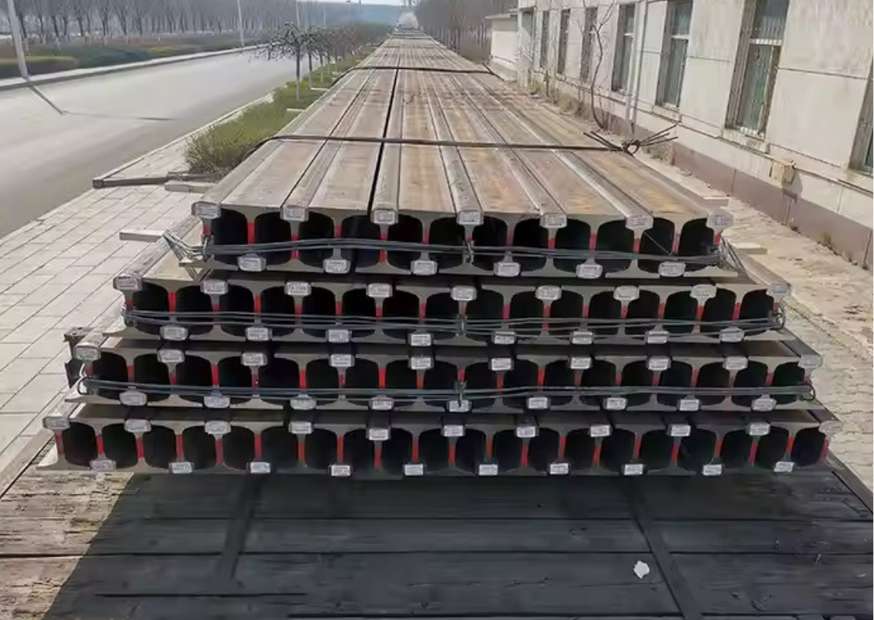
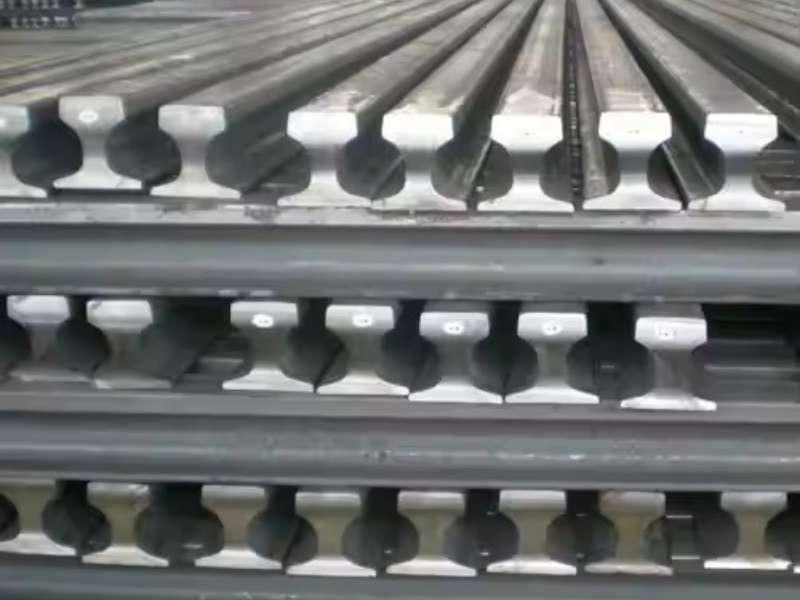
Train rails use high-grade steel because of its strength, longevity, and wear resistance. Modern railways prefer steel since it withstands heavy weights and adverse weather. Flexibility helps it absorb vibrations. Steel is stronger and lasts longer than iron. Train track steel contains carbon and manganese for hardness and deformation resistance. These qualities make steel important for freight and passenger railway infrastructure.
Railroad rails use different materials for stability and functionality. Sleepers, made of wood or concrete, evenly distribute the load and align the rails. To drain and prevent track movement, crushed stone ballast surrounds the sleepers. The construction process uses these elements to build a strong system for high-speed trains and large freight. Composite sleepers and recycled steel are more durable and eco-friendly railway track materials. These advances boost performance and reduce environmental impact. Materials used in train tracks must therefore evolve to fulfill safety, efficiency, and environmental objectives.

Train Track Manufacturing
Manufacturers use high-quality iron ore, carbon, and manganese to make train track steel. Steelmakers melt and refine these components in blast furnaces to get the desired composition. Carbon adds hardness, whereas manganese resists wear and deformation. Steelmakers cast the molten steel into billets and roll it into long rails under great pressure and heat. This technique makes the steel strong and homogenous. Since steel has better tensile strength and longevity than iron, the switch from railway iron to modern steel improved durability and performance.
Quality control is important in rail track manufacture. Steel manufacturers check for contaminants and structural defects throughout production. Ultrasonic and magnetic particle inspections find safety-compromising interior flaws. Engineers heat-treat the rails to increase hardness and resist cracking. The next phase is precision cutting and drilling to match design specifications. The finished train tracks fulfill modern railway requirements thanks to these strict quality controls. The production process uses advanced technology and painstaking attention to detail to create durable and long-lasting railway infrastructure.
For more detail on this subject, see how railway tracks are made.
Xingrail Offers High-Quality Railroad Track Steel and Railway Iron for Various Rail Systems
For all rail systems, Xingrail provides the highest-quality railroad track steel and railway iron. We make our products for modern infrastructure with precision and care. We choose premium iron ore, carbon, and manganese. Our blast furnaces refine these carefully selected elements to create strong, durable steel. Carbon increases hardness, while manganese resists wear and deformation.
Molten steel gets to work making reliable rails. Under strict conditions, billets are cast and rolled into rails. This meticulous process ensures the uniformity and structural strength of every steel piece that leaves our facility. We believe our quality commitment sets us apart and why you should choose Xingrail for your next project.
Our leadership in the transition from railway iron to advanced steel technology is our pride. Old-fashioned railway iron lacks the tensile strength and durability needed for modern high-speed and heavy-load rail systems. Our unique steel composition overcomes these limitations, improving performance and reliability. We use ultrasonic testing and heat treatments to eliminate flaws and improve toughness to keep our promise. These crucial steps ensure every rail we make meets the highest safety and performance standards.
Our precision and innovation make our products ideal for massive freight lines and high-speed passenger networks. We constantly innovate railroad track steel and railway iron manufacturing. Experience the Xingrail difference and build a safer, more reliable railway future with us. Select Xingrail for superior quality and performance.