A crane rail buffer stop is a safety device mounted at the end of a crane runway rail. It absorbs kinetic energy when a crane or trolley reaches the end of its travel. Without one, the crane hits a bare rail end — a serious hazard in any overhead or gantry crane system.
This guide covers types, selection criteria, installation, and how to source buffer stops matched to your rail section.

Buffer Stop vs End Stop: Know the Difference
These two terms are often confused.
| Term | Function |
|---|---|
| Buffer stop | Absorbs impact energy |
| End stop | Rigid barrier — stops motion only |
A buffer stop dissipates energy through hydraulic, spring, or polyurethane compression. An end stop is a rigid block that simply blocks travel. For cranes running at speed, a buffer stop is the correct choice. An end stop may crack welds or damage the crane structure under repeated impact.
Why Runway End Protection Matters
End-of-runway protection is the last line of defence against crane runaway. FEM 1.001, ISO 22986, and OSHA 1910.179 all require runway end stops or buffers on overhead cranes. A missing or undersized unit can cause crane derailment, structural damage, or injury.
Buffer stops on the runway rail complement buffer stops on the crane end truck. Both must be rated for the same impact energy.
Types of Crane Rail Buffer Stops
Four main types are available. Choose based on impact speed, energy, and available stroke.
| Type | Max speed | Stroke | Maintenance |
|---|---|---|---|
| Rigid | Low | None | Minimal |
| Spring | ≤ 0.7 m/s | Short | Low |
| Polyurethane | ≤ 1.0 m/s | Medium | Low |
| Hydraulic | ≤ 2.5 m/s | Long | Periodic |
Rigid stops suit very slow-speed auxiliary cranes where accidental end contact is rare. Spring and polyurethane stops cover most workshop overhead cranes. Hydraulic stops are specified for high-speed or heavy-duty gantry cranes where impact energy is large.

How to Select the Right Buffer Stop
Selection starts with two values: impact mass and impact speed. From these, calculate kinetic energy (E = ½mv²). The buffer stop must absorb at least that energy within its rated stroke.
Key selection parameters:
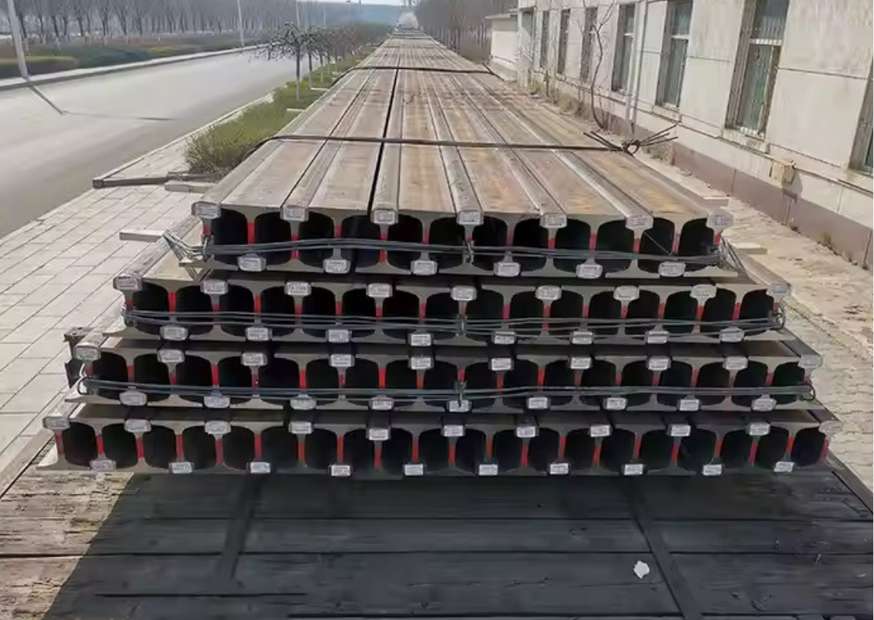
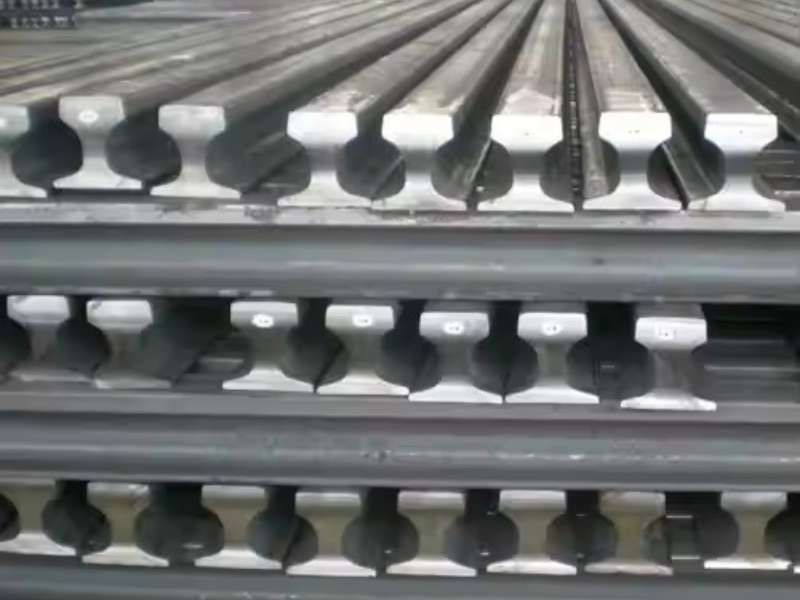
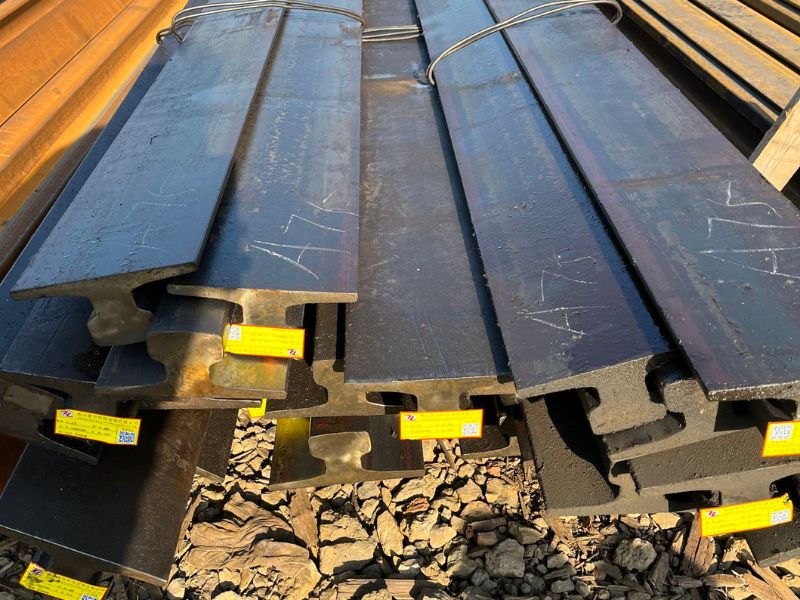
- Rail section — the stop must match your rail profile (A45, A55, A65, A75, A100, or KP series). Check your crane rails specifications first.
- Impact speed — typically rated crane speed × 0.7 for end-of-travel conditions.
- Available space — hydraulic stops need stroke clearance behind the buffer face.
- Environment — outdoor or corrosive locations require hot-dip galvanised or stainless hardware.
A correctly sized crane rail buffer stop protects both the crane and the building structure.
Mounting and Installation
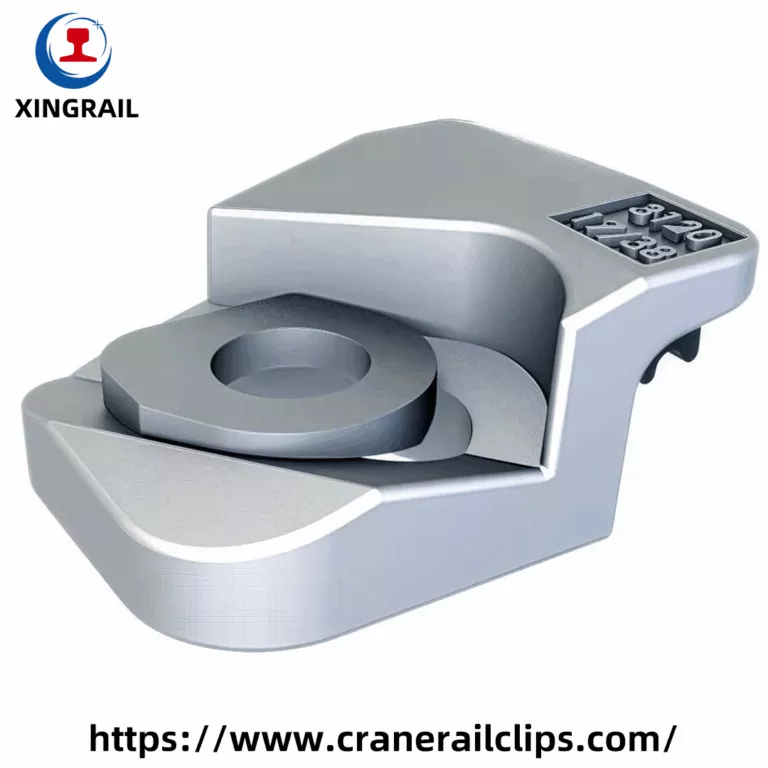
Buffer stops attach to the rail in two ways: clamped to the rail head or bolted through the rail web. Clamped versions use crane rail clamps and need no drilling — ideal for repositioning. Bolted versions suit high-energy applications where the stop must stay fixed.
Installation checklist:
- Position the stop at the correct end-of-travel distance.
- Align the buffer face perpendicular to the rail axis.
- Torque all fasteners to specification.
- Confirm runway buffer and crane end-truck buffer face heights match within ±5 mm.
- Check the surrounding rail fixing hardware at the same time.

Materials and Standards
Standard buffer stop bodies are fabricated from S235 or S355 structural steel. Polyurethane elements are cast from 90–95 Shore A material. Hot-dip galvanising (85 µm minimum) is recommended for outdoor gantry cranes.
Applicable standards: FEM 1.001 Section 3, ISO 22986, EN 13001-2, CMAA 70/74.

Frequently Asked Questions
Q1: What is the difference between a crane rail buffer stop and an end stop?
— A buffer stop absorbs kinetic energy through a compressible or hydraulic element. An end stop is a rigid block. Use a buffer stop whenever the crane can reach the end of travel under power.
Q2: How do I choose the right buffer stop for my crane runway?
— Calculate impact energy from crane mass and speed. Match that to the buffer stop’s rated absorption capacity, then confirm the rail section and available stroke length.
Q3: Can a crane rail buffer stop absorb high-speed impacts?
— Hydraulic models handle speeds up to 2.5 m/s. Spring and polyurethane types suit speeds up to 1.0 m/s. Never use a rigid stop for powered end-of-travel contact.
Q4: How is a buffer stop mounted to the crane rail?
— Either clamped using self-locking rail clips or bolted with forged rail fastening clamps.
Q5: Do you supply buffer stops matched to a specific rail section?
— Yes. Xingrail supplies buffer stops sized to A-series and KP-series crane rails. Use the rail clips configurator to confirm rail compatibility, then contact us for a matched buffer stop quote.
Source Your Crane Rail Buffer Stop from Xingrail
Xingrail is a factory-direct supplier of crane runway components. We supply rigid, spring, polyurethane, and hydraulic crane rail buffer stops to customers worldwide — matched to your rail section, impact energy class, and finish requirement. Contact our sales team for a datasheet or bulk price.