For engineers, procurement managers, and shipyard operators, designing an industrial runway means prioritizing track stability above all else. When dynamic loads from overhead equipment shift and travel, inferior fastening components can fail, causing dangerous misalignments and severe structural wear. That is why selecting reliable rail fixing hardware for cranes is a foundational step in any heavy-duty material handling project. In this technical breakdown, we will examine the core components of modern rail fixing hardware for cranes, compare the top fastening methods, and highlight reliable hardware engineered to keep your industrial operations safely on track.

What is Rail Fixing Hardware for Cranes?
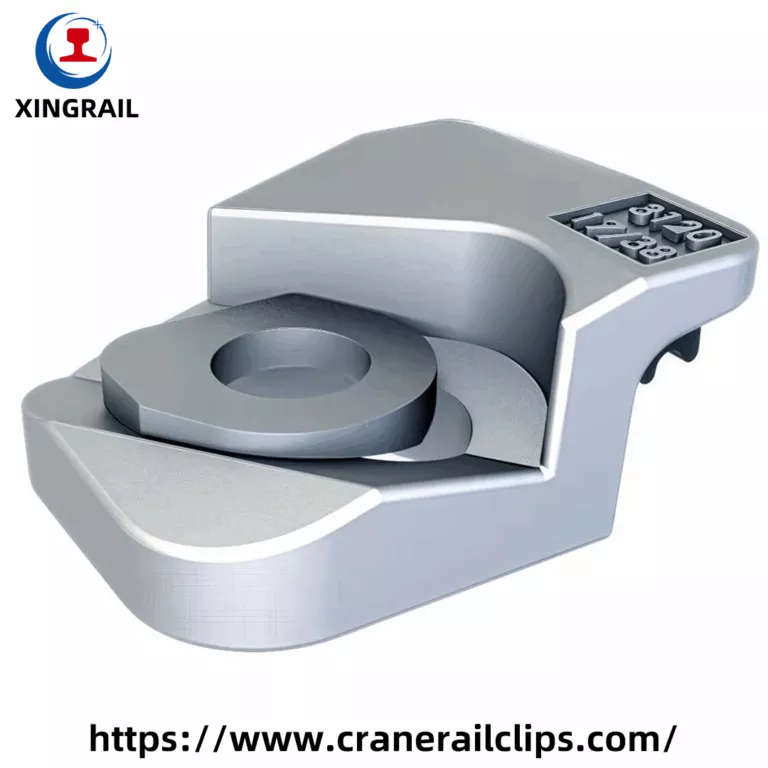
At its core, rail fixing hardware for cranes refers to the engineered assemblies that clamp rail tracks securely to the underlying concrete plinth or steel girder. This setup primarily revolves around specialized crane rail clips.
Effective Rail Clamping Hardware does more than just hold the track down; it absorbs massive lateral shear forces and dampens vibration. High-quality Crane Rail Fasteners feature vulcanized synthetic rubber noses that press against the rail flange. This flexibility allows the track to deflect slightly under load without causing fatigue failure in the rigid foundation, while acting as precise crane rail alignment clips during installation.
Welded vs. Bolted Crane Rail Clips
When evaluating rail fixing hardware for cranes, contractors typically choose between two mounting methodologies, depending on the substrate and duty cycle.
Welded Rail Fixing Clips: Recognized as the industry standard for high-impact environments, these assemblies feature a lower base that is welded directly to the steel runway girder. This creates a permanent, vibration-proof anchor point, making them the ultimate heavy duty crane rail clips and the go-to choice for gantry crane rail clips in ports.
When you specify the fixing hardware, source the rail base plate supplier together with the clips so the interface dimensions match.
Bolted Rail Fixing Clips: Secured entirely by threading studs into concrete or pre-drilled steel, bolted crane rail clips offer high versatility and easy maintenance. They serve as excellent overhead crane rail clips for indoor manufacturing facilities where welding isn’t required or permitted.
Both systems function as highly effective crane runway beam rail clips, provided they are matched to the correct load specifications.
Recommended XINGRAIL Crane Rail Clips
To ensure long-term runway integrity, specifying premium rail fixing hardware for cranes is vital. XINGRAIL manufactures top-tier forged steel crane rail clips that provide uncompromising holding power.
When a standard series will not suit the rail section, XINGRAIL also supplies custom forged rail clips manufactured to a customer’s drawing.
Reliable Bolted Solutions
If your structural design utilizes concrete foundations or bolted girders, XINGRAIL delivers robust crane rail installation clips across two primary lines:
31 Series Bolted Rail Fixing Clips: Ideal for standard operations. Key models include the XINGRAIL 3116/13/36 and the XINGRAIL 3120/17/38.
32 Series Bolted Rail Fixing Clips: Engineered for higher lateral loads, featuring the XINGRAIL 3224/20/44, XINGRAIL 3222/17/44, and XINGRAIL 3220/17/38.
High-Capacity Welded Solutions
For extreme-duty environments, XINGRAIL’s welded series provides maximum resistance against rail walk:
9 Series Welded Rail Fixing Clips: Designed to handle massive continuous loads, including the heavy-duty XINGRAIL 9220/20/45, alongside the XINGRAIL 9216/08/40, XINGRAIL 9120/15/38, and XINGRAIL 9116/08/3.
7 Series Welded Rail Fixing Clips: Featuring the highly adaptable XINGRAIL 7216/20/39.
International Rail Compatibility
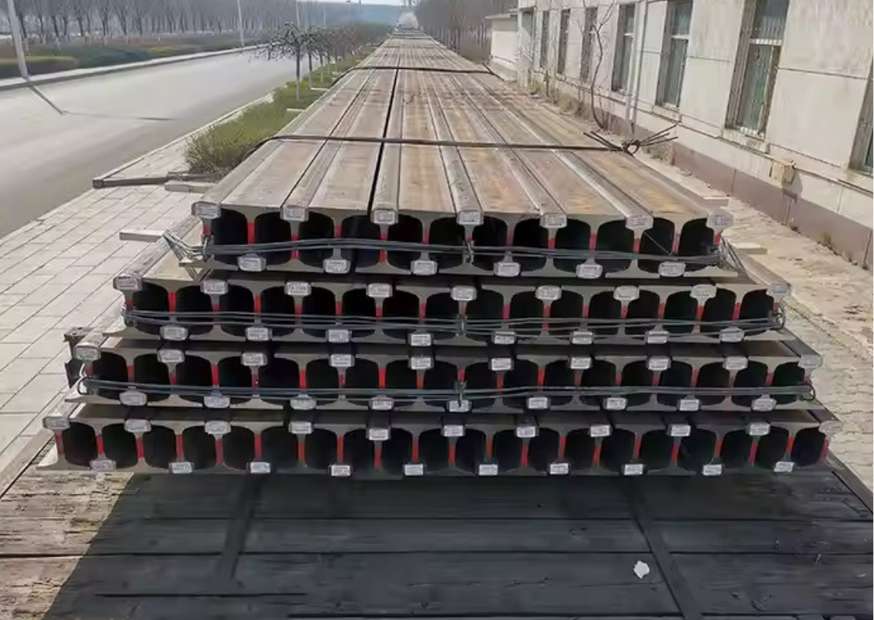
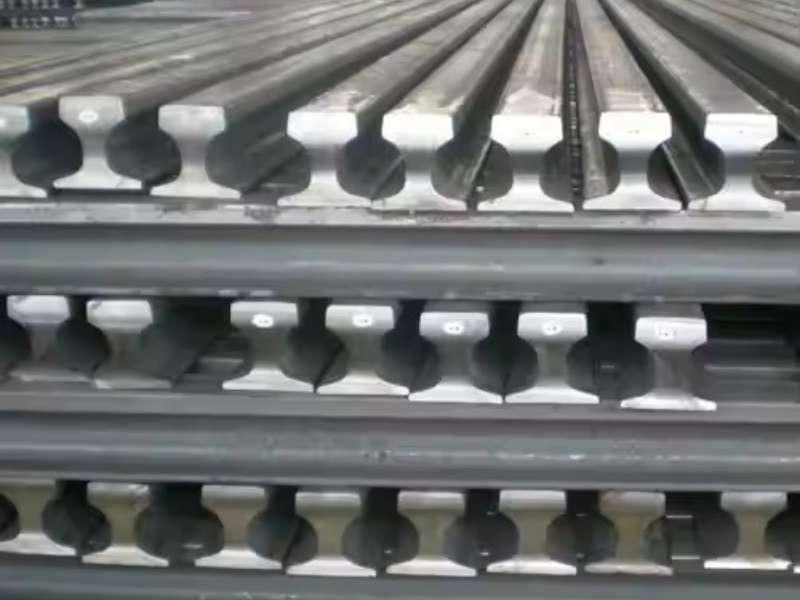
Because facility requirements vary globally, this rail fixing hardware for cranes seamlessly matches standard international track profiles. XINGRAIL components are fully compatible with DIN536 crane rails, AREA crane rails, BS railway tracks, China standard rails, Indian standard rails, GOST rails, SABS rails, and Australian standard rails.
Technical Comparison Table
|
Model |
Mounting Style |
Typical Application |
Base Material |
|
XINGRAIL 3116/13/36 |
Bolted |
Medium-duty overhead cranes |
Forged Steel |
|
XINGRAIL 3224/20/44 |
Bolted |
Heavy-duty indoor runways |
Forged Steel |
|
XINGRAIL 9220/20/45 |
Welded |
Port STS cranes, shipyards |
Forged Steel |
|
XINGRAIL 7216/20/39 |
Welded |
Steel plant ladle tracks |
Forged Steel |
Related: overhead crane rail installation and welded rail securing systems.
Key Industrial Applications
Deploying robust rail fixing hardware for cranes is non-negotiable in demanding sectors:
Port Operations: Ship-to-shore and rail-mounted gantry cranes rely on highly durable crane runway rail clips to handle relentless operational cycles without shifting.
Steel Plants: The extreme heat and massive loads of ladle cranes demand crane rail fixing clips that resist thermal expansion and intense vibration.
Manufacturing: Precision automated systems utilize properly torqued crane rail support clips to maintain tight tolerances and prevent wheel flange wear.
FAQ
Q: How do I choose between welded and bolted rail fixing hardware for cranes?
A: Base your choice on the substrate and lateral load. If mounting to a steel beam with extreme shear forces, use welded clips. For concrete plinths or medium-duty steel girders, bolted clips are highly effective.
Q: Do these clips allow for gauge adjustments?
A: Yes. High-quality crane rail fastening clips utilize slotted bases or internal cam mechanisms, allowing engineers to make precise lateral track adjustments before locking the system down.
Q: Why use forged steel over cast clips?
A: Forged steel provides a tighter grain structure, resulting in significantly higher tensile strength and fatigue resistance—critical traits for any hardware subjected to continuous heavy lifting.