Heavy-duty industrial operations rely heavily on smooth, safe, and continuous crane movement. Whether you manage a bustling container port or a massive steel mill, the integrity of your crane runway system dictates your operational efficiency. At the core of this stability are crane rail welded fixing clips.
These specialized components anchor the rail to the underlying structure, absorbing massive dynamic loads while keeping the track perfectly aligned. This guide explores everything engineers, procurement managers, and installation contractors need to know about welded crane rail fixing systems, from overcoming common installation challenges to selecting the right models for international rail standards.
What Are Welded Crane Rail Clips?
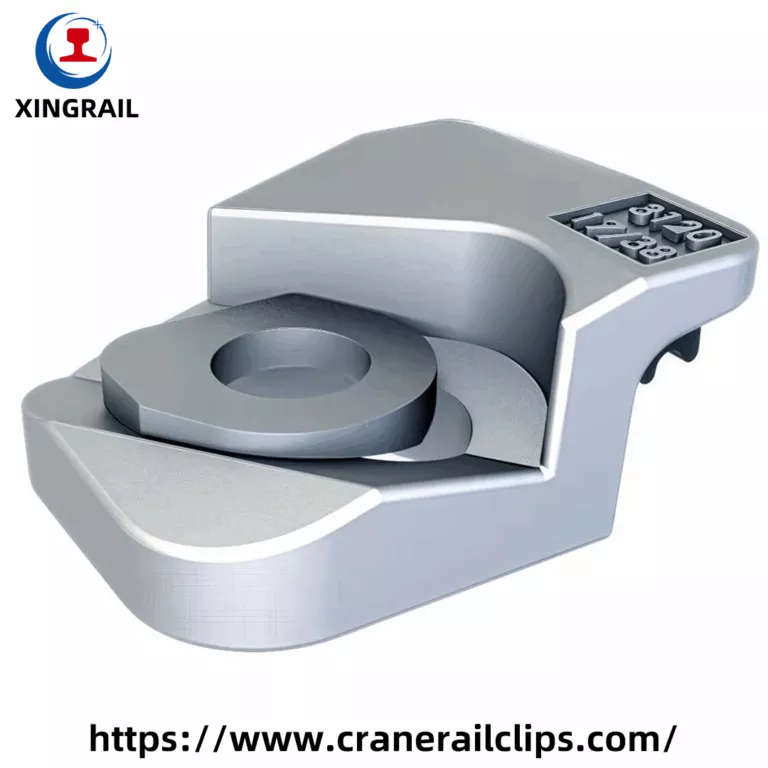
Crane rail welded fixing clips are highly engineered fastening devices used to secure crane rails to steel runway beams or concrete foundations. They consist of two primary parts: a weldable base that fuses directly to the steel support, and an upper clip mechanism that grips the rail foot tightly using a high-tensile bolt and a vulcanized rubber nose.
These clips are critical components for crane runway systems because they provide a robust, semi-flexible connection. When a massive overhead crane passes by, the track experiences severe lateral and vertical forces. Crane rail welded attachment clips absorb these dynamic loads, allowing the rail to flex slightly without breaking the permanent weld connection. This prevents structural damage and ensures the crane operates smoothly and safely.
Common Challenges in Crane Rail Installation
Installing a crane track is a highly precise engineering task. A poorly secured track can lead to catastrophic failures and expensive downtime. Crane rail fixing clips help engineers mitigate several typical problems:
- Rail misalignment: Even minor deviations in track alignment can cause severe wear on crane wheels. Adjustable crane rail alignment clips allow for precise lateral tuning during installation.
- Vibration and impact loads: Moving cranes generate immense vibrations. The elastomer nose on heavy-duty welded fixing clips dampens these shocks, protecting the underlying beam.
- Structural fatigue: Rigid fastening systems transfer all stress directly to the support structure. Semi-flexible clips distribute these forces, reducing the risk of structural fatigue over time.
- Rail movement: Thermal expansion and braking forces cause rails to slide. High-quality crane rail fastening clips apply consistent downward pressure to restrict unwanted longitudinal movement.
- Maintenance difficulties: Traditional rigid systems require constant tightening and repair. Modern welded crane rail fasteners utilize self-locking mechanisms to minimize maintenance requirements.
Welded vs Bolted Crane Rail Clips
When designing a crane runway, engineers must choose between welded crane rail clips and bolted crane rail clips. Both systems serve the same fundamental purpose but are suited for different environments.
Bolted crane rail clips attach directly to the support surface using through-bolts or studs. They are generally preferred for lighter crane applications, temporary installations, or situations where welding is prohibited due to fire hazards. Bolt-on crane rail clips are easier to replace and require less specialized labor during installation.
Conversely, welded crane rail fixing systems are the standard for heavy industrial use. Because the base is permanently welded to the steel beam, it offers vastly superior lateral load resistance. Weldable crane rail clips are the preferred choice for high-capacity gantry cranes, steel mills, and automated warehouses where the track experiences extreme impact forces and continuous operation.

Recommended XINGRAIL Crane Rail Clips
Choosing the right crane rail support clips ensures long-term reliability. The XINGRAIL product series offers solutions tailored for both standard and heavy-duty applications.
Below is a technical overview of recommended models, including both bolted and welded options:
|
Model |
Base Material |
Surface Treatment |
Lateral Force Resistance |
Horizontal Adjustment |
Applications |
Special Features |
|
XINGRAIL 3116/13/36 |
Forged Steel |
Zinc Plated / Plain |
45 kN |
10 mm |
Light overhead cranes |
Compact design, bolted |
|
XINGRAIL 3224/20/44 |
Forged Steel |
Zinc Plated / Plain |
120 kN |
15 mm |
Heavy industrial cranes |
High torque capacity |
|
XINGRAIL 9220/20/45 |
Forged Steel |
Anti-corrosion coating |
165 kN |
20 mm |
Port gantry cranes |
Heavy-duty welded base |
|
XINGRAIL 7216/20/39 |
Cast/Forged Steel |
Plain / Galvanized |
100 kN |
15 mm |
Steel mill runways |
Low-profile weldable |
These XINGRAIL series clips provide robust crane rail installation clips for almost any engineering requirement.
Compatible Crane Rails and Track Standards
Industrial crane rail fixing systems must accommodate a wide variety of global track profiles. Quality fixing clips are engineered with adjustable upper components to fit various flange widths and heights.
These systems offer seamless compatibility with international rail standards, including:
- DIN536 crane rails: The European standard, featuring a wide, flat base ideal for heavy loads.
- AREA crane rails: The American standard used widely in North American industrial plants.
- BS railway tracks: British standard rails frequently utilized in legacy systems and export projects.
- China standard rails (QU series): Commonly used in heavy-duty port and manufacturing applications globally.
- Indian standard rails (CR series): Widespread throughout South Asia’s heavy industries.
- GOST rails: The standard for Russian and Eastern European crane runways.
- SABS rails & Australian standard rails: Utilized heavily in Southern Hemisphere mining and logistics operations.
Typical Applications of Welded Crane Rail Clips
Heavy duty crane rail clips are indispensable in environments where operational failure is not an option. Real-world applications include:
- Container ports: Ship-to-shore (STS) cranes weigh thousands of tons and operate continuously. Welded clips maintain track integrity against fierce coastal winds and heavy lifting loads.
- Shipyards: Massive Goliath gantry cranes rely on gantry crane rail clips to move massive ship hull sections precisely.
- Steel mills: High temperatures and extreme impact loads from molten steel ladles demand the absolute toughest forged steel crane rail clips.
- Automated warehouses: Automated Storage and Retrieval Systems (ASRS) require perfectly aligned rails. Welded clips offer the fine horizontal adjustment needed for robotic precision.
- Mining facilities: Reclaimers and stackers operate in harsh, abrasive environments where durable crane runway rail clips prevent catastrophic track failure.
- Heavy manufacturing plants: Overhead cranes transporting heavy machinery components utilize overhead crane rail clips to ensure safe, continuous factory throughput.
Installation Best Practices for Crane Rail Clips
Proper installation is just as important as selecting the right hardware. Follow these best practices when installing rail fixing clips for cranes:
- Welding procedures for weld on crane rail clips: Clean the steel beam surface thoroughly. Use low-hydrogen electrodes to weld the lower base parallel to the rail. Ensure the weld size matches the manufacturer’s specifications to prevent base failure under lateral loads.
- Bolting methods: Always use the high-tensile bolts provided with the clips. Ensure the rubber nose sits flush against the foot of the rail.
- Tightening torque recommendations: Use a calibrated torque wrench. Over-tightening can crush the elastomer nose, while under-tightening allows dangerous rail movement. Refer to your specific model’s torque charts.
- Rail alignment procedures: Before final torque application, use the cam-pitch adjustment feature of the clips to laterally align the rail. Verify alignment with laser measuring tools to prevent future wheel flange wear.
- Inspection and maintenance considerations: Perform visual inspections every six months. Look for cracked welds, degraded rubber noses, and loose bolts.
For a deeper look at the subject, see overhead crane rail types and overhead crane rail clips.
Why Forged Crane Rail Clips Improve Durability
When selecting crane rail clip welding solutions, material choice dictates performance. Forged steel crane rail clips offer significant advantages over traditional cast iron alternatives.
The forging process aligns the grain structure of the steel to follow the shape of the clip. This results in incredibly high strength, allowing the clip to withstand the massive lateral forces generated by a heavily loaded crane. Furthermore, forged clips offer exceptional fatigue resistance. They can flex slightly under dynamic pressure without developing micro-cracks over time. Combined with the vulcanized rubber nose for vibration absorption, forged clips guarantee a longer service life and significantly lower maintenance costs.
Heavy Duty Welded Crane Rail Clips for Gantry Cranes
Gantry cranes and massive container cranes present unique engineering challenges. Because they operate outdoors, their runway systems must endure thermal expansion, high winds, and immense point loads from the crane wheels.
Crane welded rail clips support large gantry cranes by providing a semi-flexible, incredibly strong anchoring point. The welded base ensures the clip will never shear off under the lateral thrust caused by the crane skewing or braking. Meanwhile, the specialized rubber nose applies a controlled downward force that accommodates thermal rail expansion without allowing the track to buckle.
How to Install Welded Crane Rail Clips on Crane Runway Beams
Installing crane runway beam rail clips requires a systematic approach to ensure safety and precision. Here is a step-by-step overview of the installation process:
- Preparation: Position the crane rail on the steel runway beam. Use temporary bracing to roughly align the track.
- Positioning the Base: Place the weldable base of the clip tightly against the foot of the rail.
- Tack Welding: Tack weld the base to the beam to hold it in place. Ensure the spacing between clips matches the engineered design (typically every 500mm to 600mm).
- Final Welding: Remove the upper clip components to prevent heat damage to the rubber nose. Complete the structural weld around the base according to AWS or local welding standards.
- Assembly and Alignment: Once the welds cool, assemble the upper clip, bolt, and washer. Use the cam adjustment to finalize the rail’s lateral alignment.
- Torque Application: Tighten the nuts to the specified torque setting, locking the rail securely into place.
Best Welded Crane Rail Clips for DIN536 Crane Rails
The DIN536 standard is globally recognized for its wide, flat-bottom profile, designed specifically to distribute heavy wheel loads over a larger surface area. Common sizes include A45, A55, A65, A75, A100, A120, and A150.
Selecting the right welded clip requires matching the clip’s height and lateral adjustment range to the specific “A” profile. For smaller rails like A45 and A55, compact welded clips like the 7 Series provide excellent support without taking up excessive beam space. For massive profiles like the A120 and A150 used in steel mills, heavy-duty options like the XINGRAIL 9220/20/45 are required to properly grip the thick rail flange and withstand the corresponding extreme lateral loads.
FAQ – Welded Crane Rail Clips
What are welded crane rail clips used for?
Welded crane rail clips are specialized fasteners used to secure steel crane tracks to runway beams. They absorb heavy dynamic loads, maintain track alignment, and allow for minor rail flexing and thermal expansion, ensuring safe overhead and gantry crane operation.
What is the difference between welded and bolted crane rail clips?
Welded clips feature a base that is permanently welded to the steel support beam, offering superior resistance to high lateral forces. Bolted clips rely entirely on bolts or studs drilled into the support surface. Welded systems are best for heavy-duty applications, while bolted systems are used for lighter loads or concrete foundations.
How strong are welded crane rail clips?
Heavy-duty welded fixing clips, especially those made from forged steel, are incredibly strong. Premium models can resist lateral forces exceeding 165 kN per clip, making them capable of securing tracks for the world’s largest industrial and port cranes.
Are welded crane rail clips suitable for DIN536 crane rails?
Yes. Welded crane rail fasteners are fully compatible with DIN536 crane rails. Manufacturers design specific clip sizes and adjustable elastomer noses to perfectly match the dimensions of A45 through A150 rail profiles.
How many crane rail clips are required per meter of rail?
The exact number depends on the crane’s wheel load and the rail profile, but standard engineering practice typically requires clips to be spaced every 500mm to 600mm along both sides of the rail. This averages out to about 3.5 to 4 pairs of clips per meter.
Deep-Dive Technical Notes
Bolted vs Welded Rail Clips — How to Pick the Right Fastening Method
Questions Buyers Ask
1. Can welded clips be used on concrete? Only with an embedded steel plate or a welded base plate anchored into the concrete. There must be steel to weld to. 2. Do bolted clips loosen over time? They can, under heavy vibration. Spring washers, lock nuts and thread-locking compound reduce the risk. Schedule torque checks in the first months, then yearly. 3. Which one carries more lateral load? Both can be specified for the same lateral resistance. Load capacity depends on the clip body, forging grade and spacing, not the fixing method. 4. Can the two types be mixed on one runway? Yes. Some projects weld along steel beam sections and bolt at concrete transitions. Keep spacing consistent across the change. 5. Is stainless or coated hardware needed outdoors? For ports and coastal sites, hot-dip galvanised or Dacromet-coated bolts are standard practice. Plain bolts corrode fast in salt air.
Crane Rail Clips With Rubber Pad and Without Rubber Pad
Crane Rail Clips Without Rubber Pad
Direct steel-to-steel fixing is still the right answer in plenty of cases. The rail foot sits straight on the beam or on a steel sole plate, and the clip clamps it there. Where this setup is used Short indoor runways with light to medium wheel loads Machined or ground beam surfaces that are already flat High-heat areas near furnaces, casting bays, and forging lines Environments with heavy oil, solvent, or acid exposure Applications where rail head elevation must not change over time Rails that need frequent re-alignment, since there is no pad to compress unevenly The benefits are simple. Nothing ages. Nothing creeps. The rail height today equals the rail height in ten years. Maintenance crews can shim with steel plate whenever the level drifts. The downside is noise and shock. All impact goes straight into the structure. On heavy-duty runways this shortens beam and weld life.
A Guide To Weld On Rail Clips From Xingrail
Maintenance and Inspection
Maintenance and inspection of weld on rail clips are necessary to detect and fix frequent wear and tear concerns. Surface corrosion, clip loosening, and stress-induced deformation can result from frequent train operations. These concerns can degrade the rail’s stability and function, especially under large loads at high speeds. Early detection of these flaws prevents further damage and assures safety. To preserve operation, technicians should visually inspect clips for cracking, corrosion, or misalignment during scheduled checks. Maintaining weldable rail clips properly improves their durability and effectiveness. Cleaning clips to remove dirt and debris reduces exterior wear. Tightening bolts and checking weld integrity during inspections adds confidence. Using corrosion-resistant coatings and adequate lubrication can improve service life and decrease environmental damage. Periodic load tests verify the clips can withstand pressure. Proactive maintenance and high-quality materials enable weld on track clips work consistently across their service life.
Container Stacking Yards: High-Reliability Clips for Automated Stacking Cranes (ASCs)
XINGRAIL 9120/15/38
This model is ideal for yards where ground settlement is a concern or where extra alignment tolerance is needed. It provides a generous 15mm of lateral adjustment after welding, allowing for easy realignment without costly rework. Download 9120 Technical PDF 9120 Welded Rail Fixing Clips Installation: Alignment: Place the weldable base to accommodate the wide adjustment range. Welding: Perform a 5mm throat thickness fillet weld on the three outer sides. Electrodes: Low-hydrogen AWS E7018 or E7028 are recommended. Torque: Secure the clip by tightening the bolt to 350 Nm .
Crane Rail Clip Types and How to Pick the Right One
Welded Crane Rail Clips
Welded clips are fixed to the runway beam or sole plate with a fillet weld. No drilling is needed. This is the fastest option when the supporting steel is already in place and you do not want to weaken the flange with bolt holes. Common series include the 9116, 9120, 9216, 9220, and 7216 families. Each number tells you something. The first digits point to the clip series and rail foot height range. The trailing numbers give the adjustment range and clamp height in millimetres. Welded clips suit permanent installations. Ports, container yards, steel plants, and shipbuilding gantries use them heavily because the rail position is fixed and rarely changes. The trade-off is obvious. Once welded, repositioning means grinding the weld off. Replacement takes longer than simply loosening a nut. A welded clip usually pairs with a plastic or steel adjustment wedge. The wedge lets you fine-tune the horizontal position by a few millimetres during alignment, then locks the rail once the crane is commissioned. If you want a deeper breakdown of weld-on designs, our page on welded crane rail clips covers profiles and weld sizing.
Weldable Rail Clips Features and Benefits
Choosing the Right Weldable Rail Clips for Your Needs
Selecting the correct weldable rail clips requires careful analysis. Engineers must consider several factors. Step 1: Identify the Rail Profile Different rails have different foot widths. The clip must match the rail dimensions. A mismatch leads to poor clamping. Step 2: Determine Load Requirements Calculate the maximum wheel load of the crane. Consider vertical and horizontal forces. Choose a clip rated for these specific loads. Step 3: Assess Environmental Conditions Corrosive environments require special coatings. Galvanized clips resist rust. High-heat areas might need specialized steel alloys. Step 4: Evaluate Installation Constraints Some sites allow easy welding access. Others might restrict hot work. This factor influences the choice between welded and bolted bases. Rail track fixing solutions vary based on site accessibility. Related: polar crane rail fastening systems welded to containment ring girders.