India’s transportation network relies on railways, hence infrastructure and engineering professionals must comprehend Indian standard rail measurements. Which Indian rail dimensions are standard? How is railway track width or standard gauge determined? Indian rail track dimensions, rail gauge measures, and conventional railway sizes are covered in this blog, Xingrail reveal the specs and rail profile designs that define Indian railway track standards and weight parameters.
What Rail Dimensions Are Used in India?
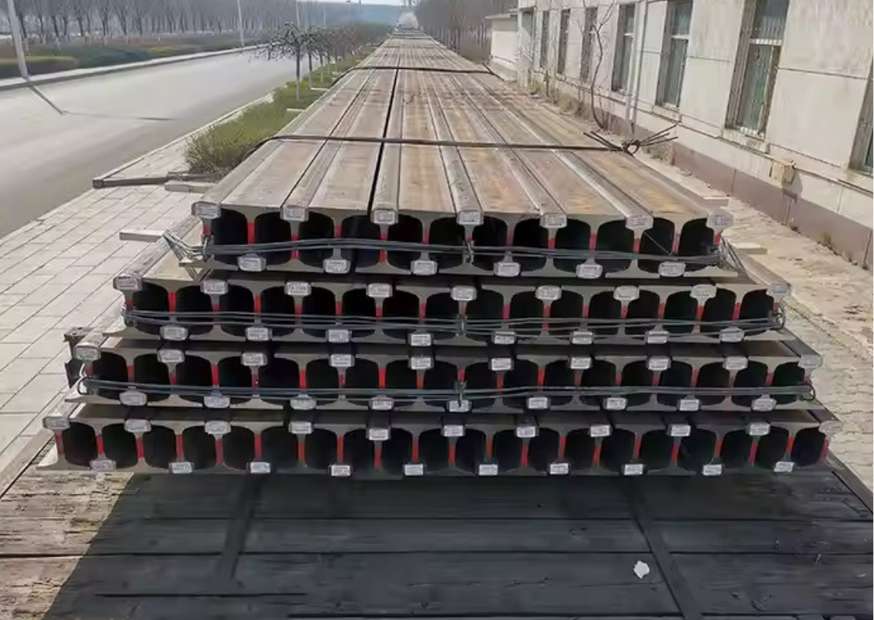
India’s railways follow strict standards for safety and efficiency. The reliability of rail networks depends on Indian standard rail dimensions. The most common rail sizes in India are 52 kg/m and 60 kg/m. This meets Indian railway track criteria for different traffic loads. Indian broad gauge rail track width is 1,676 mm for heavy-duty cargo. For some places and applications, meter and narrow gauges are employed. The rail profile and material must meet daily use pressures.
Understanding track width and structure helps measure Indian railway rail dimensions accurately. Indian standard railway track size follows strict engineering criteria for longevity and load handling. Urban transport systems employ standard gauge tracks of 1,435 mm. Under Indian railway track regulations, width, rail weight, and profile blend for perfection. This holistic strategy emphasizes the importance of dimensions and standards in preserving India’s massive rail system.

What are India’s Standard Rail Section Dimensions?
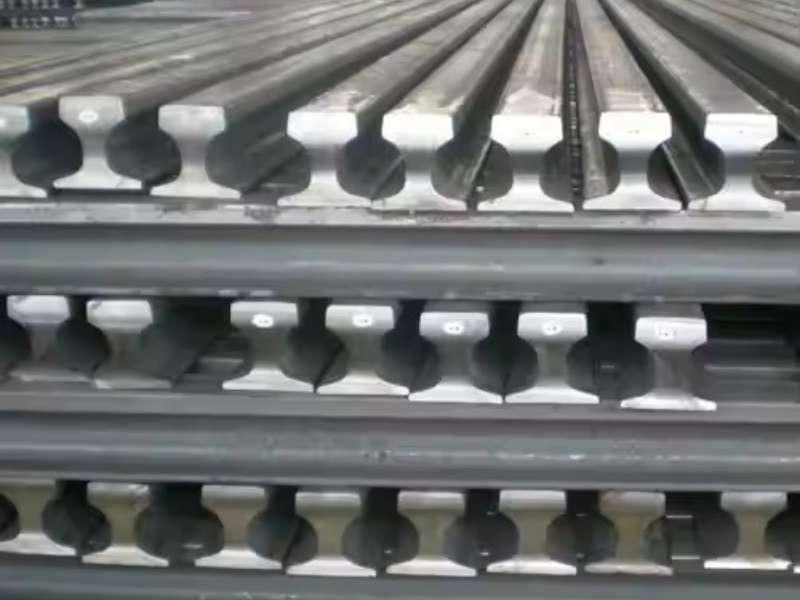
Indian rail section measurements are carefully chosen to meet the country’s different railway network needs. The main rail weights in Indian standard rail dimensions are 52 kg/m and 60 kg/m. These dimensions fulfill the comprehensive Indian railway track specifications and give the strength required to carry big loads and high-speed trains. The Indian standard rail size takes into account the rail profile’s form to provide safe and effective wheel engagement. Rail track gauge, or width, varies by application. Broad gauge (1,676 mm) is the most common freight and passenger transit width.
Indian railway track regulations include severe design and material criteria for longevity. How are Indian railway rail diameters measured? Their calculation depends on load-bearing capacity, usage trends, and track type. Broad gauge dominates intercity lines due to its capacity for heavier traffic, while engineers reserve the standard gauge of 1,435 mm for metro systems in metropolitan areas. They must also consider thermal expansion and wear resistance when determining Indian railway track size. India’s railway system offers efficiency and dependability by merging precision engineering with these different criteria to enable seamless operation across its vast network.
Calculating Rail Weights for Different Track Systems
Engineers must consider the specific features of Indian Railways when calculating track system rail weights. Indian standard rail measurements emphasize rail weight per meter. Engineers use 52 kg/m and 60 kg/m rails based on traffic volume and axle loads. They carefully consider load distribution, wear rates, estimated lifespan, and Indian railway track specifications in this calculation. Designing these systems starts with national guidelines for Indian rail track dimensions. Standard rail size India and rail profile India support loads while preserving track integrity and lowering maintenance costs.
India rail gauge specifications effect rail weight calculation. Due to its capacity for huge freight and passenger trains, the 1,676-mm broad gauge track dominates most routes. Urban metros and light railroads employ 1,435 mm standard gauge. Designers compute weights by assessing track design parameters to ensure rails can handle particular traffic kinds. Calculations also consider thermal effects and material quality. These dimensions and weight criteria enable reliable and efficient railway track systems that satisfy different environments and traffic circumstances while maintaining India’s enormous network’s operational efficiency.
Why Are Rail Dimensions Important for Track Stability?
Rail dimensions affect track stability and efficiency. Indian standard rail dimensions are carefully designed for load-bearing and structural integrity. The 52 kg/m and 60 kg/m rail sections can withstand strong traffic weight and vibration. Indian railway track specifications take material qualities and rail profile designs into consideration. These elements inhibit dynamic load-induced wear and distortion. Standard rail size India aligns track components exactly. Engineers favor the broad gauge rail track width of 1,676 mm because it can carry huge loads over long distances.
Railway track specifications in India emphasize maintaining accurate rail gauge dimensions to improve lateral stability. For lighter urban metro systems, the standard gauge is 1,435 mm. Engineers measure Indian railway rail diameters by calculating them based on traffic type, axle load (weight), and operating speed. Indian railway track dimensions give a solid base for smooth transit with the proper combination of these elements. For track stability and safety, uniform rail dimensions are essential for rail alignment and weight distribution.
At Xingrail, we prioritize precision engineering to meet these standards, offering solutions that handle heavy loads, reduce wear, and enhance stability. By adhering to robust specifications, we help maintain the reliability of India’s extensive rail network. Whether it’s broad gauge for freight or standard gauge for urban transit, we ensure every rail system operates seamlessly with outstanding performance and long-lasting quality. Contact us to inquire the price list and quotation
You may also find standard and broad gauges in Australia helpful.
Recommended Products for Indian Standard Rail Dimensions
Securing India’s expansive railway network demands fastening systems built to endure immense daily pressures. Because Indian railways rely heavily on specific rail profiles—primarily the 52 kg/m and 60 kg/m sections—you must select rail clips that precisely match these dimensions.
Whether you manage heavy freight trains on a 1,676 mm broad gauge line or oversee passenger transit on a 1,435 mm standard gauge metro track, the stability of your infrastructure depends entirely on the rail clip. The fastener must sit completely flush against the rail’s base width to apply the necessary downward clamping force. Choosing a perfectly sized clip prevents hazardous lateral track movement, absorbs intense dynamic vibrations, and stops the rail from warping under massive axle loads.
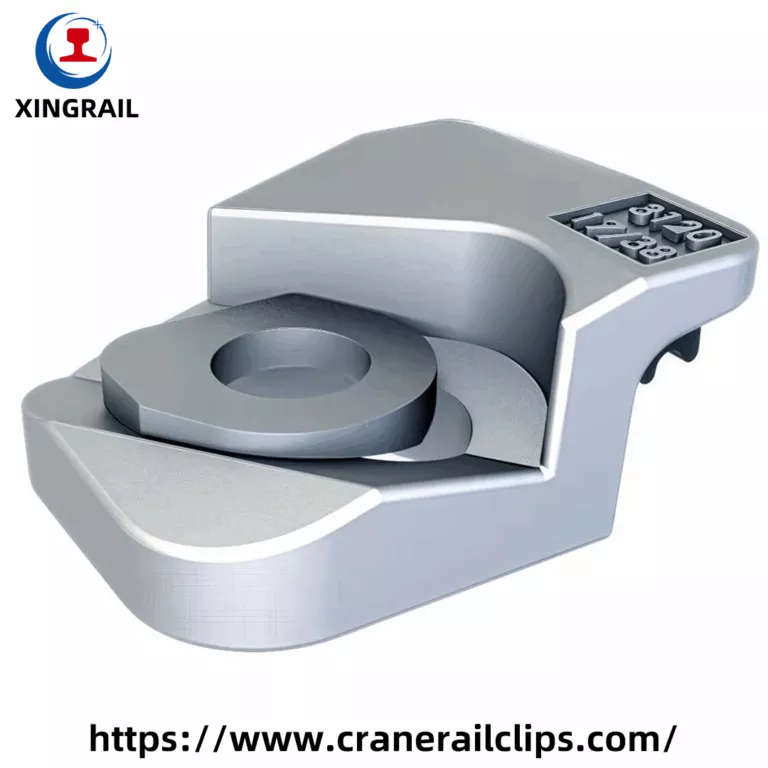
To help you build and maintain a reliable rail network based on Indian standard rail dimensions, we paired our premium crane rail clips with the primary rail profiles used across the country. Review the table below to find the ideal fastening solution based on your specific track measurements.
|
Rail Type |
Base Width |
Height |
Weight |
Recommended Clips |
|
IRS 52 kg/m Rail |
136.0 mm |
156.0 mm |
51.89 kg/m |
32 Series Bolted Rail Clips |
|
IRS 60 kg/m (UIC 60) |
150.0 mm |
172.0 mm |
60.34 kg/m |
9 Series Welded Rail Clips |
Frequently Asked Questions (FAQs)
- How do the 9 Series Welded Clips support massive freight loads on 60 kg/m railways?
India’s heavy-duty freight corridors rely on the robust 60 kg/m rail profile to carry extreme weight. As massive trains pass over these tracks, they trigger severe vertical and lateral vibrations. The 9 Series Welded Clips feature a heavy-duty base that you weld permanently to the underlying steel tie plates. This unyielding connection ensures the 150 mm wide rail base stays securely locked in place, easily absorbing dynamic loads without vibrating loose. - Why do you recommend the 32 Series Bolted Clips for the standard IRS 52 kg/m rail profile?
Engineers frequently use the IRS 52 kg/m rail for mixed-traffic and moderate-load routes across India. This rail features a distinct base width of 136.0 mm, which fits the footprint of the 32 Series Bolted Clips flawlessly. These bolted clips provide exceptional clamping force while giving maintenance teams the flexibility to loosen the bolts and make minor lateral track adjustments when necessary. - Do I need a different rail clip if I switch from a 1,676 mm broad gauge to a 1,435 mm standard gauge?
The width of the track gauge does not dictate your rail clip selection. You must base your choice solely on the cross-sectional dimensions of the steel rail itself. For example, if you lay a 60 kg/m rail on a broad gauge freight line and use the exact same 60 kg/m rail on a standard gauge metro line, both installations require the 9 Series Welded Clips to properly anchor the 150 mm rail base. - How does matching the rail profile dimension improve track stability?
Manufacturers engineer every rail clip with a specific housing size and an elastomeric rubber nose designed to reach a precise height. When you match the clip to the exact base width and height of your Indian standard rail, the rubber nose presses firmly down on the rail foot. This creates maximum downward pressure, known as toe load. This heavy friction pins the rail to the sleeper, preventing gauge widening and stopping forward rail creep. - How do these recommended fastening systems handle thermal expansion in India’s hot climate?
Indian railways endure significant temperature swings, causing steel rails to expand aggressively in the heat and contract during cooler nights. Our 9 Series and 32 Series clips operate as advanced elastic fastening systems. The premium spring steel inside the clips flexes to keep a continuous, heavy grip on the rail flange. This steady friction safely restrains longitudinal rail movement, preventing your tracks from buckling under intense thermal stress.