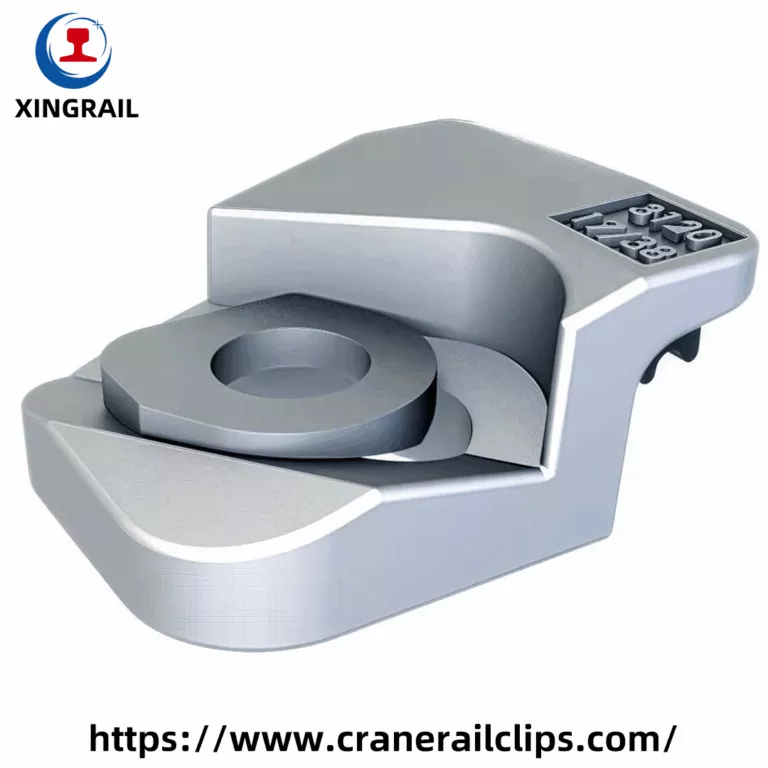
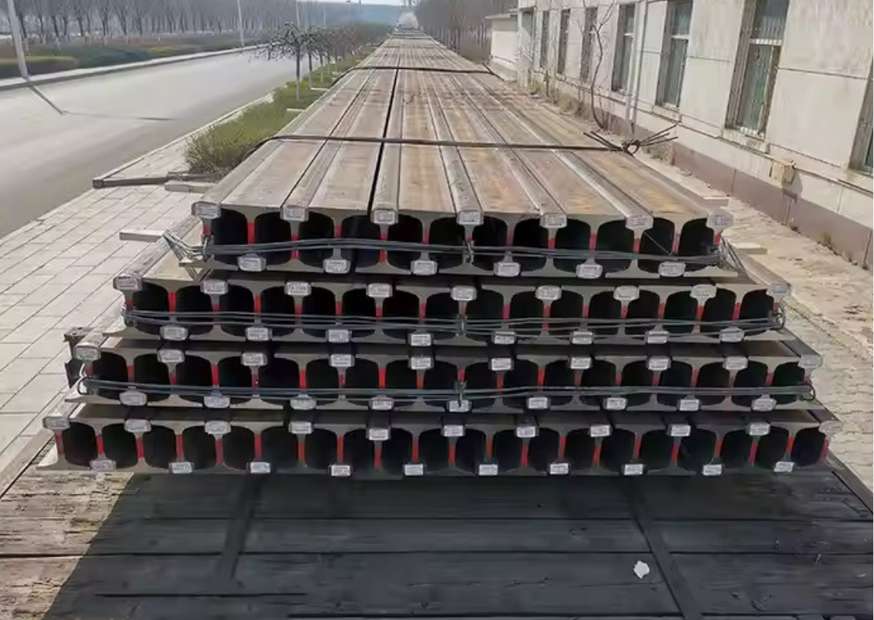
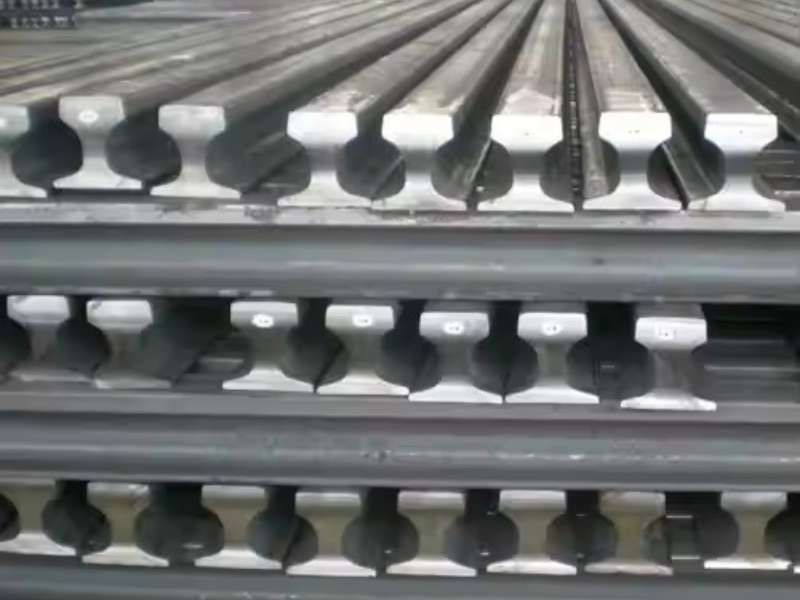
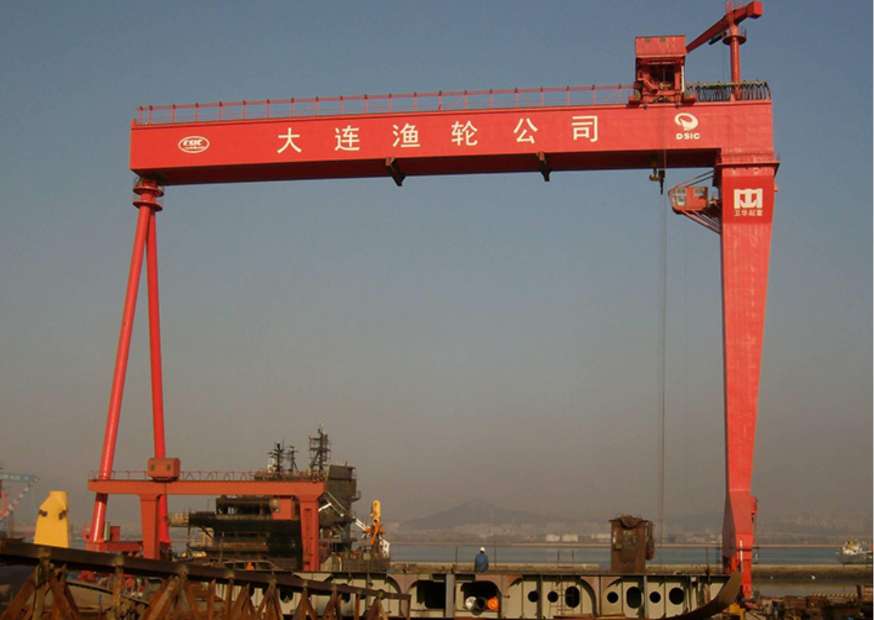
Shipyard gantry rail clips are the most critical—and most overlooked—fastening component on any drydock runway. Goliath gantry cranes span 100 to 180 metres across open dock basins. They lift ship sections weighing 1,000 to 2,000 tonnes. Every movement transfers enormous force directly into the runway rail and its clips. This guide explains how to specify the right fastening system. It covers anti-corrosion treatment, heavy rail matching, lateral thrust absorption, and precise alignment. All specifications reference Xingrail’s engineered solution, which you can explore further at our crane rail clips manufacturer product hub.

Marine Corrosion Protection: Hot-Dip Galvanizing & Dacromet Fasteners
Standard painted or blackened clip bodies corrode within six months in a coastal shipyard. Salt ions penetrate the coating rapidly. Once corrosion begins, bolts seize and clip removal becomes impossible without cutting.
The correct solution uses two layers of protection:
- Clip body: Hot-dip galvanized (HDG) per ISO 1461, with a minimum zinc coating thickness of 85 μm. This level of galvanizing resists chloride-driven corrosion for 20+ years in marine environments.
- Fasteners: Grade 10.9 bolts and nuts coated with multi-layer Dacromet (Geomet). These pass 1,500 hours of neutral salt spray testing per ASTM B117. Crucially, Dacromet eliminates hydrogen embrittlement — a critical advantage over electroplated alternatives on high-strength fasteners.
Together, these treatments ensure the fastening system remains maintainable throughout the full crane service life.
Heavy Rail Matching: DIN A120, QU120 & CR 175 Runway Tracks
Selecting the correct clip starts with the rail profile. Shipyard runways worldwide rely on three dominant heavy rail families:
| Rail Standard | Profile | Base Width | Typical Application |
|---|---|---|---|
| DIN 536 | A100 / A120 | 150–170 mm | European & Asian shipyards |
| GB/T | QU100 / QU120 | 150–170 mm | Chinese state shipyards |
| AREMA | CR 175 (175 lb/yd) | ~165 mm | North American dry docks |
These wide-base profiles distribute enormous crane weights into the civil foundation. However, each profile requires a precisely matched clip geometry. A clip designed for A100 will not provide adequate lateral restraint on A120. For a detailed comparison of clip systems for both profiles, refer to our dedicated guide on din a120 crane rails fastening solutions.
For outdoor and open-air dock runways specifically, our technical guide on gantry cranes rail clips covers critical differences between indoor overhead cranes and exposed shipyard conditions.
Clips for shipyard runways must also provide a lateral adjustment range of ±15 mm to ±20 mm. Foundation settlement near tidal zones is inevitable. Adjustable clips allow surveyors to realign tracks without demolishing the concrete base.

Use our interactive rail clips configurator selector to input your rail profile and runway length. The tool calculates required clip pairs and verifies lateral shear redundancy.
Dynamic Lateral Thrust Absorption & Reinforced Composite Pads
When a Goliath crane skews — that is, when its two legs travel at slightly different speeds — horizontal lateral forces of 250–350 kN develop along the rail head. Standard clips shear or deform under this loading.

Xingrail’s 9220 Series double-bolt heavy forged clips resist up to 300 kN of lateral shear per clip set. The Q355B hot-forged steel body provides tensile strength and ductility far beyond cast or pressed alternatives. Importantly, forging eliminates the internal voids that cause brittle fracture in cast clips under dynamic cyclic loading.
Between the clip base and the rail foot, a steel-reinforced fluted rubber pad is equally essential. Without internal steel reinforcement, standard rubber pads extrude sideways under 600 kN wheel pressure. The steel skeleton prevents this. It also damps high-frequency vibration, protecting the concrete runway beam from fatigue cracking. Learn more about the engineering specifications for this component on our crane rail pad product page.
For more detail on this subject, see continuous rail mounting systems and casting crane rail clips.
Runway Beam Mounting & Alignment Tolerances (ISO 12488-1 Class 1)
Correct clip performance depends entirely on a correctly prepared foundation interface. For Goliath crane runways, a continuous steel sole plate is preferred over discrete stool mountings. Continuous plates distribute wheel loads evenly along the beam. Discrete stools create point-load concentrations that crack high-strength grout over time.
Installation follows this sequence:
- Set and level the continuous sole plate.
- Apply non-shrink high-strength cementitious grout beneath the plate.
- Mount the steel-reinforced elastic pad.
- Set the rail and install clip pairs.
- Survey and adjust span and level to ISO 12488-1 Class 1 tolerances: span tolerance ±3 mm, height difference between rails ≤3 mm over any 2-metre length.

These tolerances prevent abnormal wear on drive gearboxes and wheel flanges — components that cost tens of thousands of dollars to replace on a Goliath crane.
FAQs
Q1: Why do shipyard Goliath runways require forged clips instead of cast clips?
— Goliath cranes generate wheel loads up to 700 kN and lateral skewing forces up to 350 kN. Cast iron clips fracture under this dynamic cyclic loading. Q355B hot-forged steel delivers superior tensile strength, ductility, and fatigue endurance — absorbing up to 300 kN of horizontal shear without failure.
Q2: How are clips protected from marine corrosion in drydocks?
— Clip bodies receive hot-dip galvanizing to ISO 1461 (minimum 85 μm zinc). Fasteners carry a multi-layer Dacromet / Geomet coating rated for over 1,500 hours of salt spray resistance. This combination eliminates both surface corrosion and hydrogen embrittlement.
Q3: Which rail profiles are standard in modern shipyard runways?
— The most common profiles are DIN 536 A100 and A120 (European and Asian yards), GB/T QU100 and QU120 (Chinese yards), and North American CR 175 (175 lb/yd). All feature base widths of 150–170 mm to spread heavy loads into the civil structure.
Q4: Why is a continuous sole plate preferred over discrete mounting stools?
— Discrete stools concentrate loads at intervals, creating stress peaks that crack grout and concrete under 1,000-tonne cranes. A continuous sole plate paired with a reinforced fluted rubber pad distributes loads uniformly, damps vibration, and extends runway service life significantly.
Q5: How does the lateral adjustment feature compensate for drydock settlement?
— Heavy drydock foundations shift due to tidal fluctuation and long-term soil consolidation. Xingrail adjustable clips provide ±15 mm to ±20 mm of lateral travel per rail side. This range allows track realignment to ISO 12488-1 Class 1 tolerances without cutting or re-welding the baseplate.
Deep-Dive Technical Notes
Crane Rail Clip Components
Fastening Hardware
Bolts, nuts and washers are Grade 8.8 or 10.9 depending on the clip series. Grade 8.8 gives around 800 MPa tensile strength. Grade 10.9 gives around 1000 MPa and is used where lateral thrust is higher, typically on gantry cranes with long spans and heavy skew loads. Surface treatment is where most cheap clips fail. Plain black bolts on a coastal quay start rusting inside six months. Salt spray gets into the thread, the nut seizes, and the next maintenance team has to cut every bolt off with a grinder. Hot-dip galvanizing puts 50 to 85 microns of zinc on the surface. Zinc plating is thinner and suits indoor workshops, cold stores and covered halls. For ports, steel mills and outdoor stockyards, HDG is the sensible default. One point that gets missed on site: torque. Over-tightening a clip bolt crushes the rubber tongue and kills the elastic function. Under-tightening lets the clip creep. Follow the torque figure on the drawing for that specific model.