When designing heavy-duty crane runways for ports, shipyards, or steel plants, engineers know that track integrity is non-negotiable. Massive dynamic loads and constant lateral shear forces demand fastening solutions that won’t degrade under pressure. For high-cycle operations, implementing robust welded rail securing systems is the most effective way to prevent track misalignment, reduce wheel flange wear, and eliminate catastrophic structural failures. In this technical guide, we’ll explore the mechanics behind welded rail securing systems, compare them with bolted alternatives, and recommend top-tier hardware configurations to keep your industrial operations moving safely.
Welded Rail Securing Systems
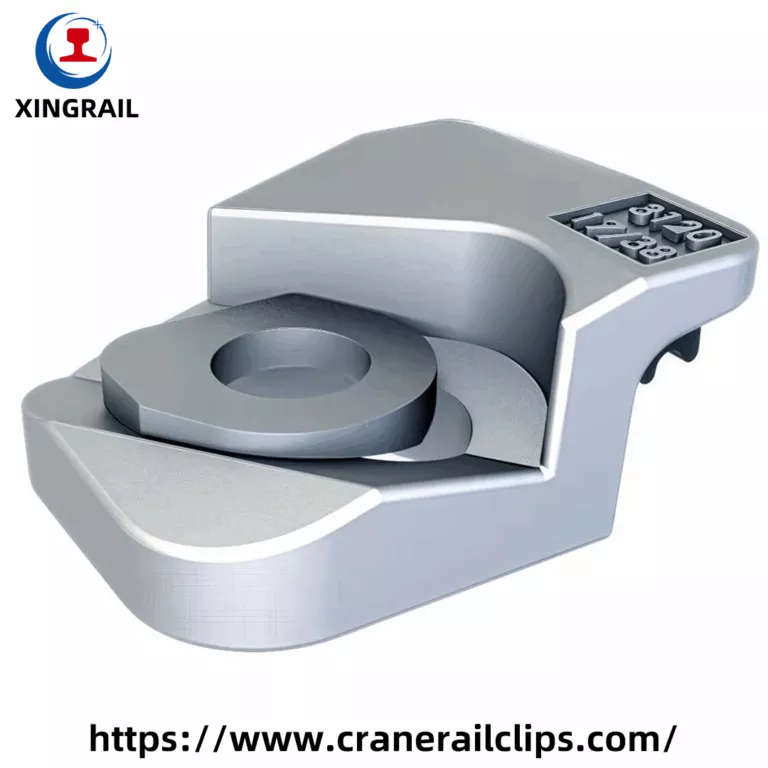
At a fundamental level, welded rail securing systems are permanent track fastening assemblies engineered for extreme industrial environments. Rather than relying solely on threaded anchors set into concrete, these Welded Crane Rail Fastening Systems feature a forged steel base that is welded directly to the underlying steel crane runway beam.
Once the lower base is fused to the girder, an upper clip is bolted into the base, locking the rail flange in place. Modern welded rail securing systems also function as Flexible Welded Rail Fasteners. They incorporate a vulcanized elastomer nose that presses against the rail, absorbing vibrations and allowing for slight, controlled rail deflection. This flexibility is crucial for dissipating stress and preventing fatigue in rigid steel foundations.
Welded vs. Bolted Crane Rail Clips
Choosing between welded rail securing systems and bolted setups comes down to your structural foundation and the anticipated load parameters.
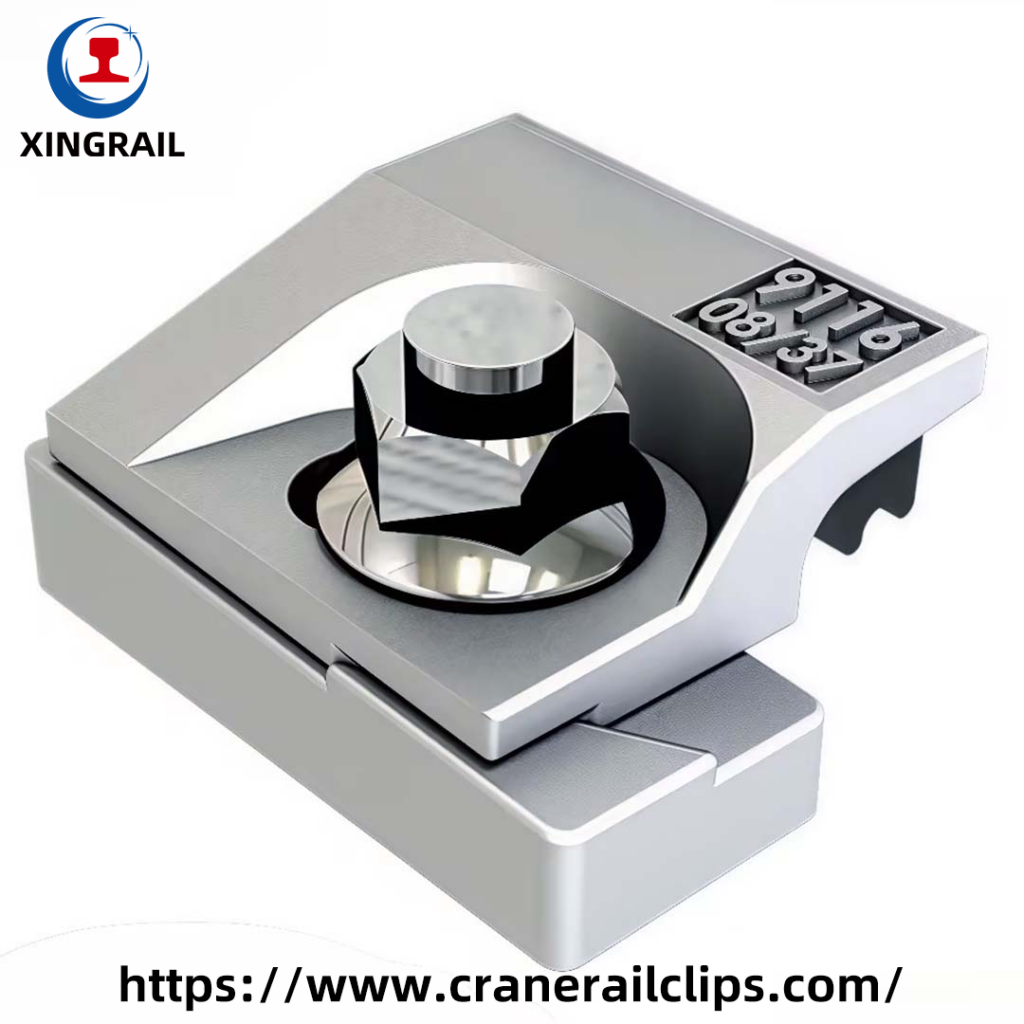
Welded Rail Fixing Clips: Often referred to as Weld-On Rail Fixing Systems, these are the undisputed standard for Heavy-Duty Welded Track Securing. By creating a permanent weld point on a steel girder, they offer unparalleled resistance to lateral forces. They are the ideal gantry crane rail clips for busy ports and high-impact environments.
Bolted Rail Fixing Clips: These crane rail clips are secured entirely by bolts drilled into concrete plinths or steel beams. While bolted crane rail clips don’t handle the extreme shear limits of welded units, they are highly effective overhead crane rail clips for indoor manufacturing and provide easier replacement options for maintenance crews.
Both systems act as excellent crane rail alignment clips, but welded rail securing systems remain the apex choice for steel girder applications.
Recommended XINGRAIL Crane Rail Clips
Sourcing premium forged steel crane rail clips is critical for runway longevity. XINGRAIL engineers exceptional crane rail fixing clips designed to handle the harshest industrial demands.
High-Capacity Welded Solutions
For the ultimate in welded rail securing systems, XINGRAIL offers field-proven reliability:
9 Series Welded Rail Fixing Clips: Engineered for severe duty, this series includes the heavy-duty XINGRAIL 9220/20/45, alongside the XINGRAIL 9216/08/40, XINGRAIL 9120/15/38, and XINGRAIL 9116/08/3.
7 Series Welded Rail Fixing Clips: Highlighted by the adaptable XINGRAIL 7216/20/39, providing excellent lateral force resistance.
Reliable Bolted Solutions
If your facility utilizes concrete foundations requiring crane rail installation clips, XINGRAIL provides robust bolted options:
31 Series Bolted Rail Fixing Clips: Reliable hardware including the XINGRAIL 3116/13/36 and XINGRAIL 3120/17/38.
32 Series Bolted Rail Fixing Clips: Built for higher capacities, featuring the XINGRAIL 3224/20/44, XINGRAIL 3222/17/44, and XINGRAIL 3220/17/38.
Global Track Compatibility
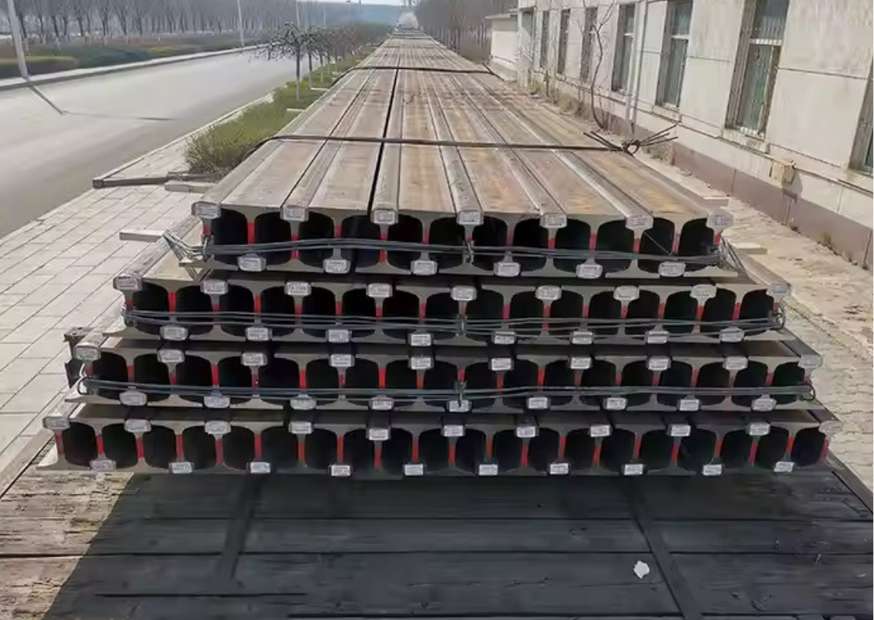
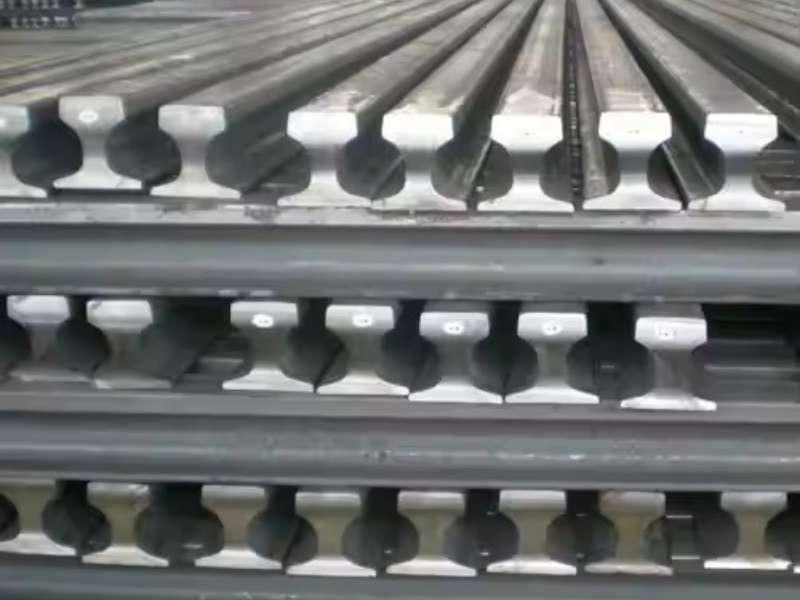
Regardless of your location, XINGRAIL crane rail fastening clips are globally compatible. These assemblies seamlessly secure DIN536 crane rails, AREA crane rails, BS railway tracks, China standard rails, Indian standard rails, GOST rails, SABS rails, and Australian standard rails.
Technical Comparison Table
|
Model |
Mounting Style |
Optimal Use Case |
Key Application |
|
XINGRAIL 3116/13/36 |
Bolted |
Medium lateral loads |
Standard indoor overhead cranes |
|
XINGRAIL 3224/20/44 |
Bolted |
Heavy-duty bolted foundations |
Concrete beam bridge cranes |
|
XINGRAIL 9220/20/45 |
Welded |
Extreme lateral shear forces |
Port STS cranes, shipyards |
|
XINGRAIL 7216/20/39 |
Welded |
High-impact continuous cycles |
Steel mill ladle cranes |
You may also find overhead crane rail types and overhead crane rail track helpful.
Key Industrial Applications
Properly specified welded rail securing systems are deployed across several high-stakes environments:
Port & Terminal Operations: Ship-to-shore (STS) cranes push limits daily. Heavy-duty crane runway beam rail clips prevent the track from walking under continuous, relentless use.
Steel Plants: The extreme vertical loads and thermal expansion found in ladle crane operations require the unwavering hold of welded rail securing systems.
Shipyard Operators: Handling massive vessel components demands precise crane rail support clips to ensure smooth gantry travel without damaging structural supports.
FAQ
Q: Do welded rail securing systems allow for gauge adjustments after installation?
A: Yes. High-quality crane runway rail clips feature an integrated cam or slotted upper clip design. This allows engineers to make essential lateral micro-adjustments before applying final torque to the bolt.
Q: Can I use heavy duty crane rail clips without a rubber pad?
A: It is highly discouraged. Continuous rubber pads distribute point loads and reduce stress concentrations. When paired with welded rail securing systems, pads extend the life of both the rail and the underlying beam.
Q: Why choose forged steel over cast iron for crane clips?
A: Forged steel possesses a tighter, more aligned grain structure, delivering significantly higher tensile strength and fatigue resistance compared to cast alternatives.
At the end of the day, cutting corners on track hardware is a recipe for expensive downtime. High-quality crane rail clips are the primary defense against lateral track shifting. By investing in premium welded rail securing systems from XINGRAIL, procurement managers and engineers guarantee optimal crane runway safety, perfect gauge alignment, and exceptional long-term durability.