An efficient material handling system is the backbone of many industrial operations. The overhead crane rail track serves as the fundamental pathway for these powerful machines. It guides cranes safely and precisely. Understanding the components, installation, and maintenance of these systems is important for operational safety and efficiency. This guide covers the necessary aspects of crane rail systems, from selection to long-term care.
Overhead Crane Rail Systems
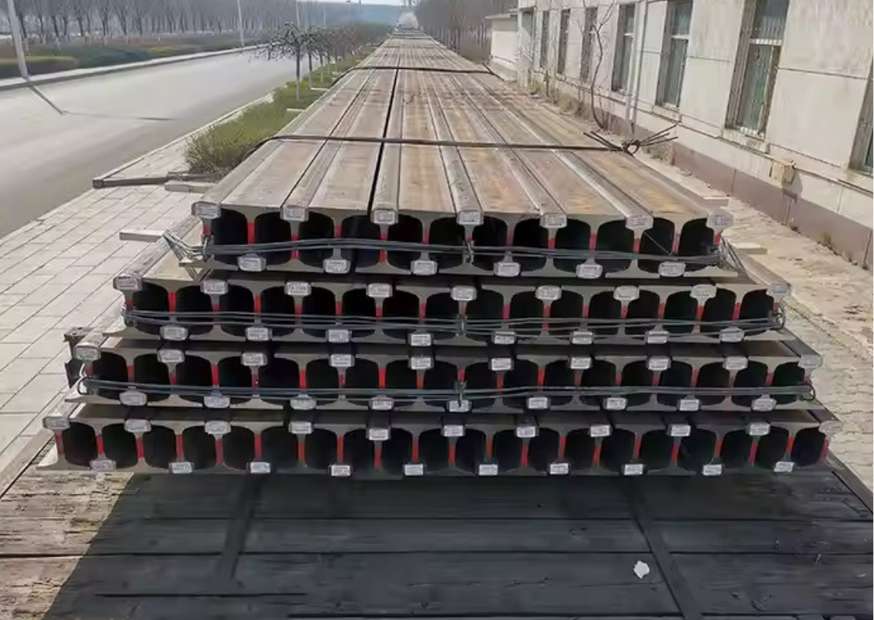
Overhead crane rail systems are comprehensive structures that provide the runway for cranes. They are indispensable in environments like manufacturing plants, warehouses, and shipyards. Generally, these systems fall into two main categories.
First, top-running systems have the crane traveling on rails mounted atop runway beams. These are ideal for handling very heavy loads and offer high hook height. Conversely, under-hung systems feature cranes suspended from the bottom flange of the runway beams. These are excellent for maximizing floor space in facilities with lower ceilings. Both systems significantly improve workflow, reduce manual labor, and enhance workplace safety.
Crane Rail Track Installation
Proper installation is critical for the performance and longevity of an overhead crane rail track. The process requires precision and adherence to strict standards.
Initially, the support structure must be prepared and verified to meet load requirements. Then, the runway beams are installed and aligned. Following this, the crane rail is laid on the beams. Technicians must meticulously align the rails to ensure they are parallel, straight, and at the correct elevation. Key tolerances for alignment, span, and elevation must be strictly followed. At last, the rails are secured using specialized clips and pads. A common challenge is achieving perfect alignment over long spans. Laser alignment tools and experienced technicians can overcome this issue effectively.
Heavy-Duty Crane Rail Tracks
Heavy-duty applications demand robust and durable rail solutions. These tracks are specifically engineered to withstand immense loads and continuous use in harsh environments. For example, steel mills and port facilities rely on heavy-duty crane rail tracks to move massive coils and shipping containers.
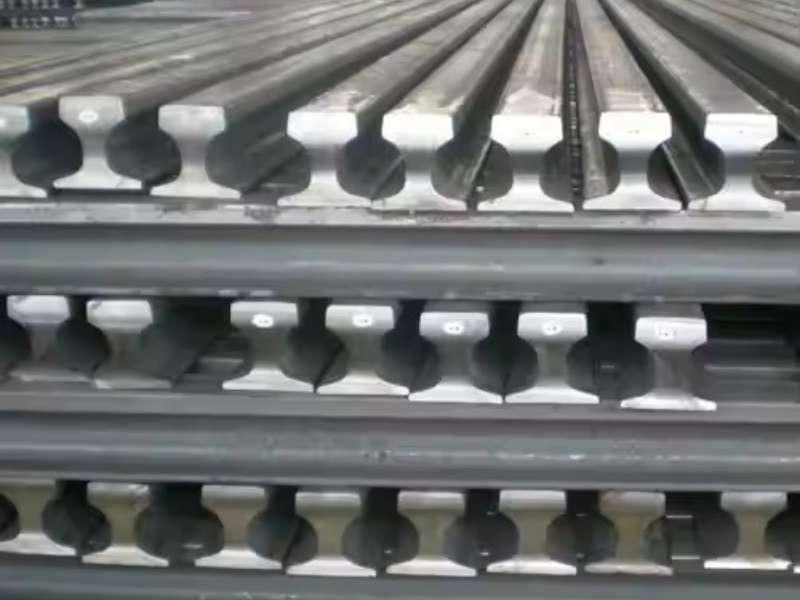
These rails have a larger profile, a wider head, and a thicker web compared to standard rails. They are also made from high-strength steel with specific chemical compositions to resist wear and deformation. The emphasis on durability ensures the system can operate reliably under extreme stress.
Monorail Crane Track Solutions
Monorail crane track solutions offer a flexible and space-efficient alternative for material handling. A monorail consists of a single beam that serves as the track for a trolley and hoist. This design is highly adaptable to various facility layouts.
Monorails are frequently used in production lines, assembly areas, and workshops. They can navigate curves, switches, and inclines. Their primary benefit is optimizing vertical space and keeping the factory floor clear of obstructions. This makes monorail systems an excellent choice for facilities where space is limited.
Crane Rail Track Specifications
Adhering to crane rail track specifications is non-negotiable for safety and operational integrity. These specifications cover dimensions, material properties, and weight capacity. Each rail profile is designed for a specific range of applications.
Engineers use these details to select the appropriate rail for a given crane system. For instance, a lighter rail might be suitable for a workshop crane, while a port crane will require a much heavier, more robust rail. Following these guidelines ensures the entire system functions as a cohesive and safe unit.
|
Rail Profile |
Weight (lbs/yd) |
Head Width (in) |
Base Width (in) |
Height (in) |
Typical Applications |
|
ASCE 30 |
30 |
1.75 |
3.00 |
3.00 |
Light-duty monorails, transfer cars |
|
ASCE 60 |
60 |
2.38 |
4.25 |
4.25 |
Medium-duty overhead cranes |
|
CR 104 |
104 |
2.94 |
5.12 |
5.50 |
Heavy-duty EOT cranes, industrial |
|
CR 135 |
135 |
3.00 |
5.50 |
6.88 |
Gantry cranes, high-capacity loads |
|
CR 175 |
175 |
4.00 |
6.00 |
7.00 |
Port cranes, steel mill applications |
Overhead Crane Rail Weight Chart
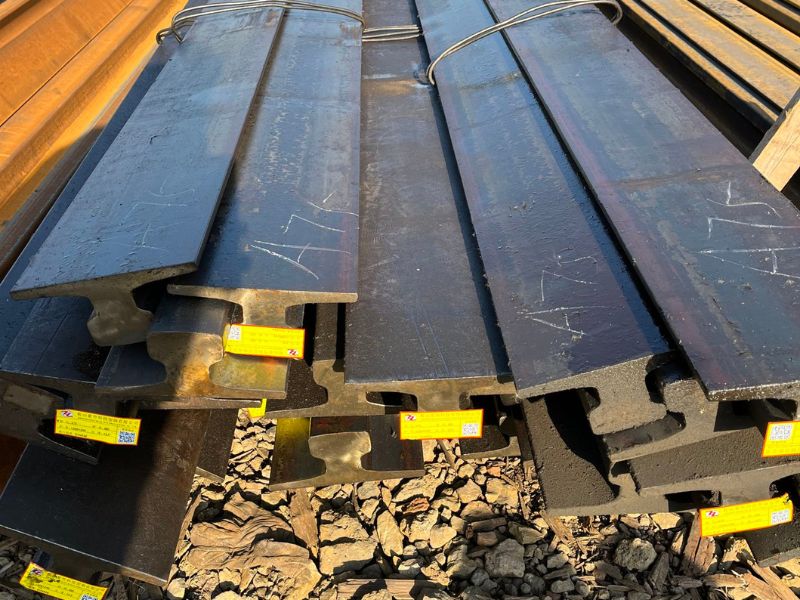
Selecting the correct rail weight is a critical decision in designing a crane system. The weight, typically measured in pounds per yard or kilograms per meter, directly relates to the rail’s strength and load-bearing capacity. An overhead crane rail weight chart provides necessary data for this selection process.
For example, a rail weighing 60 lbs/yd can support a medium-duty crane in a general manufacturing setting. In contrast, a rail weighing 175 lbs/yd is necessary for a massive gantry crane at a port. To choose the right rail, engineers must consider the crane’s maximum wheel load, the frequency of use, and the operating environment.
Industrial Crane Rail Tracks
Industrial crane rail tracks are the workhorses of modern industry. You can find them in nearly every sector that involves heavy material handling. In manufacturing, they transport raw materials and finished products. In logistics, they are necessary for loading and unloading goods in distribution centers.
The use of industrial-grade crane rails offers several advantages. They are built for high-cycle operations and can withstand the rigors of an industrial environment. Furthermore, these systems streamline production processes. Their reliability is a key factor in maintaining a smooth and efficient supply chain.
Crane Rail Track for Heavy Loads
An overhead crane rail track for heavy loads is engineered to a higher standard. Applications like gantry cranes and port cranes place enormous stress on the rail system. Therefore, the specifications for these rails are stringent.
Strength and precise alignment are paramount. The rails must be perfectly straight and level to prevent excessive wheel wear and potential derailment. The foundation supporting the rail must also be incredibly stable. Misalignment can lead to catastrophic failure.
Crane Rail Track Maintenance
Consistent crane rail track maintenance is necessary for ensuring safety and extending the life of the system. A proactive maintenance program helps identify potential problems before they become serious issues.
Best practices include regular visual inspections to check for wear, cracks, or loose components. Technicians should also perform periodic alignment checks to ensure the rails remain within tolerance. Common issues like rail wear can be managed through lubrication and by ensuring the crane wheels are correctly aligned. Addressing misalignment promptly prevents damage to both the rail and the crane itself. Regular inspections are the most effective way to guarantee the long-term safety and reliability of the crane system.
Crane Rail Track Accessories
Various crane rail track accessories are necessary to create a complete and secure system. These components work together to ensure the rail performs correctly under load.
necessary accessories include rail clips. Rail pads are placed between the rail and the support beam to absorb shock and reduce vibration. Additionally, splice bars are used to join sections of rail together. These accessories are not optional; they are integral to the performance and safety of the entire crane rail system.
Common Questions and Answers
- What are the types of overhead crane rail systems?
Overhead crane rail systems include top-running and under-hung configurations. Top-running systems are for heavy loads, while under-hung systems are ideal for maximizing floor space. - How is a crane rail track installed?
Installation involves aligning the rail on prepared support beams. - What are heavy-duty crane rail tracks used for?
Heavy-duty crane rail tracks are used in applications requiring high load capacities. Examples include gantry cranes in shipyards and large overhead cranes in steel mills. - Why is crane rail maintenance important?
Regular maintenance prevents excessive wear, misalignment, and safety hazards. It ensures the longevity and efficiency of the crane system. - What accessories are necessary for crane rail tracks?
necessary accessories include rail clips, bolts, pads, and splice bars. These components secure the rail, absorb vibration, and ensure stability and safety during crane operations.
Overhead Crane Rail Track Systems
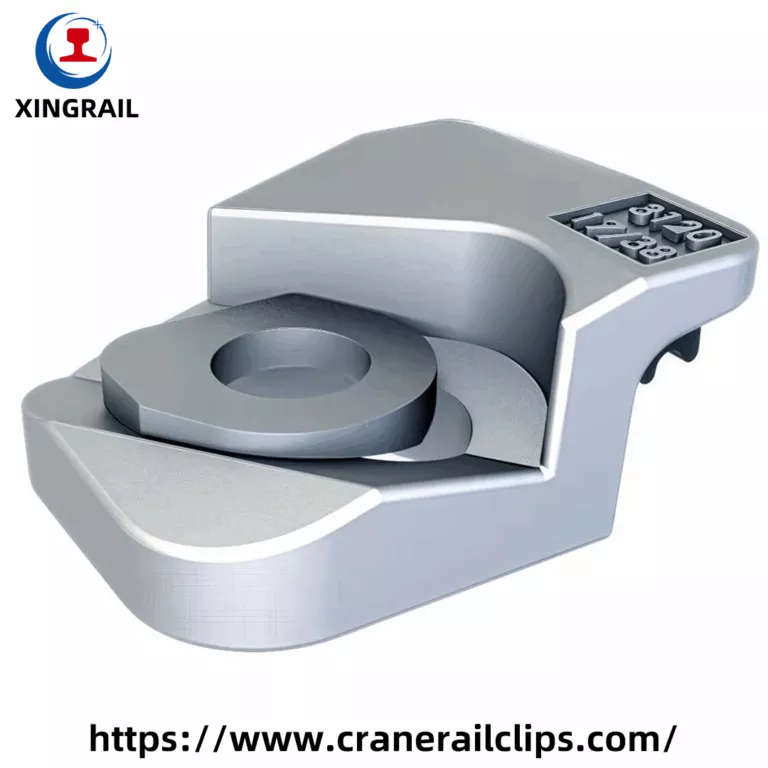
The overhead crane rail track is a critical component in industrial material handling systems, providing a stable and precise pathway for cranes. To ensure the rails remain securely in place under dynamic loads, specialized crane rail clips are used. These clips are designed to provide consistent clamping force, absorb vibrations, and maintain alignment over time. Below is a detailed table showcasing the specifications of some of the most commonly used crane rail clips for overhead crane rail systems:
|
Clip Model / Type |
Material Grade |
Bar Diameter (mm) |
Clamping Force (Toe Load) (kN) |
Fatigue Life (Cycles) |
Hardness (HRC) |
Surface Treatment |
|
E-Clip (E1609) |
60Si2MnA |
16 |
8.5 – 10.0 |
> 3 Million |
44 – 48 |
Plain Oiled / Galvanized |
|
E-Clip (E2007) |
60Si2MnA |
20 |
10.0 – 12.5 |
> 3 Million |
44 – 48 |
Dacromet / Sherardized |
|
E-Clip (E2055) |
60Si2MnA |
20 |
11.0 – 13.0 |
> 5 Million |
44 – 48 |
Electro-coating |
|
SKL 14 Tension Clamp |
38Si7 |
13 |
9.0 – 11.0 |
> 5 Million |
42 – 47 |
Black / Zinc Plated |
|
Fastclip (FC 1504) |
Spring Steel |
15 |
10.0 – 12.0 |
> 5 Million |
44 – 48 |
Anti-corrosion Paint |
You may also find overhead crane rail installation and crane rail welded fixing clips helpful.
Related Products and Internal Links
For more detailed information about specific crane rail clips, you can explore the following resources:
- Crane Rail Clips for Overhead Crane Runway Guide
- Welded Crane Rail Clips: Complete Guide for Gantry Cranes
- Welded Crane Rail Clips: Engineering Guide & Solutions
- Crane Rail Clips for Industrial Cranes Guide
FAQs About Crane Rail Clips for Overhead Crane Rail Tracks
- What are the key features of crane rail clips for overhead systems?
Crane rail clips for overhead systems provide consistent clamping force, absorb vibrations, and maintain rail alignment under dynamic loads. - Why is clamping force important in crane rail clips?
Clamping force ensures the rail remains securely in place, preventing lateral movement and uplift caused by crane operations. - What materials are used in crane rail clips?
Crane rail clips are typically made from high-quality spring steel, such as 60Si2MnA, to ensure durability and elasticity. - Can crane rail clips be used interchangeably across different systems?
No, each crane rail clip is designed for specific load requirements and rail profiles. Using the wrong clip can compromise safety and performance. - How does surface treatment enhance the performance of crane rail clips?
Surface treatments like galvanization or anti-corrosion paint protect the clips from rust and wear, especially in harsh industrial environments.