Understanding how to calculate rail weight is fundamental in railway engineering and logistics. Accurate calculations are not just a matter of compliance. They directly influence the safety, efficiency, and longevity of a rail network. Every track component, from the ties to the fasteners, depends on the correct rail specification. This guide provides a detailed breakdown of the formulas, standards, and factors involved in determining rail weight.
Rail Weight Formula
A common method for estimating rail weight involves a volumetric formula. To find the volumetric weight in kilograms, you can use the formula: Length × Width × Height / 5000. This approach provides a quick estimate for shipping and logistics. However, for precise engineering specifications. This accuracy is necessary. It ensures the rail can support the intended axle loads and withstand environmental stresses.
Rail Weight Per Meter
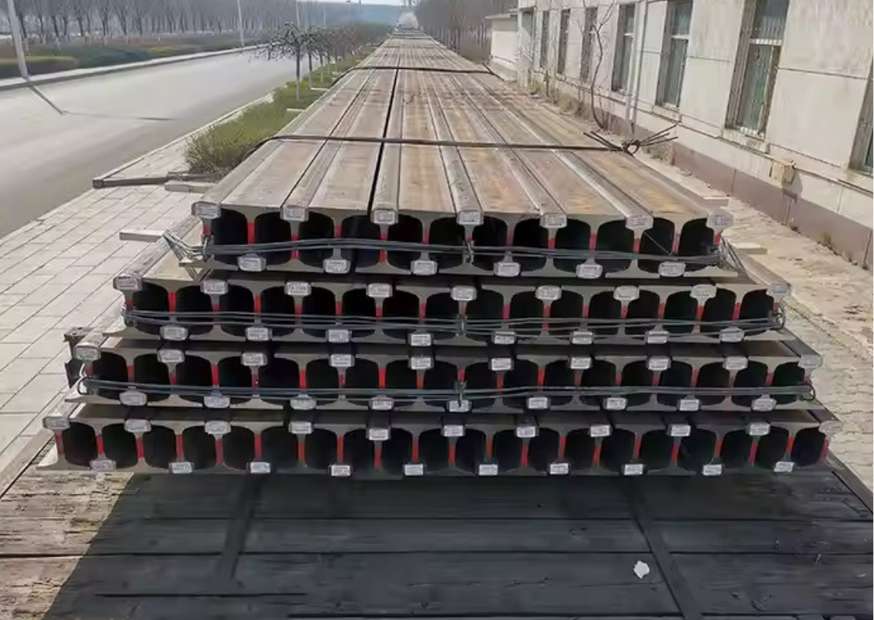
Calculating rail weight per meter is a standard industry practice. It provides a uniform metric for design and procurement. The process is straightforward. First, you determine the cross-sectional area of the rail profile in square millimeters. Then, you multiply this area by the density of steel. The result gives you the rail weight in kilograms per meter (kg/m). For example, a common 60 E1 rail section has a weight of 60.21 kg/m. Similarly, a 54 E1 rail section weighs 54.43 kg/m. The material composition and specific design of the rail profile are key factors that influence the final weight per meter.
Rail Weight Per Yard
Many online tools and calculators are available to determine rail weight per yard. These tools simplify the process, especially when working with imperial units. They are particularly useful for projects in regions like the United States where pounds per yard (lbs/yd) is the standard measurement. To convert between metric and imperial systems, you can use a simple conversion factor. One kilogram per meter (kg/m) is approximately equal to 2.0159 pounds per yard (lbs/yd). Conversely, one pound per yard equals about 0.4961 kilograms per meter. For instance, a 115RE rail.
Rail Weight Analysis
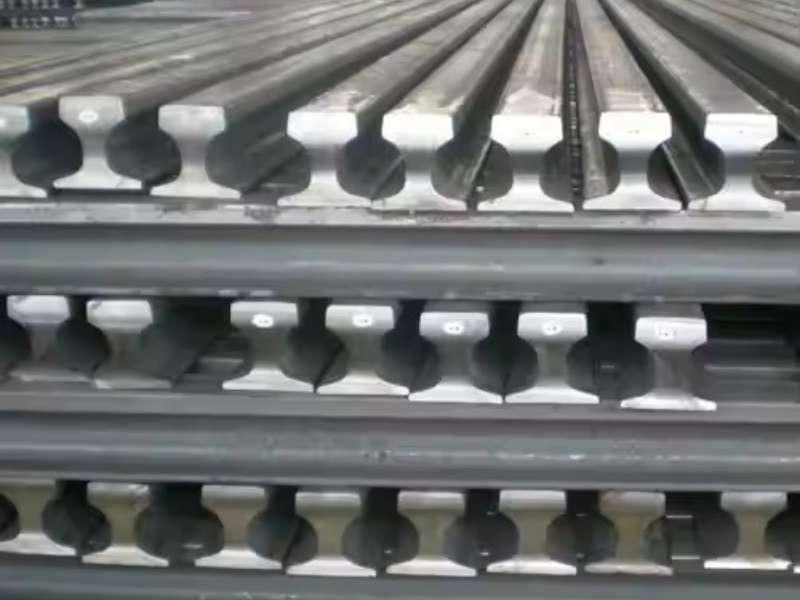
A detailed rail section weight analysis is important for understanding a rail’s load-bearing capacity. Different rail sections are designed for specific applications, and their weight reflects their strength. Rail profiles are standardized by country and railway authority. For example, in the USA, the American Railway Engineering and Maintenance-of-Way Association (AREMA) specifies profiles like 115RE and 136RE. In Europe, the “E” series, such as 60 E1 (UIC60), is common. China uses its own standards like the 75 kg/m rail for its heavy-haul lines. The weight of the rail section is a primary determinant of how much load it can safely carry over time.
You can use below rail weight calculator :
Rail Weight Calculator

Rail Weight by Country
Rail weight standards vary significantly across the globe. This variation reflects different operational philosophies, traffic demands, and historical developments. Heavy-duty freight lines typically use heavier rails than passenger lines or light rail systems. For instance, high-speed rail networks often use rails weighing 60 kg/m or more to ensure stability and safety at high velocities. In contrast, heavy-haul lines in Australia and North America might use rails weighing up to 70 kg/m to handle extreme axle loads.
Here is a comparison of some common rail standards:
|
Standard |
Country/Region |
Nominal Weight (kg/m) |
Application |
|
115RE |
USA |
56.9 |
Mainline, Freight |
|
136RE |
USA |
67.5 |
Heavy Haul, High-Density |
|
141RE |
USA |
70.0 |
Very Heavy Haul |
|
60 E1 (UIC60) |
Europe |
60.21 |
High-Speed, Mainline |
|
54 E1 (UIC54) |
Europe |
54.43 |
Mainline, Mixed Traffic |
|
BS113A |
UK |
56.1 |
Mainline |
|
P50 |
Russia/CIS |
51.67 |
Mainline |
|
P65 |
Russia/CIS |
64.72 |
Heavy Duty, Mainline |
|
50kg |
China |
51.51 |
Mainline |
|
60kg |
China |
60.64 |
High-Speed, Heavy Haul |
|
75kg |
China |
74.4 |
Dedicated Heavy Haul |
|
AS 60 |
Australia |
60.3 |
Heavy Haul |
|
AS 68 |
Australia |
68.2 |
Very Heavy Haul |
Rail Weight Axle Load
The relationship between axle load and rail weight is direct and critical. Axle load refers to the total weight placed on the track by a single pair of wheels. A heavier rail distributes this load over a larger area of the track structure. Consequently, it reduces stress on the ties, ballast, and subgrade. Using a rail that is too light for the applied axle loads can lead to rapid wear, metal fatigue, and potential track failure. As a rule, higher axle loads demand heavier and more robust rail sections to ensure durability and operational safety.
Rail Weight in Industrial Applications
In industrial settings, the principles of how to calculate rail weight are applied to specialized tracks. These tracks are found in ports, steel mills, and manufacturing plants. They often support gantry cranes, transfer cars, and other heavy machinery. Crane rails, for example, have a different profile from standard railway tracks. They are designed to handle immense, concentrated loads. Calculating the correct weight and profile for these industrial rails is necessary to prevent deformation and ensure the smooth, safe operation of critical equipment. Accurate rail weight calculation ensures the entire system, from the foundation to the crane itself, functions as a cohesive and reliable unit.
Common Questions and Answers
- What is the formula for calculating rail weight?
A basic formula for volumetric weight is Length × Width × Height / 5000. For engineering, weight is calculated by multiplying the rail’s cross-sectional area by the density of steel. - How do you calculate rail weight per meter?
You multiply the rail’s cross-sectional area (in square meters) by the density of steel (approximately 7850 kg/m³). - What is the standard rail weight in the USA?
Common standard rail weights in the USA include 115RE (approximately 57 kg/m) and 136RE (approximately 68 kg/m). - Why is rail weight important?
Rail weight is a key indicator of a rail’s strength, load-bearing capacity, and durability. It directly impacts the track’s ability to safely handle train traffic and axle loads. - What tools can I use to calculate rail weight?
Many online calculators and conversion tools are available. They can quickly convert between units like pounds per yard and kilograms per meter and calculate weights for specific rail profiles.
How to Calculate Rail Weight
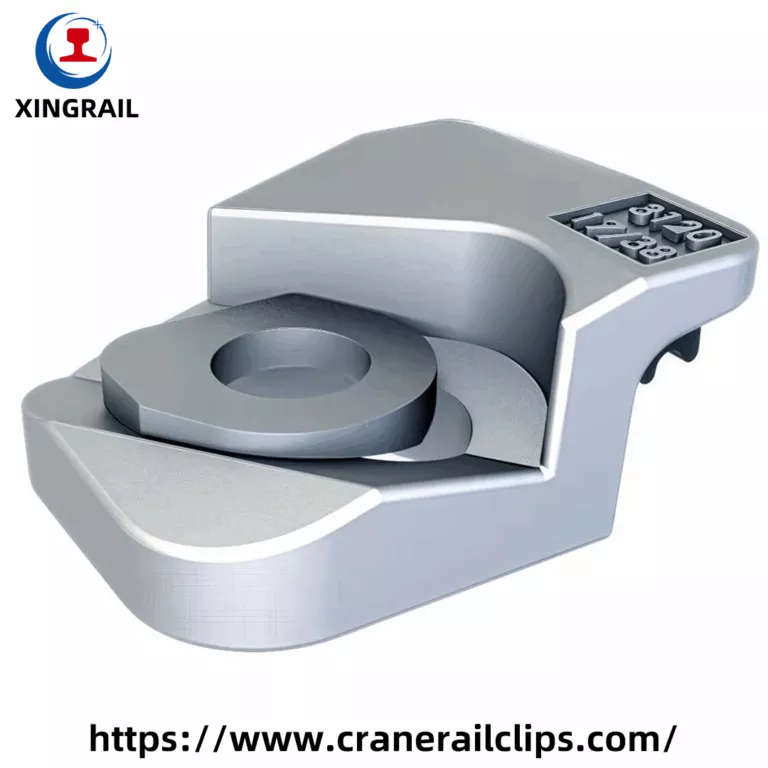
Understanding how to calculate rail weight is essential for ensuring the safety and efficiency of railway systems. Rail weight directly impacts the load-bearing capacity and durability of the track. Complementing these rails are crane rail clips, which are critical for securing rails to sleepers and maintaining alignment under heavy loads. Below is a detailed table showcasing the specifications of crane rail clips compatible with various rail weights:
|
Clip Type |
Material |
Clamping Force (kN) |
Fatigue Life (Cycles) |
Application |
|
Pandrol e2007 |
60Si2MnA |
9.0 – 11.0 |
≥ 3 Million |
Heavy-haul and high-speed rail systems |
|
Vossloh SKL 14 |
38Si7 |
10.0 – 12.0 |
≥ 5 Million |
High-speed and heavy-duty applications |
|
WJ-7 |
Spring Steel |
Adjustable |
≥ 5 Million |
Ballastless track systems in China |
To source any clip type in that table, start from our Pandrol plate and clip matching notes — the row values above are exactly the parameters a supplier must match.
For a deeper look at the subject, see rail size and weight chart guide and rail weight by type and size.
Related Products and Internal Links
For more detailed information about specific crane rail clips, you can explore the following resources:
- Crane Rail Clips for Overhead Crane Runway Guide
- Welded Crane Rail Clips: Complete Guide for Gantry Cranes
- Welded Crane Rail Clips: Engineering Guide & Solutions
- Crane Rail Clips for Industrial Cranes Guide
FAQs About Crane Rail Clips for Rail Weight Applications
- What is the formula for calculating rail weight?
A basic formula is Length × Width × Height / 5000. For engineering purposes, weight is calculated by multiplying the rail’s cross-sectional area by the density of steel. - Why are crane rail clips important for rail systems?
Crane rail clips secure the rail to the sleeper, ensuring stability, alignment, and vibration absorption under heavy loads. - What materials are used in crane rail clips?
High-grade spring steel alloys like 60Si2MnA or 38Si7 are commonly used for durability and elasticity. - How do rail clips maintain track stability?
Rail clips provide clamping force, resist lateral forces, and control longitudinal movement, ensuring the rail remains securely in place. - What are the advantages of elastic rail clips?
Elastic rail clips, such as Pandrol e2007, offer high clamping force, durability, and the ability to absorb vibrations, making them ideal for heavy-duty applications.