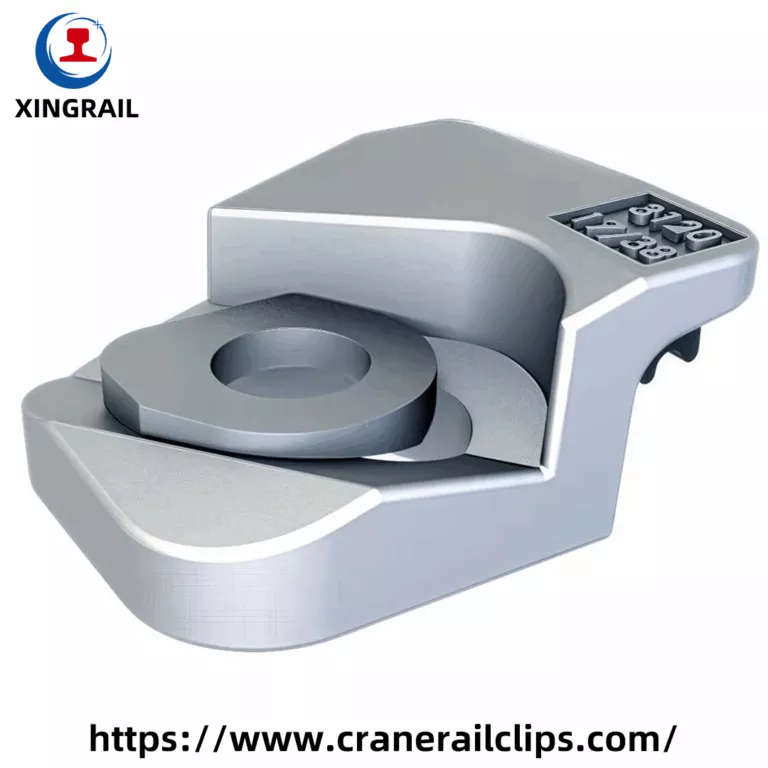
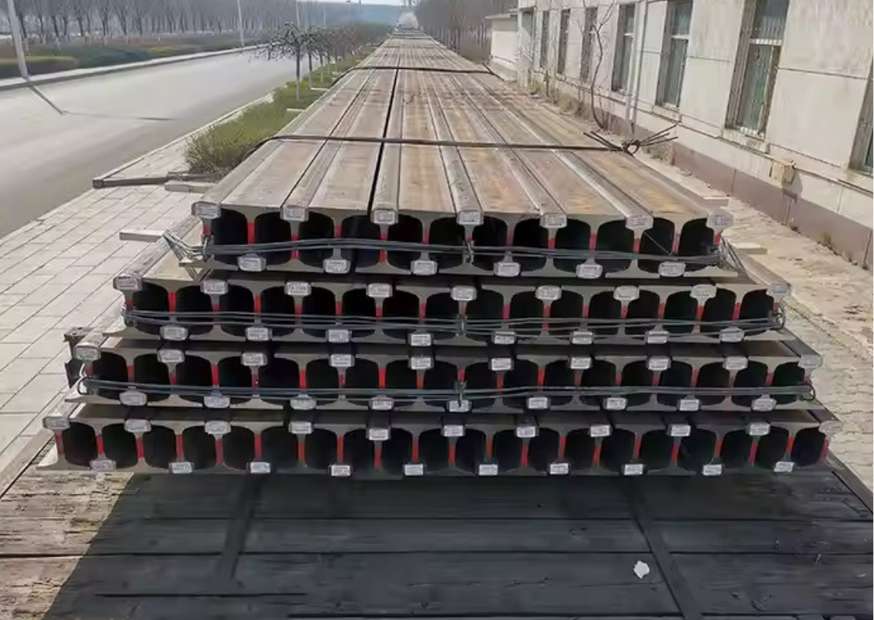
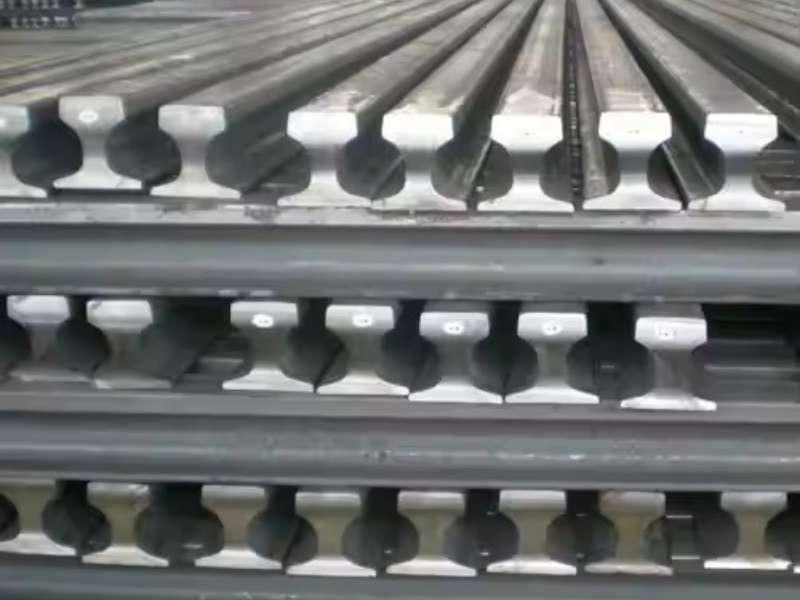
The bearing plate in a railway is a very important part of rail track bearing plate systems. It links the sleeper to the rail. Also, it reduces the wear and tear that train operations cause by dynamic forces. The bearing plate in the railway is made to handle heavy loads and harsh weather. It makes the track system last longer. Also, its precise design helps trains move quickly and easily. In this post, Xingrail will discuss the common issues of bearing plate in railway.
Bearing plates and the rail bearing plate under a crane rail fail for the same reasons — soft shims, poor flatness and trapped water.
Common Issues with Bearing Plate in Railway
A bearing plate in railway infrastructure faces numerous challenges that can compromise track integrity. For instance, misalignment is a frequent problem. An improperly seated plate creates uneven load distribution. Consequently, this leads to premature component failure and potential track instability. Heavy loads from passing trains also cause significant wear and tear over time. This constant stress can exceed the material’s endurance. Therefore, regular inspection is important for identifying these issues early.
Furthermore, environmental factors contribute heavily to degradation. Corrosion and material breakdown are significant concerns, especially in regions with harsh weather. Moisture and contaminants can accelerate the deterioration of steel plates. In addition, improper installation practices can create immediate problems. Installers must follow precise railway bearing plate specifications to ensure correct function. Failure to do so can negate the plate’s purpose from the start.
At last, compatibility issues within rail track bearing plate systems present another challenge. A bearing plate must work seamlessly with the rail, fasteners, and ties. Mismatched components can lead to inefficient performance and increased stress on the entire track structure. Subsequently, this incompatibility undermines the stability and safety of the railway. Ensuring all parts of the system are correctly matched is necessary for long-term operational success.
The plate works with the fastener that presses the rail down onto it — on modern elastic track, that is the e clip fastening, paired with a rail pad and insulator.

Solutions to Address Bearing Plate Issues
Proactive measures can effectively mitigate problems with a bearing plate in railway systems. First, regular inspection and maintenance are fundamental. Maintenance crews should frequently check for signs of wear, corrosion, and misalignment on the bearing plate for railway tracks. Consequently, early detection allows for timely repairs or replacements. This prevents minor issues from escalating into major track failures. Consistent upkeep ensures the long-term reliability and safety of the entire railway infrastructure.
Furthermore, advancements in materials and installation practices provide robust solutions. Using advanced materials, such as high-strength alloys or composite polymers, can significantly improve durability and resistance to environmental degradation. In addition, strict adherence to railway bearing plate specifications during installation is necessary. This guarantees correct alignment and load distribution from the very beginning. Proper installation prevents many common issues before they can even start.
The implementation of modern railway bearing plate technology. This data helps predict potential failures. Educated crews can correctly install and maintain rail track bearing plate systems, ultimately reducing human error and improving the system’s longevity.
For a deeper look at the subject, see railway track construction and rubber pads for railway tracks.
People Also Ask Questions
-
What is the primary function of a bearing plate in railway tracks?
The primary function of a bearing plate is to evenly distribute the heavy load from a train across the sleeper. This prevents rail deformation and sleeper damage by providing a stable, flat surface that reduces localized stress on the track foundation. Essentially, it acts as a critical support interface between the steel rail and the timber or concrete sleeper.
-
What materials are commonly used for manufacturing bearing plates, and why?
Common materials for bearing plates include mild steel and cast iron due to their strength and cost-effectiveness. For more demanding applications, advanced alloys and composite materials are used as they offer enhanced durability and corrosion resistance. The choice of material depends on the specific requirements of the railway system.
-
What are the different types of bearing plates, and where are they used?
There are various types of bearing plates, including flat, ribbed, and grooved designs.
Flat bearing plates are used in standard track sections.
Ribbed and grooved plates provide additional stability and grip, particularly for holding the rail gauge securely.
These plates are strategically placed at high-stress points such as track joints, sharp curves, and turnouts to enhance support and maintain track integrity.
We at Xingrail know how important the bearing plate is to railway systems. We are experts at coming up with reliable ways to keep tracks stable and safe. Focus on practical, effective steps, like fixing misalignment and stopping wear and corrosion. Our team is dedicated to providing high-quality goods and services that meet the specific needs of railway infrastructure. We help keep rail networks around the world safe by putting accuracy and durability first. For professional help with optimizing your rail track bearing plate systems, trust Xingrail.