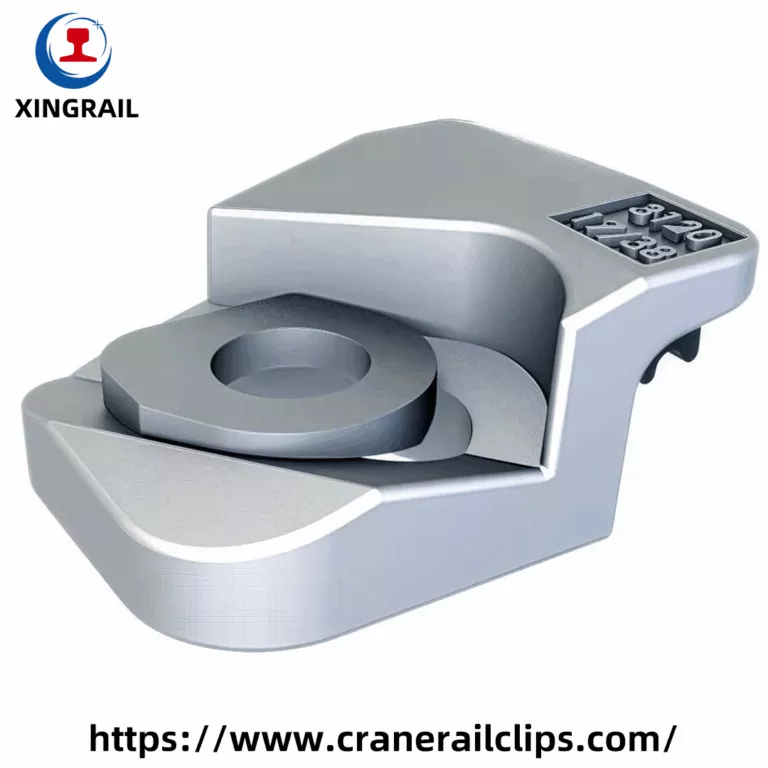
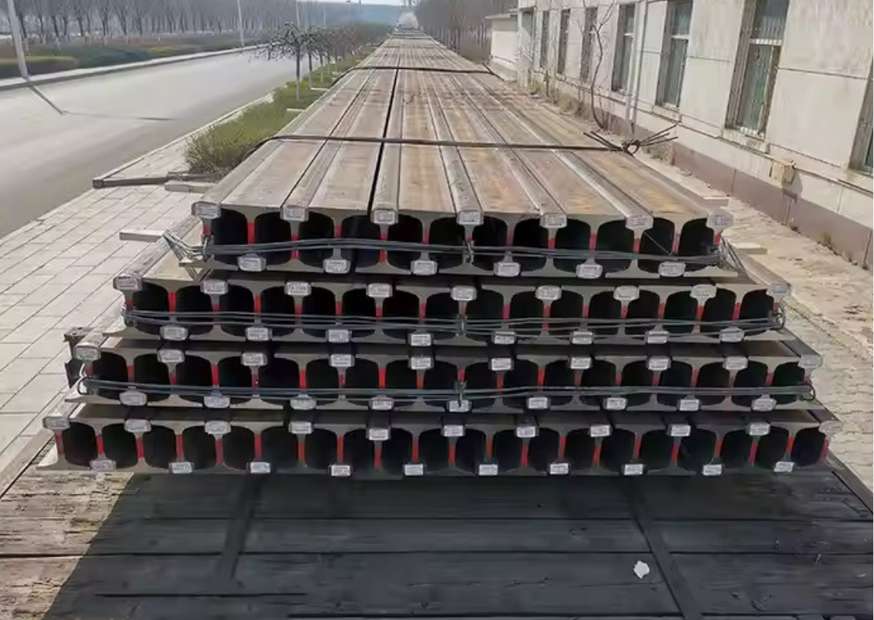
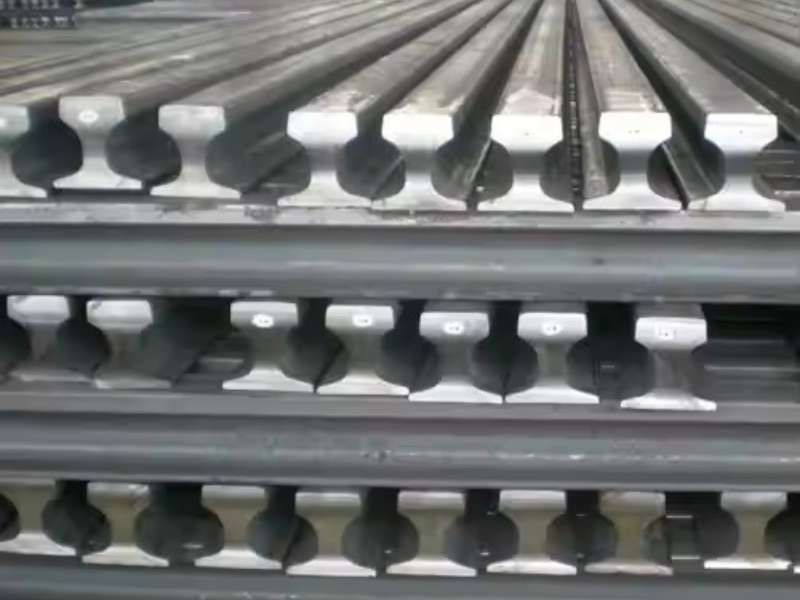
A crane rail base plate sits between the rail foot and the runway beam. It spreads the wheel load across the beam flange and gives installers a flat, adjustable datum before the rail is clamped in place. Without it, point loads concentrate at the rail foot and accelerate fatigue in the structure below.
This guide covers types, dimensions, materials, and how to order direct from a manufacturer.

What Is a Crane Rail Base Plate?
A crane rail base plate is a machined or cut steel plate sized to match the rail foot width. It has three jobs: distribute vertical load, provide a level bearing surface, and locate the bolt pattern that holds the crane rail clips.
It is often called a sole plate in British and European standards, or a bearing plate in North American practice. All three names describe the same component for crane runways. The term “tie plate” belongs to railway track and refers to a different product entirely.
A railway pad is not the same thing. The pad is an elastomeric layer for vibration damping. The base plate is the rigid steel carrier beneath it. Both are often stacked in the same assembly.
Types of Crane Rail Base Plates
Four types cover most industrial applications:
- Flat base plate — a rectangular plate with drilled bolt holes. The simplest and most widely stocked option.
- Shouldered base plate — raised edges on both sides of the rail seat act as lateral stops alongside the clips.
- Welded base plate — factory-welded to an embed plate or beam flange before rail installation. Permanent and high-stiffness.
- Steel-rubber composite plate — a steel plate bonded to a rubber layer, combining load distribution with damping. The Xingrail L2 composite mat is one such product.
Use the rail weight calculator to match the rail section to rail weight before sizing the plate.

Rail Base Plate Dimensions
Plate size follows the rail foot width. Key parameters to specify are shown in the table below.
| Parameter | Typical range |
|---|---|
| Width (B) | Rail foot width + 10–30 mm |
| Length (L) | 200–600 mm |
| Thickness (T) | 16–40 mm |
| Bolt hole diameter | 24–36 mm |
| Flatness tolerance | ≤ 0.5 mm per 500 mm |
For detailed rail foot widths by section, check the rail size chart. CR, QU, A-series, and ASCE rails each have a defined foot width that drives plate width directly. Plate length and thickness increase with wheel load. A 50-tonne crane on a QU100 rail, for example, typically needs a plate at least 25 mm thick.
See also crane rail clip specifications to coordinate the bolt pattern between plate and clip.

Material and Surface Protection
Most crane rail base plates are made from Q235B or Q355B structural steel. Heavy-load applications above 80 tonnes wheel load may use 45# forged steel for higher yield strength and better fatigue resistance.
Surface treatment depends on the environment:
- Indoor dry workshops: black oxide or epoxy primer
- Outdoor or coastal sites: hot-dip galvanizing (HDG) or Dacromet
- Port cranes and foundries: HDG with an epoxy topcoat
A steel rail base plate in Q355B with HDG finish will outlast the rail in most industrial settings.

Welded vs Bolted Base Plates
Welded plates suit permanent installations. Once welded to the beam, there is no adjustment available — but the connection is stiff and requires no ongoing maintenance. Post-weld flatness must be checked and corrected before laying the rail.
Bolted plates suit projects where future realignment is likely. The plate sits on grout or shim packs, so installers can re-level the rail without cutting welds. This is standard practice on concrete runway beams. See rail fixing hardware for cranes for the complete fastener assembly.

Frequently Asked Questions
Q1: What is the difference between a crane rail base plate and a rail pad?
— The base plate is a rigid steel component that carries load and provides a level bearing surface. A rail pad is an elastomeric layer that absorbs vibration. They serve different functions and are often used together in the same assembly.
Q2: Is it called a base plate, sole plate, or bearing plate?
— All three refer to the same product for crane runways. “Sole plate” is common in British and European standards; “bearing plate” appears in North American usage. “Tie plate” is a railway track term and describes a different item.
Q3: What dimensions do I need to specify?
— Provide the rail section (e.g., QU100), rail foot width, plate length and thickness, bolt hole pattern, surface treatment, and design wheel load.
Q4: Should the base plate be welded or bolted?
— Weld it when the installation is permanent and future adjustment is not needed. Bolt it when re-leveling is likely or when mounting on concrete with a grout layer.
Q5: Do you supply base plates and rail clips together?
— Yes. Xingrail supplies both as a matched assembly, quoted and shipped together. Contact us with your rail section, load, and quantity for a factory price.
Crane Rail Base Plate Manufacturer: Xingrail
Xingrail manufactures crane rail base plates in Q235B, Q355B, and 45# forged steel, sized to CR, QU, A-series, and ASCE rail sections. We supply base plates together with crane rail clips as a complete fastener set — one inquiry, one drawing review, one shipment.
Send us your rail section, wheel load, bolt layout, surface treatment, quantity, and destination port. We will return a factory quote with lead time.