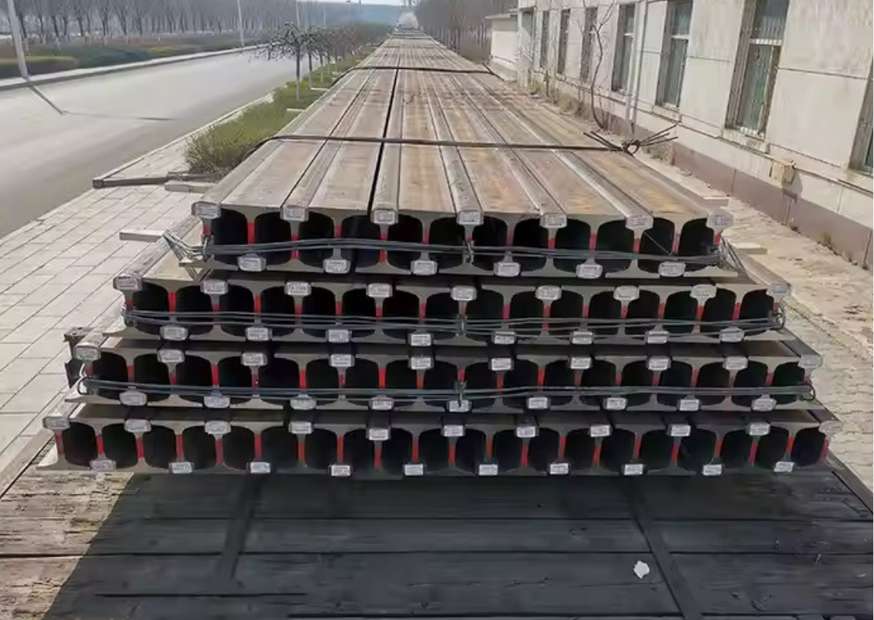
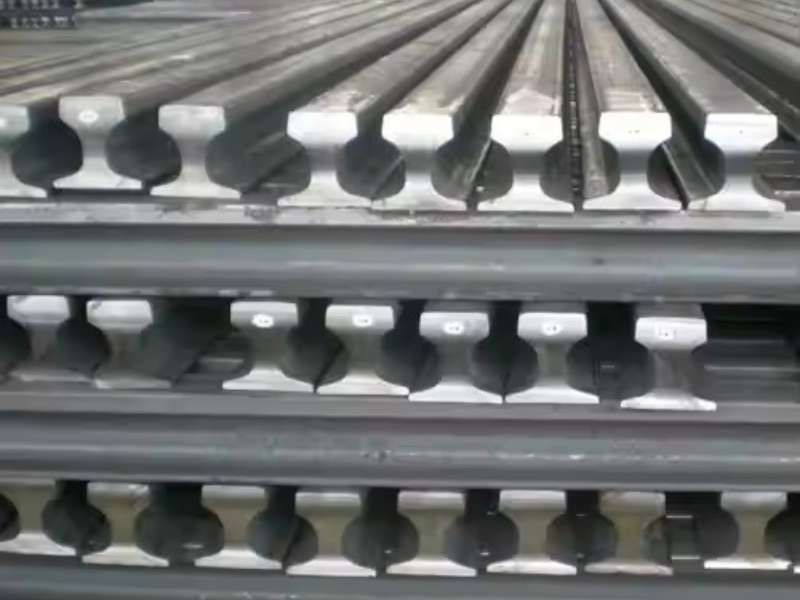
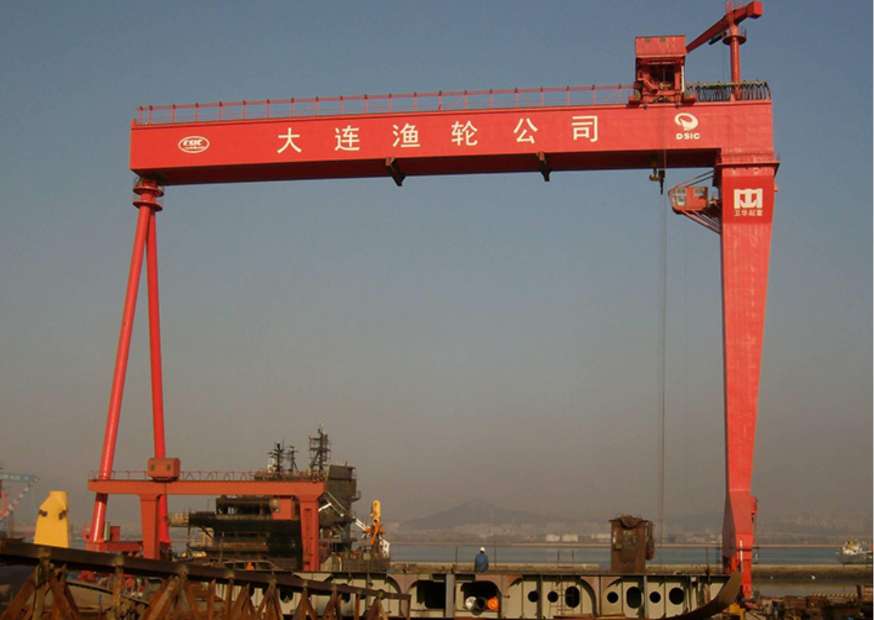
A grooved crane rail is a steel rail with a longitudinal flangeway cut into the rail head. The wheel flange runs inside the groove, keeping the rail surface flush with the surrounding floor. This design suits embedded crane runways in harbours, shipyards, and workshop floors where no raised rail profile is acceptable. Unlike flat-bottom crane rails (QU, CR, and A series), the grooved section sits at floor level and allows vehicles to cross without obstruction.

What Is a Grooved Crane Rail?
Grooved rail vs flat-bottom crane rail
A flat-bottom (Vignole) crane rail carries the wheel load on a full, uncut head. A grooved rail cuts a flangeway into the head. The groove guides the wheel flange and holds the rail flush with the floor slab.
Why the flangeway groove matters
The groove provides three key benefits. First, it guides the wheel flange laterally. Second, it allows the rail to sit level with the floor or pavement. Third, it removes any raised obstruction, so forklifts and other vehicles can cross freely. Embedded grooved rail is the standard choice whenever flush installation is a hard requirement.
Grooved Crane Rail Types and Section Designations
Common sections used in crane applications include:
|
Section |
Weight |
Typical use |
|
35G |
≈ 35 kg/m |
Harbour, industrial floor |
|
41GP / 41GN |
≈ 41 kg/m |
Mid-load embedded runway |
|
T62 / Ri60N |
≈ 60 kg/m |
Light rail, tram-type duty |
|
59R2 |
≈ 59.8 kg/m |
Australian standard |
Exact groove width, head height, base width, and tolerances depend on the applicable standard and project drawings. Always confirm dimensions against your specification sheet before ordering.

Grooved sections suit light-to-medium crane duty on embedded runways. They are not designed for heavy-duty overhead bridge crane girder tracks, where flat-bottom sections such as QU70–QU120 are the correct choice. See our overhead crane rail types page for a full comparison.
Grooved vs Flat-Bottom vs Railway Rail
|
Parameter |
Grooved |
Flat-bottom (QU/CR/A) |
Railway rail |
|
Head form |
Longitudinal groove |
Full flat head |
Full heavy head |
|
Load range |
Light–medium |
Medium–heavy |
Heavy main line |
|
Flange path |
Inside groove |
Outside head |
Outside head |
|
Flush with floor |
✅ |
❌ |
❌ |
|
Fixing method |
Embedded clips + grout |
Base plate + clamp |
Elastic clip + sleeper |
|
Maintenance |
Clean groove, drainage |
Bolt torque, pad |
Gauge, ballast |
|
Typical use |
Harbour, shipyard, floor |
Bridge/gantry runway |
Railway track |
For section dimensions and tolerances, refer to crane rails specifications and crane rail dimensions.

Fastening and Anchor Systems for Grooved Rail
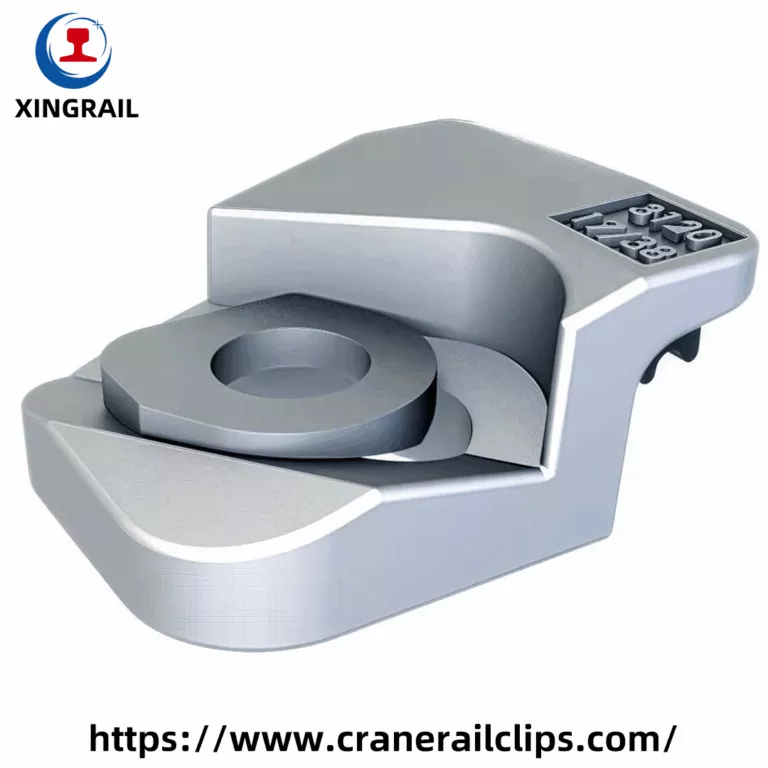
Standard crane rail clips do not suit grooved sections without modification. An embedded grooved rail fastening system must meet four constraints:
- No intrusion into the flangeway groove
- Top of fastener at or below floor level
- Lateral adjustment to allow gauge correction
- Corrosion resistance for marine or wet environments
A typical assembly combines a low-profile clip, a rubber rail pad, a cast-in anchor channel, and a poured infill compound. The infill protects the fastener from traffic and keeps the surface flush.
Use our rail clips configurator to match the clip type to your rail section and load case. For clamp-style options, see crane rail clamps.
How to Specify a Grooved Crane Rail
Follow these six steps to build a complete specification:
- Define the duty — axle load, wheel diameter, travel speed, and whether road vehicles cross the track.
- Select the section — 35G for lighter runways, 41GP/41GN for medium duty, 60-class for heavier embedded applications. Use the rail weight calculator below to confirm unit weight.
- Set the flush datum — confirm the groove depth and the height difference between rail head and finished floor level.
- Choose the fastening system — clip type, rubber pad hardness, anchor spacing, and lateral adjustment range.
- Specify the infill and drainage — grout type, expansion joint spacing, and drainage detail.
- Decide on rail joints — thermite weld for a continuous running surface, or bolted fishplates where removal may be needed.
Use our rail weight calculator to confirm the exact unit weight for your chosen grooved section.
Sourcing a Grooved Crane Rail from Xingrail
Xingrail supplies crane rails and fastening systems as a complete package. Grooved and embedded-track sections are available to customer drawings and project standards. Lead time, unit weight, length, and steel grade all affect the final cost, contact us for a project-specific quotation. Browse the full range on our crane rails supplier product page.

FAQs
Q1: What is a grooved crane rail used for?
It is used in embedded crane runways where the rail must sit flush with the floor, typically in harbours, shipyards, industrial workshop floors, and transfer car tracks.
Q2: What is the difference between a grooved rail and a flat-bottom crane rail?
A flat-bottom rail has a full, uncut head and sits above the floor surface. A grooved rail has a flangeway cut into the head and can be installed flush with the surrounding pavement. See the comparison table in Section 3.
Q3: What groove and head dimensions does a grooved crane rail have?
Dimensions vary by section designation and applicable standard. Key values to confirm include groove width, groove depth, rail height, base width, weight per metre, steel grade, and length. Always verify against the supplier’s certified drawing, never design from nominal values alone.
Q4: Can standard crane rail clips fix a grooved rail?
Standard clips that sit above the rail head will block the flangeway or protrude above floor level. Use low-profile embedded clips designed for flush installation. The rail clips configurator filters by rail section and mounting condition.
Q5: How much does a grooved crane rail weigh per metre?
The 35G series weighs approximately 35 kg/m; the 60-class sections weigh approximately 60 kg/m. Use the rail weight calculator above for accurate figures based on your chosen section.