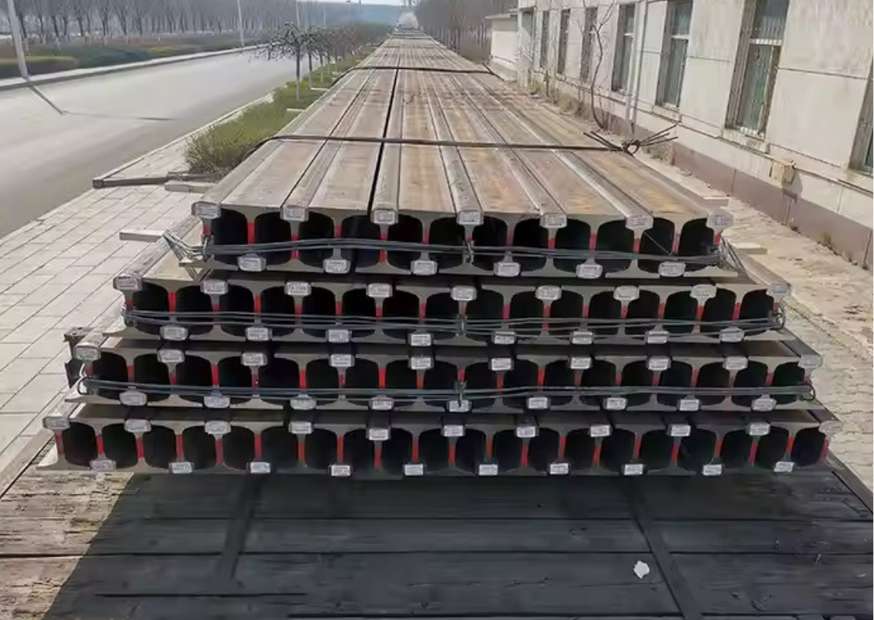
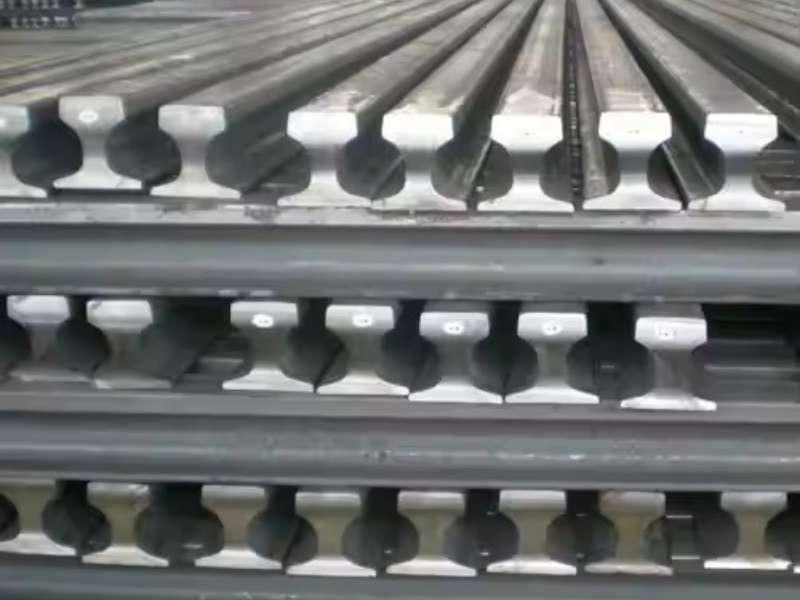
The world’s rail system is intricate. The railway track size is a key component of this system. Train compatibility and operational efficiency are determined by this measurement, namely the separation between the inner faces of two parallel rails. This important dimension is known to engineers as the track gauge. Anyone working in railroad engineering, logistics, or infrastructure development must comprehend the differences in railway track size. In this post, Xingrail will explore the topic of railway track sizes.
What is the Size of a Railway Track?
Understanding the Size of a Railway Track
The track gauge is the main term used to describe railway track size. This is the precise distance between a railway’s two load-bearing rails. This specification is important. Which rolling stock can run on a specific line is determined by the gauge. To guarantee consistency, the measurement is taken at a predetermined distance below the rail head.
Components That Determine Track Size
The total railway track size comprises additional elements in addition to the gauge. These elements include the subgrade, the ballast, the ties or sleepers, and the rails themselves. Every component has unique specifications. The track’s stability and load-bearing capacity are influenced by these specifications. For instance, the rail’s shape and weight are determined by its rail profile. Wear resistance and the contact patch with the train wheel are directly impacted by this.
Typical Railway Track Sizes Worldwide
Typical Sizes of Railway Tracks Globally, rail networks employ a variety of track gauges. Broad, standard, and narrow gauges are the general classifications for these gauges. The standard gauge is the most widely used. More than half of the railway lines in the world are this specific railway track size. While narrow gauges are smaller, broad gauges are wider than the norm.
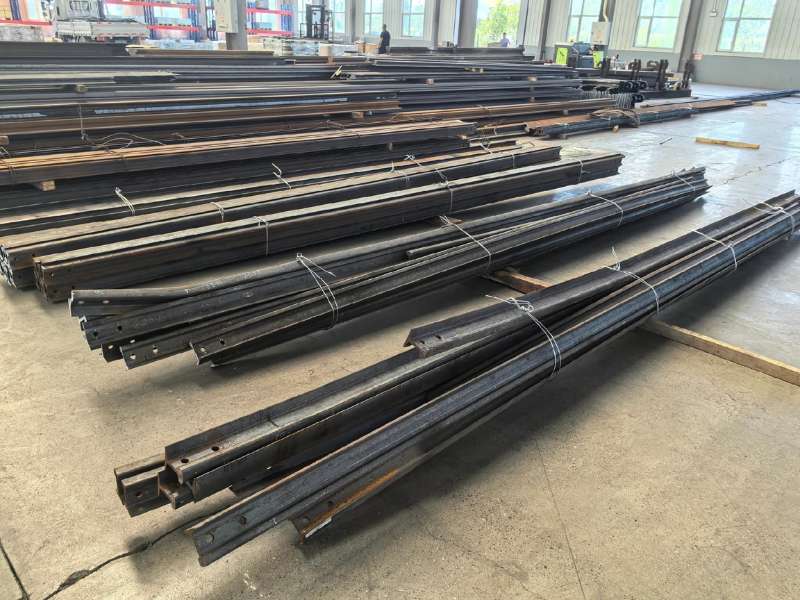
Table Gauge Type
The table that follows compares the prevalence of different track gauges across various nations.
|
Gauge Type |
Measurement (mm) |
Measurement (ft in) |
Common Countries/Regions |
Notes |
|
Standard Gauge |
1435 |
4′ 8.5″ |
North America (including us rail gauge), China, most of Europe, Middle East, Australia (interstate network) |
The most widely used gauge in the world, facilitating international traffic. Optimal for high-speed and heavy-freight operations. |
|
Broad Gauge |
1676 |
5′ 6″ |
India, Pakistan, Bangladesh, Sri Lanka, Argentina, Chile |
Known as Indian Gauge. It offers greater stability and higher load capacity. |
|
Broad Gauge |
1668 |
5′ 5.66″ |
Spain, Portugal |
Known as Iberian Gauge. Spain is actively converting lines to standard gauge for better European integration. |
|
Broad Gauge |
1520 |
4′ 11.84″ |
Russia, CIS countries, Finland, Mongolia |
Known as Russian Gauge. It is the second most common gauge worldwide. |
|
Broad Gauge |
1600 |
5′ 3″ |
Ireland, parts of Brazil, parts of Australia (Victoria, South Australia) |
Known as Irish Gauge. |
|
Narrow Gauge |
1067 |
3′ 6″ |
Japan, South Africa, Indonesia, New Zealand, parts of Australia (Queensland, Western Australia) |
Known as Cape Gauge. It is suitable for challenging terrain with tight curves. |
|
Narrow Gauge |
1000 |
3′ 3.37″ |
Southeast Asia (Thailand, Vietnam, Malaysia), East Africa, parts of South America |
Known as Metre Gauge. It is cost-effective for developing regions and mountainous areas. |
|
Narrow Gauge |
914 |
3′ |
Parts of the US (historic lines), Central and South America |
Common in early industrial and mining railways. |
|
Narrow Gauge |
762 |
2′ 6″ |
India (heritage lines), parts of Eastern Europe |
Used for mountain railways and specialized industrial lines. |
You may also find railway standards comparison and Australian railway standards helpful.
Factors Affecting the Choice of Track Gauge
Choosing a track gauge is a difficult choice. Geographical, economic, historical, and political factors are all involved. Geographical factors are important. Narrow gauges are frequently preferred in mountainous areas, as was already mentioned. There is less need for large tunnels and bridges because of their capacity to negotiate tighter curves. This lowers the cost of building. On the other hand, standard or broad gauges work best in open, level terrain. More stability and faster speeds are made possible by these gauges.
Economic considerations are just as significant. A railway’s gauge has a direct impact on construction costs. More materials are needed for a wider gauge. This entails a bigger land footprint, more ballast, and wider sleepers. On the other hand, longer and heavier trains can be supported by a wider gauge. Over time, this may result in reduced operating expenses per ton-mile. The decision is frequently influenced by the type of goods being transported as well as the anticipated volume of traffic.
The global railway map has also been influenced by political and historical factors. Because of British engineers’ influence in the 19th century, many nations adopted the standard gauge. In other instances, nations used a different metric for military purposes. An invading army could be slowed by a break-of-gauge at a national border. The variety of gauges observed in Europe, especially between Russia and its western neighbors, was influenced by this strategic thinking. Lastly, an important engineering factor is operational efficiency. For mixed-traffic lines, a standard gauge frequently offers the best compromise between speed, capacity, and cost.
Common Questions
- What is the standard railway track size in the US?
The US standard gauge is 4 ft 8.5 in (1435 mm).
- Why is the standard gauge 1435 mm?
It originated from the wheel spacing of early coal wagons and was standardized by George Stephenson.
- What are the differences between broad, standard, and narrow gauges?
Broad gauges are wider than 1435 mm, standard is 1435 mm, and narrow gauges are less than 1435 mm.
- How does track gauge affect train speed and load capacity?
Standard gauges are optimal for high-speed and heavy-load operations, while narrow gauges are used for lighter loads and mountainous regions.
- What materials are used for railway tracks?
Tracks are typically made of high-carbon steel for durability and strength.