Xingrail is a top maker of high-quality rubber rail pads that keep tracks stable and last a long time. These important parts are very important for lowering vibrations, spreading loads, and keeping sleepers safe. This article will talk about the importance, types, and benefits of rubber pads in railway systems.
Rubber Pad Uses in Railroads
Within the track structure, railway pads perform several important functions. Every function adds to the railway line’s overall longevity, stability, and safety.
Shock Absorption and Vibration Dampening
As they travel along the tracks, trains produce noticeable vibrations and shocks. These forces have the potential to harm the ballast, sleepers, and rails. The cushion is a railway pad. These vibrations are effectively attenuated. The impact energy from the wheels is thus absorbed by the pad. The dynamic load applied to the sleepers and the underlying foundation is decreased by this procedure. A smoother ride and less wear on the track system as a whole are the outcomes.
Capabilities for Reducing Noise
Particularly in cities, track noise is a serious environmental problem. The interaction between the wheel and the rail is responsible for a large amount of this noise. This problem is lessened by rubber pads. By separating the rail from the sleeper, they obstruct the transmission of sound. Acoustic energy is actually absorbed by the pad’s elastic qualities. As a result, there is a discernible decrease in background noise near the railroad.
Distribution of Loads and Prevention of Fatigue Stress
The points where the wheels and rails meet are where the majority of a train’s weight is concentrated. This enormous weight would transfer straight to a tiny spot on the sleeper in the absence of a pad. Cracks and early failure may result from this concentration of stress. This load is spread across the sleeper’s larger surface area by a rubber pad in railway systems. Stress points are reduced by this uniform distribution. Consequently, it prolongs the sleeper’s operational life and avoids material fatigue.
Defense Against Wear and Abrasion
Friction between the sleeper and the steel rail is caused by heavy loads and constant movement. Abrasion and mechanical wear are brought on by this friction. This may eventually deteriorate the sleeper’s surface and jeopardize the integrity of the track. Railway pads offer a barrier of defense. They keep the two hard surfaces from coming into direct contact. This barrier keeps the rail and sleeper in good condition by drastically reducing abrasion.
Railway Pad Types
To meet various track requirements and performance standards, manufacturers create various railway pad types. The decision depends on the axle load, train speed, and the surroundings.
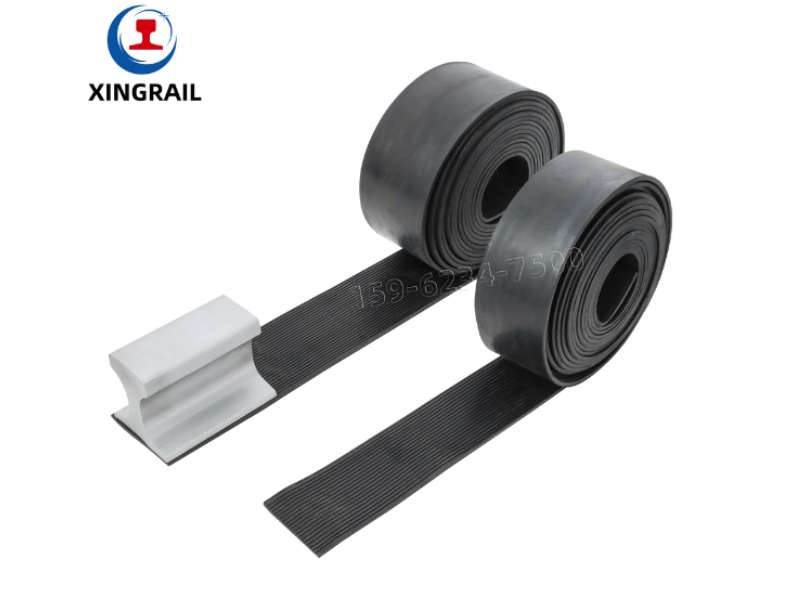
Rail Pads Made of Rubber
The most popular kind are standard rubber rail pads. They are employed by engineers in many different railway applications. These pads provide a well-balanced combination of stiffness and elasticity. For traditional mainlines and freight routes, they offer dependable load distribution and vibration damping. They are usually made by manufacturers using sturdy rubber compounds. They are also an affordable option for many track systems due to their straightforward design.
Rubber Sole Plates with Grooves
A specific kind of railway pad is a rubber sole plate with grooves. They have a surface that is grooved or textured. Improved stability and grip between the sleeper and the rail are provided by this design. Additionally, the grooves enhance water drainage. This stops the accumulation of moisture. Because of this, engineers frequently recommend grooved plates for tracks in regions with inadequate drainage or rainy climates. Additionally, the enhanced interlocking aids in preventing rail slippage.
Rail Pads with High Elasticity
Advanced polymer materials are used in high-elastic rail pads. These materials offer exceptional damping and elasticity properties. They are designed by engineers for heavy-haul freight lines, high-speed lines, and tracks that pose serious vibration problems, like bridges and tunnels. Compared to regular rubber pads, these pads have a higher energy absorption capacity. As a result, they provide the best possible protection for track components under extremely high dynamic loads. Additionally, their sophisticated composition offers superior resistance to environmental deterioration and fatigue.
Rubber Rail Pad Specifications
For railway pads to function properly and safely, they must adhere to strict technical requirements. National or international standards organizations, like the UIC (International Union of Railways) or the RDSO (Research Designs and Standards Organization) in India, frequently define these requirements.
|
Technical Parameter |
Standard Value/Range |
Unit |
|
Material |
Natural Rubber, SBR, EPDM, HDPE, EVA |
– |
|
Density |
0.95 – 1.35 |
g/cm³ |
|
Hardness |
75 – 98 |
Shore A |
|
Tensile Strength |
≥ 12.5 |
MPa |
|
Elongation at Break |
≥ 250 |
% |
|
Tear Strength |
≥ 40 |
N/mm |
|
Compression Set (70°C, 22h) |
≤ 30 |
% |
|
Operating Temperature |
-25 to +75 |
°C |
|
Standard Compliance |
RDSO, UIC 864-5, AREMA, etc. |
– |
Note: These are typical values that may change depending on the standards and requirements of particular products.
Related: what train tracks are made of.
Rubber Rail Pad Installation and Maintenance
For railway pads to operate at their best and last as long as possible, proper installation and maintenance are important. Following best practices lowers long-term expenses and guarantees track safety.
Appropriate Installation Methods
Precision and close attention to detail are necessary for installation. First and foremost, the sleeper surface needs to be spotless and debris-free. Any grit or dirt can cause pressure points and impair the pad’s performance. Before placing the rail, the pad needs to be positioned in the middle of the sleeper. When placing the rail, it’s important to make sure the pad isn’t folded or pinched. Lastly, the fastening system needs to be tightened to the proper torque specification. Under-tightening can permit undesired movement, while over-tightening can compress the pad too much.
Upkeep How to Extend Your Service Life
For maintenance, routine track inspections are necessary. Inspectors should search for indications of pad deterioration, wear, or damage. This involves looking for excessive compression, brittleness, or cracks. Maintaining clean ballast and ensuring adequate drainage around the track are important. Inadequate drainage can hasten the aging process of the pads by exposing them to moisture and impurities. To preserve track integrity and safety, pads that exhibit noticeable wear or damage should be replaced right away.
Frequently Asked Questions
What is the purpose of a rubber pad in railway tracks?
Rubber pads reduce vibrations, distribute loads, and protect sleepers from wear.
What materials are used in rubber rail pads?
Common materials include natural rubber, HDPE, EVA, and synthetic polymers.
How do rubber pads improve railway safety?
They enhance track stability, reduce noise, and prevent track misalignment.
What are the specifications of a standard rubber rail pad?
Specifications include density (0.95-0.98 g/cm³), tensile strength (≥19 MPa), and hardness (≥98 Shore A).
What factors influence the price of rubber rail pads?
Material type, customization, compliance with standards, and market demand.