Transporting people, cities, and industries efficiently relies on railways. There are several types of railway tracks for different functions and terrains. Each track has unique qualities, from ballasted and ballastless to gauge, construction, and purpose-classified. Understanding different types of railway tracks, their purposes, and materials can help with global train infrastructure. Some nations prefer broad gauge rails. Why? Why are small gauge tracks good? Xingrail address all your track type and construction inquiries as we examine these designs, systems, and buildings.
What Are the Most Common Types of Railway Tracks?
Common types of railway tracks include gauge, construction, and purpose. Standard, narrow, and broad gauge tracks are common. Standard gauge tracks are stable and support high-speed trains worldwide, while narrow gauge lines are better for mountainous areas. However, broad gauge railroads are suitable for large loads, thus India and Russia employ them. Ballasted and ballastless building styles also differ in design. Although ballasted tracks employ crushed stone bases for drainage, ballastless rails use concrete or asphalt for durability and less maintenance.
Railway track systems can have single, double, or quadruple tracks to maximize traffic flow and capacity. Embedded tracks, used for light rail, integrate into urban streets. Customized timber, concrete, or steel sleepers improve railway track performance. Such designs and their uses help answer questions like What are the advantages of narrow gauge railway tracks? & How are railway tracks classified by gauge? Whether supporting high freight capacity, commuter transportation, or smooth, high-speed global rail operations, each design and material represents the objective.

How Are Types of Railway Tracks Classified?
Types of railway tracks are classified by gauge, construction, and usage. Performance is heavily influenced by rail gauges , or rail width. Standard gauge rails are used worldwide for their efficiency and speed, while broad gauge tracks are better for larger loads. Narrow gauge lines are ideal for mountain railways because they can handle uneven terrain. These characteristics show railway track systems’ different regional and international transport functions. Railway track construction types. Crushed stone bases improve drainage, but solid concrete ballastless buildings increase durability.
The purpose of different types of railway track structures varies. Single tracks handle modest traffic, whereas double and quadruple tracks maximize capacity in busy regions. Contemporary light rail systems use embedded rails to integrate with urban settings. Wood, concrete, and steel sleepers affect railway performance and lifetime. These classifications answer issues like How are railway tracks classified by gauge? and What is the difference between ballasted and ballastless railway tracks? Rail systems can efficiently meet transit needs while maintaining operational reliability by understanding these distinctions.
What Are the Main Features of Railway Tracks in Modern Rail Systems?
Modern train systems prioritize different types of railway tracks for smooth and reliable operations. Construction—ballasted and ballastless—is the foundation. Ballasted railway tracks with crushed stone bases are suited for conventional train systems due to drainage and flexibility. However, ballastless tracks with concrete surfaces are more durable and require less maintenance. Railway track materials, such as steel, concrete, or composite sleepers, must meet environmental and operational requirements.
Modern infrastructures use single- to quadruple-track railway track systems. Double or quadruple tracks improve scheduling and handle high-density traffic, whereas single tracks handle lower-frequency routes. Light railways work effectively with embedded rails in urban areas. In addition, gauge classification affects railway track infrastructure. Narrow gauges excel in mountainous terrain, but standard gauges dominate global rail systems for balance and speed. Broad gauges handle greater loads. Questions like What is the difference between ballasted and ballastless railway tracks? and Why are broad gauge tracks used in some countries? show how railway track types and uses have improved.
Why Are Different Types of Railway Tracks Used in Different Regions?
Depending on their geography, economy, and operating needs, different regions use different types of railway tracks. Due to their speed and efficiency, standard gauge lines are utilized worldwide for high-speed trains and international freight. Because they can bend tighter and adapt to uneven terrain, narrow gauge tracks are more common in mountainous or difficult terrain. Broad gauge lines, popular in India and Russia, accommodate heavier trains and cargo loads.
Railway track material and design vary by location to meet environmental and traffic needs. Ballasted tracks are cheaper and easier to maintain, hence they’re more popular in modest rail traffic locations. Due to their endurance and low maintenance, ballastless tracks are used in high-speed lines and urban transit systems. Urban areas embed rails into city frameworks to interface with current light rail and tram systems. Different railway track construction types and systems reflect local objectives and address important aspects like cost, terrain, and predicted load.
Our team at Xingrail knows that choosing the right railway track type is essential for performance, durability, and cost. Every track type has advantages, whether standard, narrow, broad gauge, ballasted, or ballastless. We customize solutions for diverse regional and operational needs. Our advanced materials and innovative designs optimize global railway system functionality. Trust our expertise and products to support efficient and reliable rail infrastructure. Choose us for railway track needs.
Recommended Products for Different Types of Railway Tracks
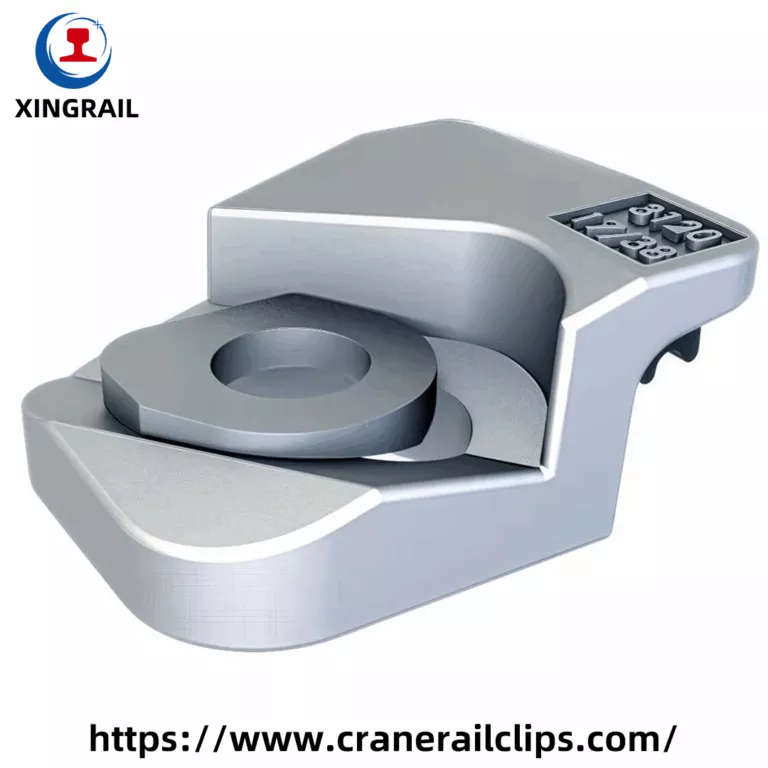
The stability of any railway network relies directly on the fastening system used to secure it. Whether you operate a ballasted standard gauge line or a high-capacity ballastless track, the rails face immense dynamic forces. The track gauge dictates the distance between the wheels, but your rail profile’s base width determines which rail clip you need.
To keep your railway tracks perfectly aligned, you must pair your specific rail profile with a clip that matches its exact footprint. When the rail clip sits perfectly flush against the rail foot, it applies the maximum downward clamping force (toe load) required to lock the steel to the sleeper.
To help you build a reliable track structure across various terrains and construction types, we have paired our premium crane rail clips with the most common global rail profiles. Review the table below to find the correct fastening solution for your specific railway tracks.
|
Rail Type |
Base Width |
Height |
Weight |
Recommended Clips |
|
UIC 54 (54E1) |
140.0 mm |
159.0 mm |
54.77 kg/m |
32 Series Bolted Rail Clips |
|
AREMA 115 RE |
5.500 in (139.7 mm) |
6.625 in |
115 lb/yd |
32 Series Bolted Rail Clips |
|
UIC 60 (60E1) |
150.0 mm |
172.0 mm |
60.21 kg/m |
9 Series Welded Rail Clips |
|
AREMA 136 RE |
6.000 in (152.4 mm) |
7.313 in |
136 lb/yd |
9 Series Welded Rail Clips |
Related: Indian standard rail dimensions and standard gauge versus broad gauge.
Related: types of railway tracks.
Frequently Asked Questions (FAQs)
- Does my track gauge determine whether I should use a welded or bolted rail clip?
No. The track gauge defines the spacing between the two rails, not the fastening method. You must choose your rail clips based on the rail’s cross-sectional dimensions. A standard gauge track and a broad gauge track will both use the exact same 9 Series Welded Clips if they both feature a heavy-duty 136 RE rail profile with a 6-inch base width. - Why do heavy-duty rail lines typically require 9 Series Welded Clips?
Broad gauge tracks and high-capacity freight lines handle massive loads that generate intense vibrations. The 9 Series Welded Clips feature a robust base that you weld directly to the underlying steel plates. This creates a permanent, rigid anchor capable of gripping the broad base of heavy rails like the UIC 60, successfully preventing the tracks from shifting under extreme dynamic stress. - Are 32 Series Bolted Clips suitable for traditional ballasted railway tracks?
Yes. Traditional ballasted tracks often utilize the 115 RE or UIC 54 rail profiles for moderate-speed commuter and freight operations. The 32 Series Bolted Clips perfectly match the base dimensions of these rails. They provide exceptional clamping force to hold the rails firmly to the sleepers, while giving maintenance crews the flexibility to easily loosen the bolts during routine track alignment. - How do elastic fastening systems benefit ballastless railway tracks?
Ballastless tracks use solid concrete foundations instead of crushed stone. Because concrete lacks the natural shock absorption of loose stone, the fastening system must handle all the dynamic vibrations. Our elastic rail clips use premium spring steel and rubber noses to apply a relentless downward pressure. This design absorbs high-frequency vibrations from passing trains, protecting the solid concrete track structure from cracking. - What happens if I install a mismatched rail clip on my railway track?
Using a clip that does not precisely fit your specific rail profile creates an immediate derailment hazard. If you place a clip engineered for a 139.7 mm base onto a wider 152.4 mm rail, the fastener will fail to seat correctly. You will instantly lose the necessary toe load. Without this clamping force, passing trains will aggressively vibrate the rails loose, widening your track gauge and destroying the structural integrity of the line.