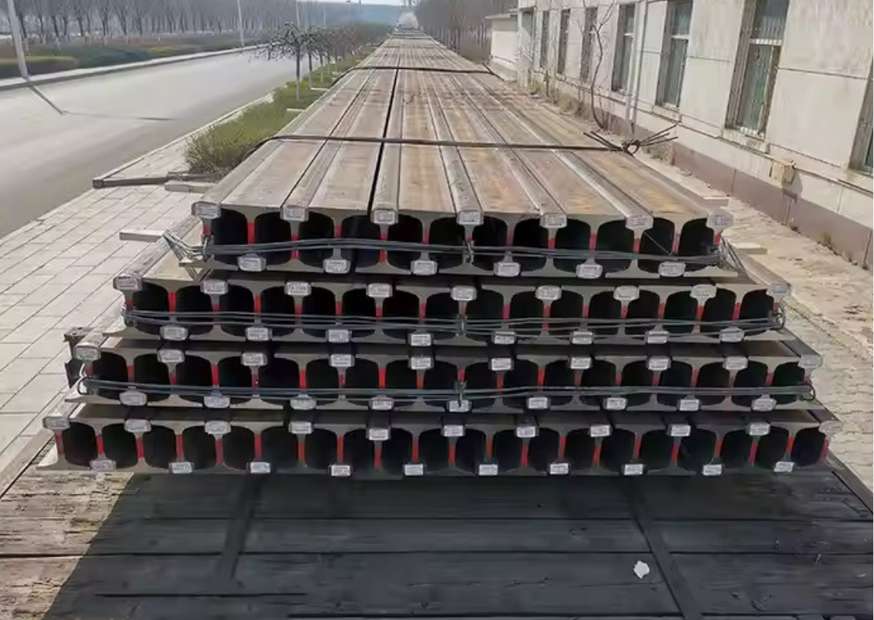
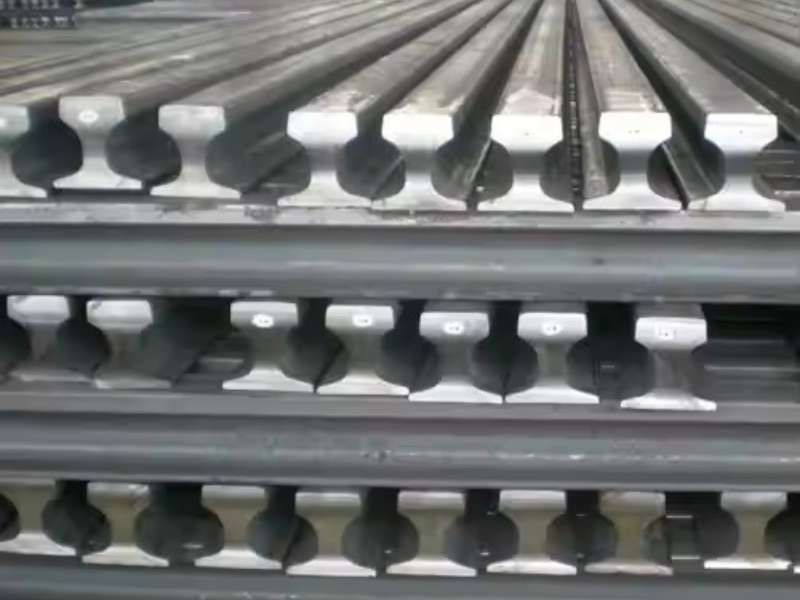
A75 rail is a member of the DIN 536 A-series crane rail family, defined by a 75 mm head width and a reference mass of approximately 56.2 kg/m. It sits between the lighter A55 and the heavier A100 rail dimensions profile, making it a practical choice for medium-duty overhead crane runways. Correct a75 rail clips selection is critical: an undersized clamp cannot transfer lateral loads safely, while an oversized one may not seat flush against the 75 mm head, creating stress concentrations and accelerated wear. Matching the clip geometry to the exact head width and base width of A75 rail is the first step toward a reliable runway.

A75 Rail Specifications at a Glance
Before selecting hardware, engineers need the exact cross-section figures. The table below summarises the key dimensional and mass data for DIN 536 A75. Always verify against your mill certificate or the current edition of DIN rail dimensions before finalising fastener sizes.
| Parameter | A75 Value |
|---|---|
| Head width | 75 mm |
| Rail height | ≈ 110 mm |
| Base width | ≈ 135 mm |
| Web thickness | ≈ 16 mm |
| Mass per metre | ≈ 56.2 kg/m |
The 75 mm head sits on a relatively wide 135 mm base, which improves stability on the girder flange but also means clip jaws must span the correct base overhang. The ≈ 110 mm rail height provides adequate moment of inertia for light-to-medium span cranes. For full crane rail specifications across all common profiles, see the linked reference page.

Technical Spec Comparison — A75 vs Adjacent Crane Rails
Choosing A75 rail only makes sense when you know how it compares with neighbouring profiles. The matrix below covers the five most frequently specified sections:
| Profile | Standard | Head Width | Rail Height | Base Width | Mass (kg/m) |
|---|---|---|---|---|---|
| A75 | DIN 536 | 75 mm | ≈ 110 mm | ≈ 135 mm | ≈ 56.2 |
| A100 | DIN 536 | 100 mm | ≈ 150 mm | ≈ 175 mm | ≈ 89.0 |
| A120 | DIN 536 | 120 mm | ≈ 170 mm | ≈ 200 mm | ≈ 118.5 |
| CR80 | GB/T 2585 | 80 mm | ≈ 130 mm | ≈ 130 mm | ≈ 52.8 |
| ASCE 85 | AREMA | 76 mm | ≈ 136 mm | ≈ 136 mm | ≈ 42.3 |
Key takeaways:
- A75 vs A100/A120: All three share the DIN 536 A-series cross-section geometry and taper angle, so clip families are similar in design — but jaw widths and bolt patterns differ. Never swap A75 clips onto an A100 rail without re-verifying dimensions.
- A75 vs CR80: Head widths are close (75 mm vs 80 mm), yet the base widths, web profiles, and standards are entirely different. Clips are not interchangeable.
- A75 vs ASCE 85: Head widths are nearly identical, but the rail heights differ by roughly 26 mm, making clip seating angles incompatible.
Specifying crane rail clamps by profile name and standard, not just by head width, avoids costly field errors.

Rail Clip / Clamp Options for A75 Rail
Three fastener types are widely used with a75 rail clips installations, each suited to different structural conditions:
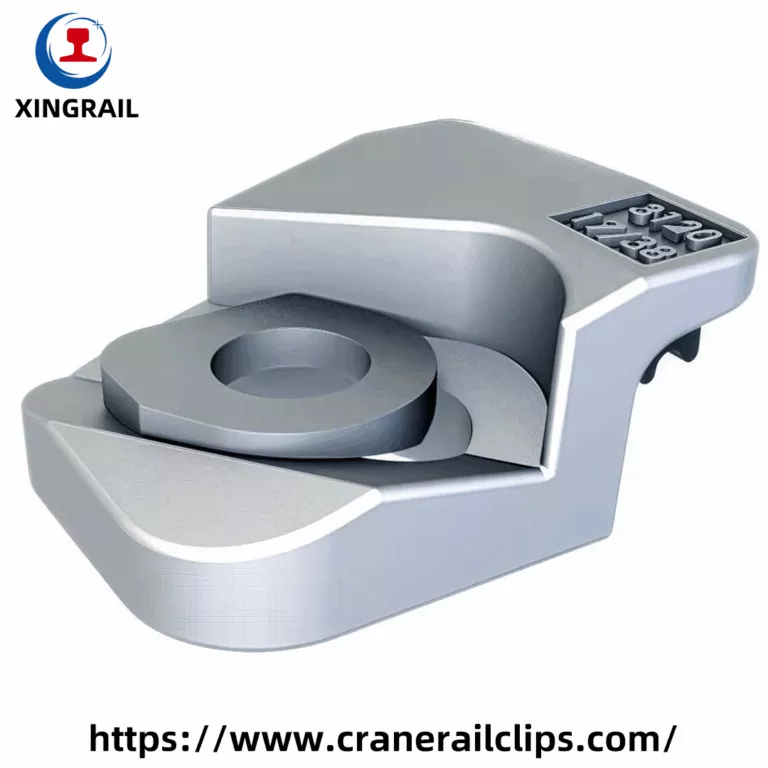
1. Self-Locking Crane Rail Clips The most common choice for new construction. Self-locking crane rail clips grip the rail head via a pre-tensioned bolt and an eccentric jaw. When the bolt is torqued, the jaw rotates slightly and locks against the head undercut, no secondary locking element needed. They accommodate small lateral rail movement without loosening, which extends maintenance intervals on active runways.
2. Forged Fastening Clamps The forged fastening clamp is machined from a single forged blank, giving superior fatigue resistance under repeated dynamic loading. It is typically bolted directly to the girder flange and transfers both vertical and horizontal forces efficiently. Recommended for high-cycle cranes or outdoor gantries where weld-on solutions are impractical.
3. Welded or Bolted Plate Clamps A cost-effective option for fixed installations where rail replacement is infrequent. Plate clamps are fillet-welded or through-bolted to the flange and provide a rigid, non-adjustable connection. Because removal requires grinding or unbolting, they are best reserved for permanent, low-maintenance applications.

Application Scenarios Comparison
| Scenario | Recommended Clip Type | Reason |
|---|---|---|
| Light-duty warehouse crane | Self-locking clip | Easy install, low maintenance |
| Medium bridge crane, indoor | Forged fastening clamp | High fatigue life, precise fit |
| Outdoor gantry / port | Forged fastening clamp | Corrosion-resistant, rigid |
| Adjustable runway (future relayout) | Self-locking clip | Tool-removable without grinding |
| Fixed production-line crane | Welded plate clamp | Maximum rigidity, low cost |
For warehouse and light bridge crane applications, a75 rail clips of the self-locking type offer the best balance of installation speed and long service life. Heavier or outdoor applications benefit from forged clamps, which handle shock loads without fatigue cracking.

Frequently Asked Questions
Q1: What is A75 rail?
— A DIN 536 A-series crane rail with a 75 mm head width and a reference mass of about 56.2 kg/m.
Q2: Which rail clips fit A75 rail?
— Self-locking forged clips and welded or bolted clamps matched to the 75 mm head and ≈ 135 mm base width. Always confirm jaw dimensions against actual mill drawings.
Q3: How much does A75 rail weigh per meter?
— Approximately 56.2 kg/m per DIN 536. Use the rail weight calculator on this site to cross-check profile weight and confirm against factory drawings before ordering.
Q4: What does DIN 536 A75 mean?
— It is the German DIN 536 standard designation for a 75 mm-head crane rail section, the “A” denotes the A-series profile family, and “75” denotes the head width in millimetres.
Q5: Is A75 rail the same as CR80 rail?
— No. They come from different standards (DIN 536 vs Chinese GB/T 2585) with different head widths (75 mm vs 80 mm), base widths, and web profiles. Clips designed for one profile will not fit the other correctly; use the rail clip selector tool to match the right clamp to your specific rail profile.