Selecting the wrong fastening hardware on a heavy-duty crane runway is a costly mistake. This guide covers everything you need to choose the right CR100 rail clips, from dimensional specs and cross-rail comparisons to clip types and real-world application scenarios.

What Is CR100 Rail and Why Clip Selection Matters
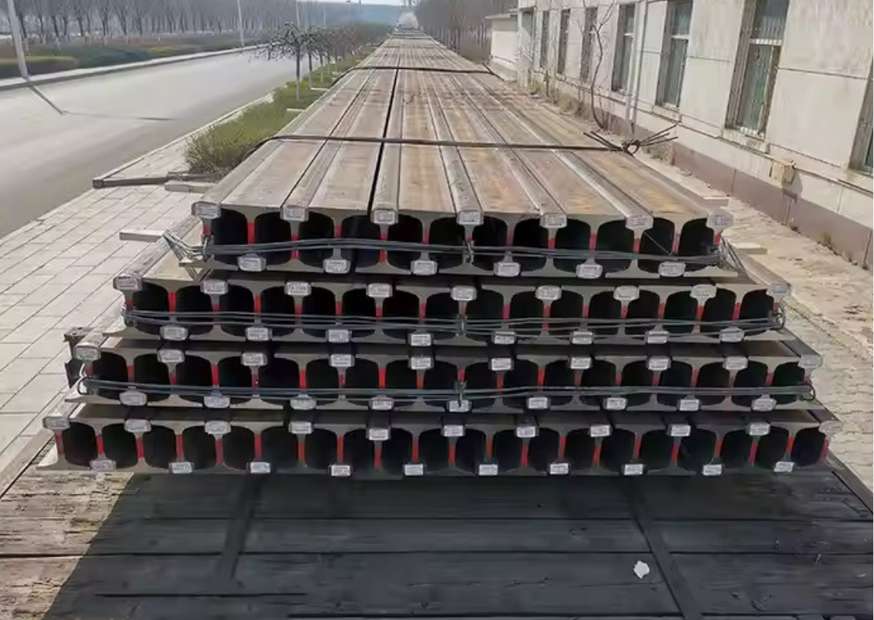
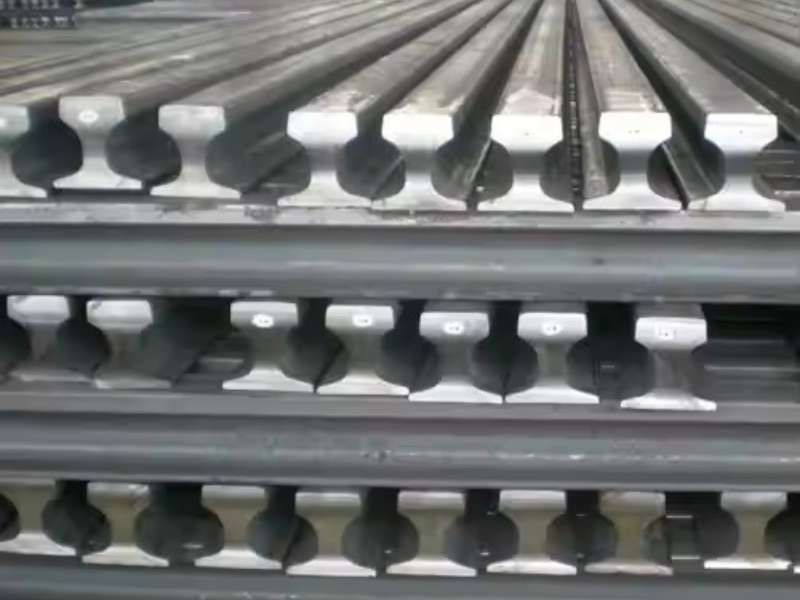
CR100 is a Chinese GB/T 2585 crane rail with a 100 mm head width and a reference mass of approximately 88.9 kg/m. It belongs to the heavy end of the CR series, sitting between CR80 and CR120 in load capacity. Because the head width, rail height, and base width all differ from adjacent sections, every fastening component must be dimensioned to match CR100’s own geometry. A clip designed for a narrower head will rock laterally; one sized for a wider base will not clamp securely. Correct clip selection is therefore not optional — it directly affects runway alignment, rail life, and overhead crane safety.
Use our on-site rail weight calculator to quickly verify the kg/m figure for any section.
CR100 Rail Specifications at a Glance
The table below lists the key reference dimensions for CR100. Always verify against the current standard or your supplier’s mill drawings before finalising a fastening design.
| Parameter | CR100 Value |
|---|---|
| Head width | 100 mm |
| Rail height | ≈ 150 mm |
| Base width | ≈ 150 mm |
| Web thickness | ≈ 26 mm |
| Mass (reference) | ≈ 88.9 kg/m |
| Standard | GB/T 2585 |
For the full family of crane rail dimensions, including section drawings in mm, visit our dedicated dimensions page. Also see crane rail specifications for cross-standard data.

Technical Spec Comparison — CR100 vs Adjacent Crane Rails
Knowing where CR100 sits within the wider range helps engineers confirm they are not over- or under-specifying the rail section — and, by extension, the clips.
| Section | Head Width | Rail Height | Base Width | Mass (kg/m) | Standard |
|---|---|---|---|---|---|
| CR80 | 80 mm | ≈ 130 mm | ≈ 130 mm | ≈ 60.0 kg/m | GB/T 2585 |
| CR100 | 100 mm | ≈ 150 mm | ≈ 150 mm | ≈ 88.9 kg/m | GB/T 2585 |
| CR120 | 120 mm | ≈ 170 mm | ≈ 170 mm | ≈ 118.1 kg/m | GB/T 2585 |
| QU100 | 100 mm | ≈ 150 mm | ≈ 150 mm | ≈ 88.9 kg/m | GB 3426 |
| A100 | 100 mm | ≈ 145 mm | ≈ 150 mm | ≈ 77.3 kg/m | DIN 536 |
Key takeaways:
- CR100 = QU100 in all practical dimensions. QU100 is simply the older GB 3426 designation for the same section; clips sized for one fit the other.
- CR100 vs A100: the European A100 (DIN 536) shares a 100 mm head width but has a lower rail height and lighter mass. Do not assume that A100 clips will fit CR100 without checking the base profile.
Refer to CR80 rail dimensions to see how the step down from CR100 changes the clip geometry.
Rail Clip and Clamp Options for CR100 Rail
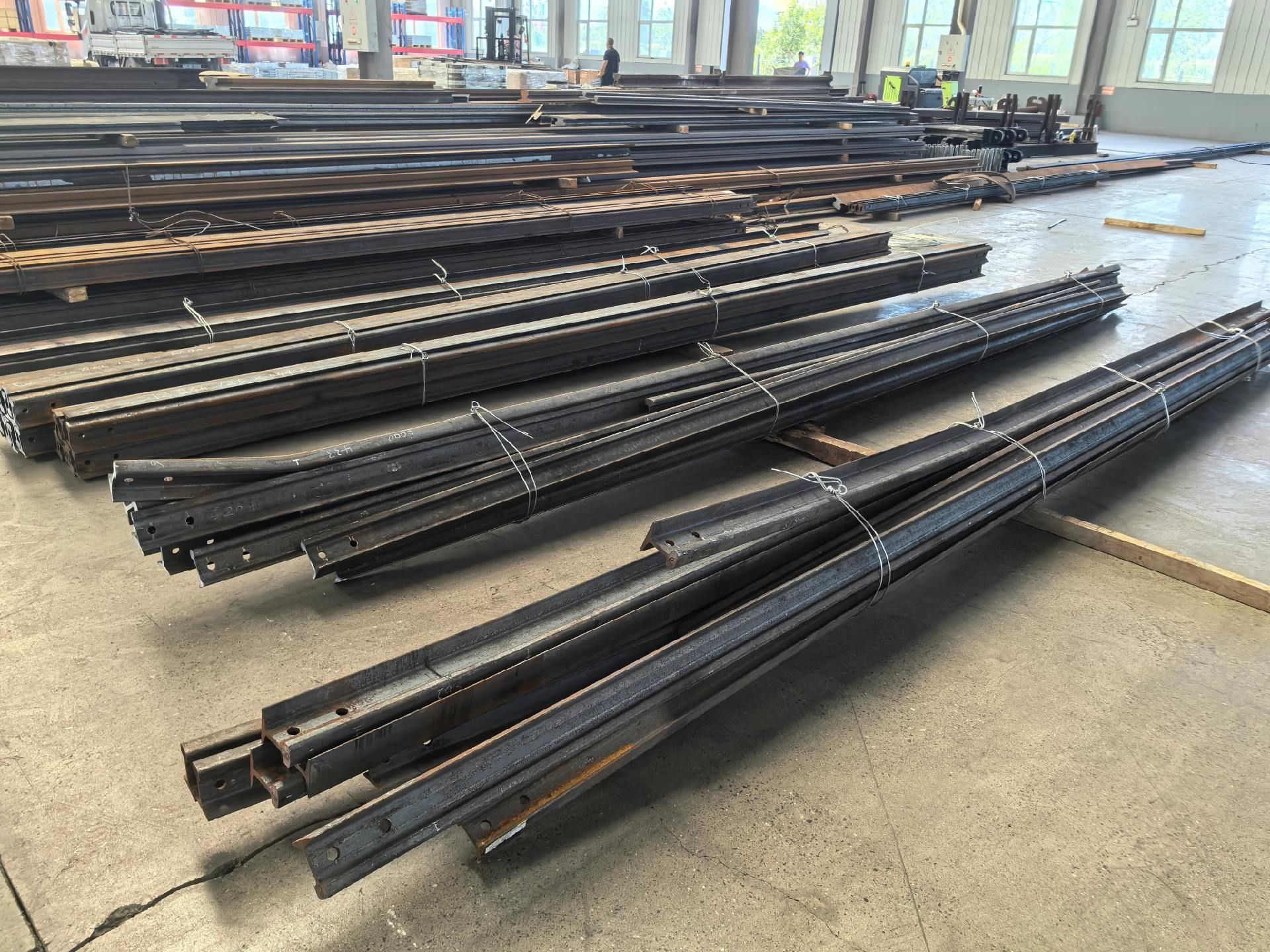
Three main fastening families suit CR100:
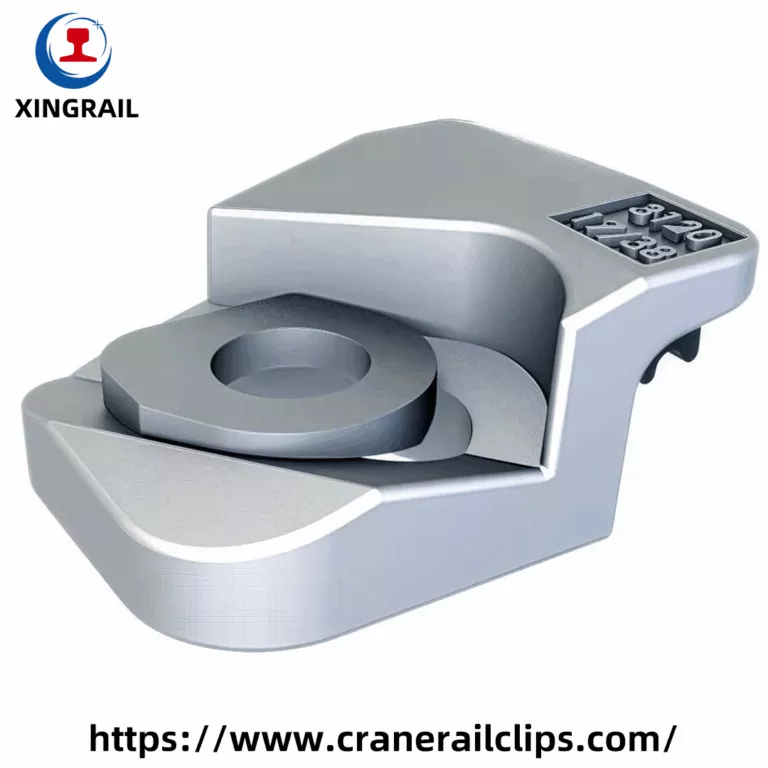
- Self-Locking Crane Rail Clips — The preferred choice for new runways and retrofit projects. Forged from alloy steel and heat-treated, self-locking crane rail clips grip the rail base with a tapered wedge action. No welding is required, which means the rail can float slightly to absorb thermal expansion while remaining laterally restrained. They are the fastest to install and replace.
- Forged Fastening Clamps (Bolted) — Heavy-section forged fastening clamp assemblies are torqued against the rail foot via high-strength bolts. They suit applications where vibration loads are severe and a rigid, non-sliding connection is required, such as steel mill bridge cranes and port gantries.
- Welded Clamps — Welded crane rail clamps are permanently fused to the runway beam flange. They offer the highest resistance to rail walk but sacrifice the ability to re-position the rail after installation. Typically specified on high-cycle, high-load runways where maintenance access is planned from the outset.
Use the clip selector below to match clip model to rail section automatically.

Application Scenarios Comparison
| Application | Recommended Clip Type | Key Reason |
|---|---|---|
| Port gantry crane | Bolted forged clamp | High dynamic load, corrosive environment |
| Steel mill bridge crane | Bolted forged clamp | Extreme heat cycles, heavy axle loads |
| Warehouse overhead crane | Self-locking clip | Easy install, moderate load, thermal float |
| Adjustable crane runway | Self-locking clip | Rail can be repositioned without cutting welds |
| Retrofit / re-rail | Self-locking clip | No hot-work permit required |
In port and steel mill environments the rail is rarely moved, so the higher installation effort of a bolted or welded clamp is justified. Warehouse and light-industrial runways benefit from self-locking CR100 rail clips because installation crews can complete a bay in a single shift without welding equipment.

Frequently Asked Questions
Q1: What is CR100 rail?
— A Chinese GB-standard crane rail with a 100 mm head width and a reference mass of about 88.9 kg/m.
Q2: Which rail clips fit CR100 rail?
— Self-locking forged clips and welded or bolted forged clamps matched to the 100 mm head and ≈150 mm base are the correct choices for CR100 rail clips.
Q3: How much does CR100 rail weigh per meter?
— Approximately 88.9 kg/m. Confirm the exact figure against the current standard or factory drawings before ordering.
Q4: What is the difference between CR100 and QU100 rail?
— They are equivalent crane rail sections. CR is the GB/T 2585 designation and QU is the older GB 3426 marking — the cross-section geometry and mass are the same.
Q5: Can CR100 rail clips be used on CR80 rail?
— No. The 100 mm and 80 mm head profiles differ significantly, so each section requires a clamp matched to its own geometry. Using the wrong size compromises lateral restraint and voids any load rating.