A pandrol rail clip is the benchmark for elastic rail fastenings worldwide. The e-Clip and Fastclip product families secure rails by applying a continuous toe load through a spring-steel clip. When sourcing a compatible replacement, four parameters must match: rail section profile, clamping toe load, mounting hole pitch, and coating grade. Xingrail supplies Pandrol-compatible and e-Clip replacement clips for both railway and crane rail applications, with fast lead times and full material certification.

What Is a Pandrol Rail Clip?
A Pandrol rail clip is an elastic fastening that holds rail to a concrete or timber sleeper. A spring-steel clip flexes over the rail foot and generates a controlled toe load. This load resists vibration, lateral spread, and rail creep over the service life of the track. Pandrol clips are specified on mainline railways, metro systems, light rail, and industrial trackwork across most continents. Their dominance in the market means that any buyer sourcing a replacement or second-source supply will encounter this name.

The Pandrol Clip Family: e-Clip, Fastclip and Compatible Types
e-Clip
The e-Clip is the most widely installed Pandrol type. It suits standard railway profiles such as UIC60, 60 kg, and 115 lb. Installation is straightforward: the clip is driven into a cast-in shoulder with a hammer or simple hand tool. No threaded fastener is involved. Most cross-reference requests for a Pandrol-compatible rail clip involve an e-Clip equivalent.
Fastclip
The Fastclip is a pre-assembled fastening assembly designed for mechanised installation on high-throughput mainline track. The clip, insulator, and rail pad ship together as a single unit. Replacing a Fastclip system requires swapping the full assembly rather than just the clip itself, which affects both procurement scope and stock planning.
What “Pandrol-Compatible” Means
A Pandrol-compatible clip is manufactured to Pandrol dimensional and clamping standards by a third-party supplier. It is not an original Pandrol product. Compatible clips must meet the same toe load, hole pitch, and coating specification as the original. This is the practical meaning buyers intend when they search for a Pandrol rail clip supplier: they want a verified cross-reference, not a rebadged product.

What Must Match When Sourcing a Compatible Clip
Four parameters drive compatibility. Confirm all four before placing an order:
| Parameter | What to confirm |
|---|---|
| Rail section | Profile name: UIC60, 115RE, CR80… |
| Toe load | Minimum clamping force in kN |
| Hole pitch | Shoulder spacing on sleeper or baseplate |
| Coating | Hot-dip galvanised, epoxy, or bare steel |
Xingrail elastic clips (type 3116 / 3113 / 3136) match standard railway profiles and are supplied with dimensional reports. For crane rails such as CR80 or QU80, the correct choice is a heavy-duty self-locking crane rail clip, not a railway e-Clip. Crane rail duty involves repeated heavy impact loads that exceed the design envelope of any standard railway fastening. Cross-reference the toe load and hole pitch against our rail fastenings specifications before submitting a quote request.
Railway Rail vs Crane Rail: Which Clip Applies?
Pandrol’s primary application is mainline railway track. If your line runs 115 lb rail, confirm the full foot width and shoulder system before ordering an e-Clip replacement. Profiles that look similar on a drawing can differ in flange width by several millimetres — enough to cause a toe load shortfall.
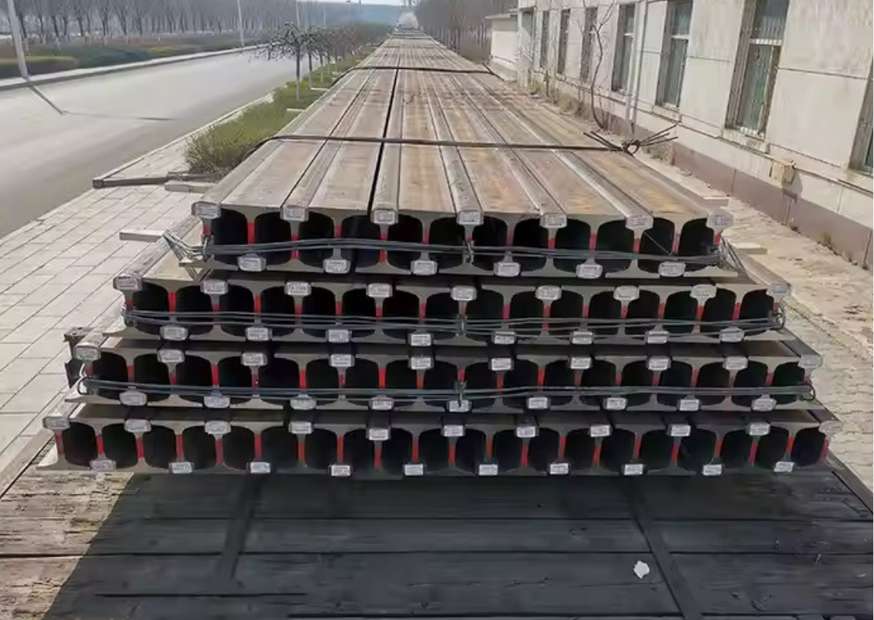
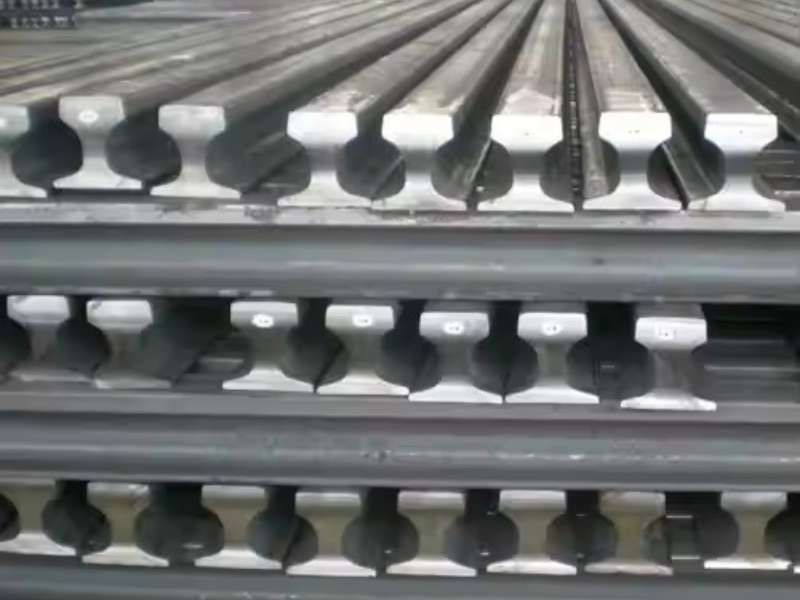
Crane rail applications — overhead cranes, gantry cranes, harbour equipment, and steel mill transfer cars — impose cyclic vertical and lateral shock loads that are categorically different from railway wheel loads. A dedicated forged self-locking clip provides the sustained grip and anti-loosening performance that a railway pandrol rail clip cannot deliver under crane duty cycles. Review CR80 rail dimensions to know why a separate fastening family is required for crane trackwork.
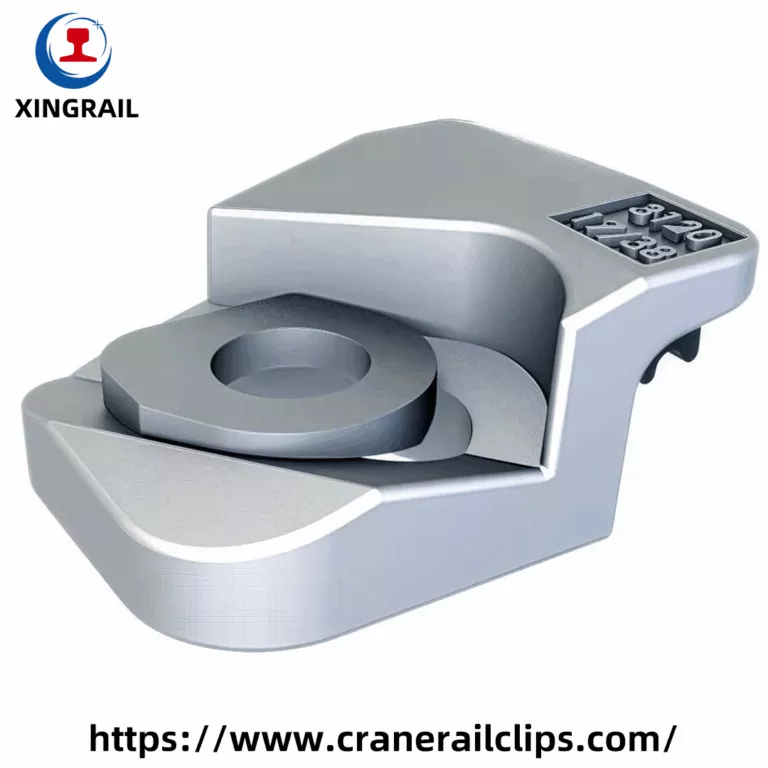
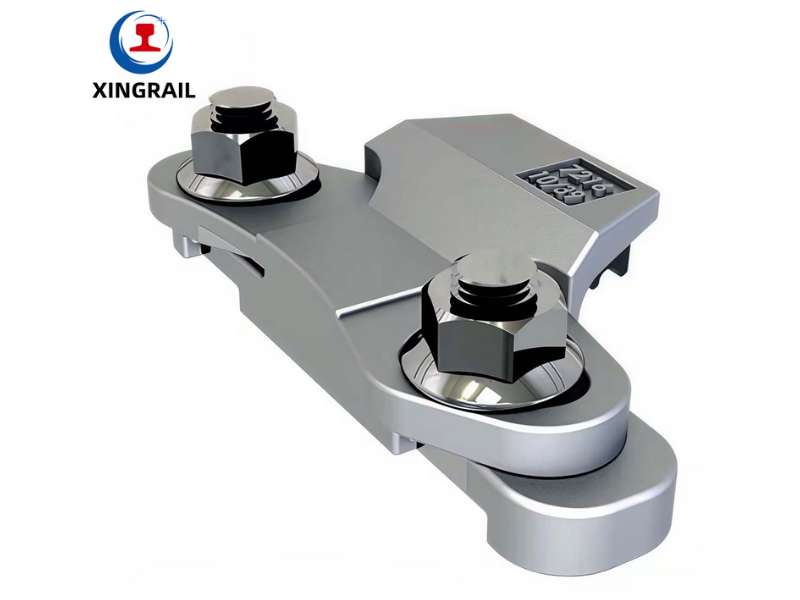
For crane track, Xingrail self-locking rail clips (type 3220 / 3224) are the correct replacement, not an e-Clip equivalent. Specifying the wrong clip type is the single most common sourcing error in crane rail procurement.
Selection and Sourcing Checklist
Before requesting a quote, confirm the following five items:
- Rail type and section: railway or crane rail, with full profile name
- Toe load requirement: minimum clamping force in kN per clip
- Hole pitch and shoulder form: cast-in shoulder, drilled baseplate, or weld-on base
- Corrosion environment: indoor warehouse, outdoor coastal, or chemical exposure
- Quantity and lead time: MOQ, delivery schedule, and certification requirements
Use the rail clip selector to match your section and clamping requirement in seconds before you request a quote. Buyers sourcing for AREA-profile track will find compatible profiles listed on the AREA standard track page.

FAQs
Q1: Is a Pandrol-compatible rail clip the same as a genuine Pandrol clip?
No. A compatible clip is manufactured to Pandrol dimensional and clamping standards by a third-party supplier. Verify toe load, hole pitch, and material certification against your original specification before ordering.
Q2: What rail sections do Pandrol-type clips fit?
Railway profiles, 115RE, UIC60, 60 kg are the primary applications. Crane rails such as CR80 and QU80 require dedicated heavy-duty crane clips, not railway e-Clip replacements.
Q3: What is the difference between a Pandrol e-Clip and a W-clip or J-clip?
Each name describes a different spring geometry and shoulder system. Compatibility is determined by toe load and hole pitch, not clip name alone. Always cross-reference by specification, not by shape similarity.
Q4: Can Pandrol-type clips be used on crane rails?
Not recommended. Crane rail duty requires forged self-locking clips rated for heavy cyclic loading. Standard railway elastic clips are not designed for crane duty cycles and will underperform in service.
Q5: What information is needed to quote a replacement Pandrol-type clip?
Rail profile name, toe load requirement, hole pitch and shoulder form, coating grade, quantity, and required lead time. Providing a drawing or physical sample speeds up the process significantly.