The DIN 536 crane rail standard is famous for its precision and durability in industrial applications. This tutorial examines the DIN 536 rail’s size, material qualities, and design aspects that distinguish it from other crane rails. This detailed review addresses questions like “What is the DIN 536 standard used for?” and “What are the dimensions of DIN 536 crane rails?” by explaining the DIN 536 A45 rail specifications and its use in shipyards and warehouses. Discover the necessaries of this sturdy steel profile.
What Is DIN 536 Rail Track Used For?
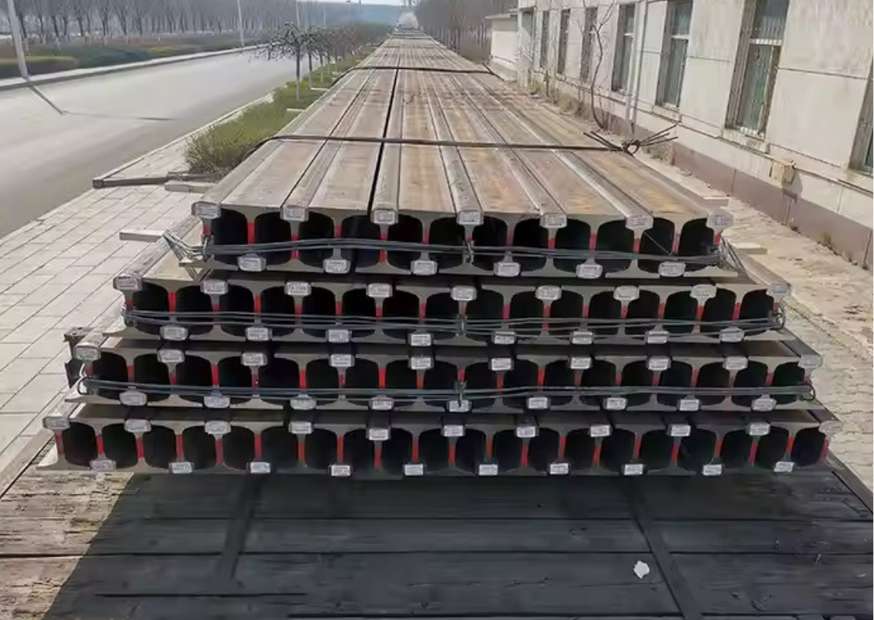
Industries that need strong crane rail systems use these rail tracks. Engineers design these rails to stabilize and precisely move large cranes and machines. They are common in shipbuilding, the steel industry, and logistics, where companies transport heavy cargoes. These rails fulfill strict standards and resist wear and distortion. Engineers design them for extreme-stress environments that require steady performance. Their precise dimensions and material qualities enable crane system integration.
The rails are also used for overhead cranes and gantry systems. These rails are sturdy and low-maintenance. The uniform profiles and dimensions of The rails aid precision-intensive industries like aerospace and automotive manufacture. Rails that can manage dynamic loads and vibrations ensure safety and reliability in high-demand applications. The rails can also be customized for different crane designs.

What Are the Specifications of Standard Rails?
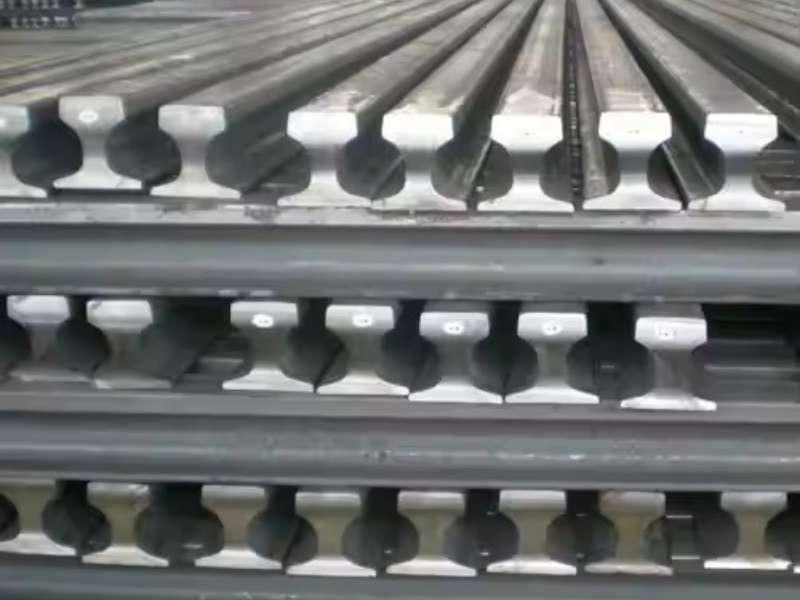
The standard rails offer exact dimensions and material qualities for heavy-duty industrial applications. These rails come in A45, A55, A65, A75, and A100 profiles. Flat-bottom rails improve stability and crane compatibility. Manufacturers use high-grade steel to make the rails, ensuring tensile strength and wear resistance. They fit durable and reliable surroundings. The rails also have rigorous tolerances to maintain regularity.
Dynamic loads and vibrations are another rail requirement. Weight is evenly distributed by the rails. Cranes convey huge weights in shipbuilding, steel production, and logistics. The rails’ profiles also reduce maintenance. Their standard dimensions and qualities allow engineers to integrate the rails with numerous crane designs. These characteristics make the rails ideal for precision, durability, and efficiency applications.
How Is the Quality of Rail Track Ensured?
Manufacturers ensure the quality of DIN 536 rail tracks through rigorous production and strict compliance with the DIN 536 standard. Manufacturers employ high-grade steel with specific chemical compositions for strength and endurance. Advanced heat treatment strengthens the steel against wear and distortion. The production process also uses accurate rolling to maintain rail profile homogeneity. For crane compatibility, the rails must fulfill certain parameters such head width, height, and base width. Quality control teams inspect every stage of production to find and eradicate flaws.
Manufacturers test rails extensively to check their mechanical qualities. To ensure rails can handle severe loads and dynamic stresses, these tests evaluate tensile strength, hardness, and impact resistance. Advanced measuring equipment checks rail dimensions. This ensures trains connect exactly with crane systems. These procedures, along with DIN 536 conformity, ensure rail performance and reliability in demanding applications.
What Industries Commonly Use Rail Track?
Industries that use heavy-duty cranes for material handling and transportation use DIN 536 rail tracks. These tracks support shipyard gantry cranes that carry big ship components precisely and steadily. DIN 536 rails help carry molten steel and heavy machines in steel factories. Logistics and warehouses, where overhead cranes move containers and other large goods, require these rails. Their endurance and dynamic load capacity make them necessary in these harsh situations.
The rails also aid aerospace and automobile manufacture with their precision and reliability. Cranes handle delicate yet heavy components during assembly in these sectors. These rails keep tower cranes and other lifting equipment safe and efficient on building sites. Ports and terminals use the rails for container cranes to move products between ships and storage spaces. The rails’ versatility, standardized size, and durable material qualities make them widely used throughout industries.
Why Choose XINGRAIL for Rail Track?
XINGRAIL’s quality and precision make it a reliable DIN 536 rail track provider. At Xingrail, we provide high-quality DIN 536 rail tracks made from premium steel. Our advanced manufacturing ensures precision and durability for heavy-duty applications. We offer profiles like A45, A55, A65, A75, and A100 to meet diverse needs. Our team provides expert guidance and tailored solutions.
With strict quality control, fast delivery, and competitive pricing, we deliver reliable products for industries like shipbuilding and transportation. Trust Xingrail for excellence and long-term performance.
Recommended Products for DIN 536 Crane Rails
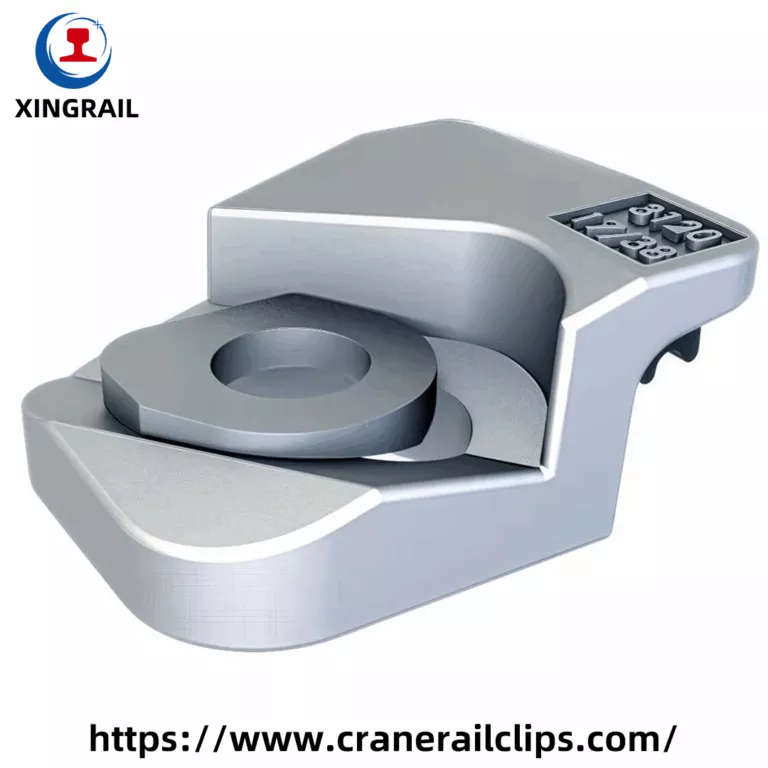
Industries worldwide rely on DIN 536 crane rails to move massive loads in demanding environments like shipyards, steel plants, and automated warehouses. Engineers specifically design these A-series profiles—such as the A45, A75, and A100—with wide, flat bottoms. This unique shape distributes heavy dynamic loads evenly across the support structure. However, to keep these heavy-duty rails securely in place, you must pair them with an equally robust rail fastening system.
When selecting rail clips for your DIN 536 rails, you must match the fastener directly to the physical base width of the rail profile. Because DIN 536 rails feature exceptionally wide bases, your rail clip must sit completely flush against the rail foot. This perfect fit allows the fastener to apply a continuous, heavy downward pressure known as toe load. This intense clamping force safely locks the flat-bottom rail to the underlying structure, absorbs extreme vibrations from overhead cranes, and neutralizes the massive lateral forces that attempt to push the tracks out of alignment.
To help you build a reliable and safe crane runway, we have matched our premium heavy-duty rail clips with common DIN 536 rail profiles. Review the table below to find the correct fastening solution for your specific rail dimensions.
|
Rail Type |
Base Width |
Height |
Weight |
Recommended Clips |
|
DIN 536 A45 |
125.0 mm |
55.0 mm |
22.10 kg/m |
32 Series Bolted Rail Clips |
|
DIN 536 A75 |
200.0 mm |
85.0 mm |
56.20 kg/m |
9 Series Welded Rail Clips |
|
DIN 536 A100 |
200.0 mm |
95.0 mm |
74.30 kg/m |
9 Series Welded Rail Clips |
For more detail on this subject, see railway track material specifications and railroad track dimensions.
Frequently Asked Questions (FAQs)
- Why do wide, flat-bottom DIN 536 rails require specialized rail clips?
DIN 536 rails feature uniquely wide bases engineered to distribute massive industrial loads. Standard railway fasteners cannot safely grip these extended profiles. You must use specialized crane rail clips that precisely match the wider dimensions, ensuring the fastener housing sits flush against the rail flange to deliver maximum downward clamping force. - Which fastening system works best for heavy A100 crane rails?
Heavy-duty profiles like the A100 endure extreme dynamic loads and severe lateral forces in environments like steel mills. We highly recommend securing these large rails with 9 Series Welded Rail Clips. You weld the base of these clips directly to the steel girder, creating a permanent, unyielding anchor that effortlessly manages the intense vibrations and side-thrusts of heavy gantry cranes. - Can I use 32 Series Bolted Clips on lighter DIN 536 profiles like the A45?
Yes. The DIN 536 A45 rail features a narrower 125 mm base width, which perfectly aligns with the gripping range of the 32 Series Bolted Clips. These fasteners deliver excellent downward pressure to stabilize the track while providing your maintenance teams with the flexibility to quickly loosen the bolts for lateral runway adjustments. - How do 9 Series welded clips prevent DIN 536 crane rails from shifting?
When massive overhead cranes accelerate or brake, they exert immense lateral pressure against the rails. The 9 Series clips utilize a self-locking wedge design and a vulcanized rubber nose that presses tightly against the rail foot. Combined with a welded structural base, this system actively resists both lateral and longitudinal movement, keeping your crane runway perfectly aligned. - What happens if my rail clip fails to match the DIN 536 rail base width?
Installing an incorrectly sized rail clip severely compromises the safety of your crane system. If the fastener does not seat flush against the wide DIN 536 rail foot, it instantly loses its essential clamping pressure. The heavy vibrations of passing cranes will rapidly push the loose rails out of alignment, causing severe wheel wear and creating an immediate derailment risk.