Railway clips play an important role in securing rails to sleepers. These components are necessary for maintaining the alignment of railway tracks under heavy loads and dynamic forces. The types of railway clips vary based on design, material, and application. Not only do they provide a firm grip, but they also absorb vibrations. Additionally, their durability and ease of installation make them indispensable in modern rail infrastructure. Knowing the types of railway clips helps in selecting the right option for specific track conditions.
What Are the Different Types of Railway Clips?
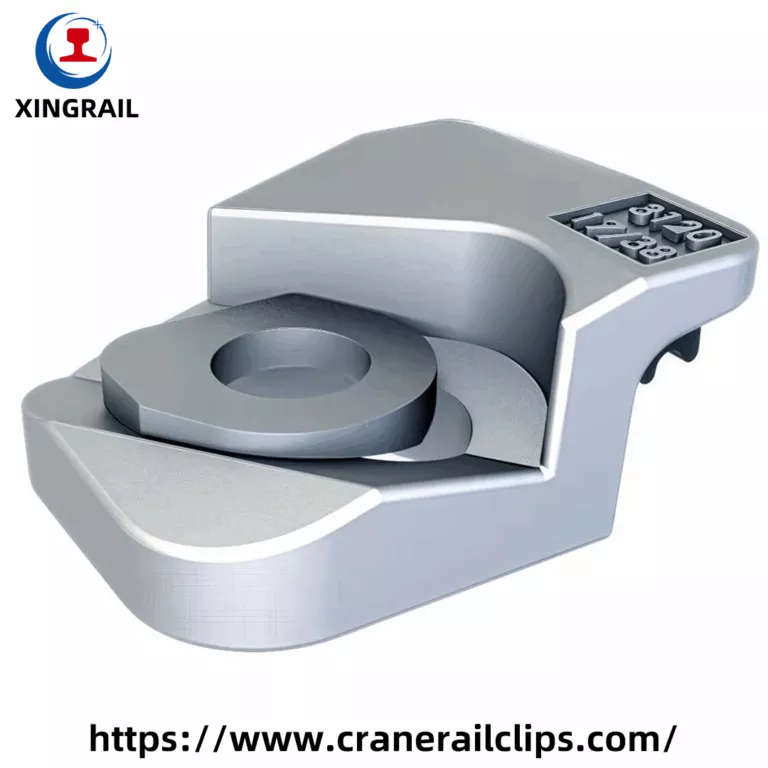
Railway clips play a important role in securing rails to sleepers. These clips are classified into several categories based on their design and application. Engineers widely use elastic rail clips because they absorb vibrations and maintain track alignment. Rigid clips, on the other hand, are suitable for tracks requiring minimal movement. Both elastic and rigid clips serve distinct purposes.
Different types of rail clips are designed to meet specific requirements in railway systems. Engineers value the Pandrol clip, a popular elastic clip, for its durability and ease of installation.
Where the original Pandrol fastener is hard to source, buyers cross-reference Pandrol-compatible rail clips that match the same rail section, toe load and shoulder geometry.
They prefer the SKL clip for high-speed railways because it offers superior vibration-damping properties. They use rigid clips, such as the e-clip, in less demanding track conditions due to their simpler design. variations highlight the adaptability of railway fastening clip types to diverse track environments.
Railway fastening clip types also vary in materials and manufacturing processes. Steel is the most common material. Some clips incorporate advanced alloys to enhance performance under extreme conditions. The manufacturing process, whether forged or cast, ensures the clip meets specific track specifications. These classifications and variations demonstrate the importance of selecting the right clip for optimal track performance.

For a brand-by-brand view of interchange sizes, see our Pandrol rail clip cross-reference covering e-Clip, Fastclip and their compatible equivalents.
For a single-section deep dive, see the 60kg rail clip selection guide covering 60 kg/m, UIC 60 and 60E1 rail.
Materials Used in Manufacturing Railway Clips
Railway clips rely on high-quality materials to ensure durability and performance under demanding conditions. Steel is the most commonly used material in rail clip manufacturing types due to its exceptional strength and resistance to wear. Manufacturers often use carbon steel or alloy steel, as these materials provide the necessary balance between flexibility and rigidity. Additionally, stainless steel is sometimes chosen for environments requiring corrosion resistance, such as coastal or humid regions.
The choice of material significantly impacts railway clip designs and applications. For instance, elastic rail clips require materials with high tensile strength to withstand repeated stress and maintain track stability. Conversely, rigid clips benefit from materials that prioritize rigidity over flexibility. These material variations allow railway fastening clip types to meet specific operational needs, whether for high-speed railways or heavy freight lines.
Manufacturing processes also influence material selection and performance. Forged steel clips offer superior strength and uniformity. Cast steel clips, while less expensive, are suitable for tracks with moderate operational demands. The combination of material properties and manufacturing techniques ensures that rail clip system types meet the diverse requirements of modern railway infrastructure.
How Do Railway Clips Function in Track Systems?
Railway clips play a important role in maintaining track stability by securing rails to sleepers and ensuring proper alignment. These clips prevent lateral and longitudinal rail movement. Elastic rail clips, for example, absorb vibrations and reduce stress on the track. Rigid clips, on the other hand, provide a firm grip.
Railway track clip categories are designed to address specific operational needs. Railway engineers widely use elastic clips, such as the Pandrol and SKL types, because they maintain consistent pressure on the rail and adapt to dynamic forces. They use rigid clips, like the e-clip, for tracks with moderate operational demands due to their simpler design. Each category serves a unique purpose.
The features of rail clip system types directly impact their performance. Elastic clips provide flexibility and durability. Rigid clips, with their robust design, ensure a secure fit in static conditions. These features highlight the importance of selecting the right clip type to meet the specific requirements of a railway system.
How Are Railway Clips Installed on Tracks?
Installing railway clips involves a precise step-by-step process to ensure track stability and safety. The first step requires positioning the rail on the sleeper. Workers then place the base plate between the rail and the sleeper to distribute the load evenly. Afterward, they position the railway clip in its designated slot on the base plate.
The tools and techniques used during installation depend on the railway track clip specifications. Manual installation often involves hammers and crowbars to secure the clip into place. For larger projects, operators use hydraulic or pneumatic machines to apply consistent force. These advanced tools not only improve efficiency but also reduce the risk of improper installation.
Rail clip system types require specific techniques to match their designs. Elastic clips, such as the Pandrol type, are installed by applying downward pressure to lock them into the base plate. Rigid clips, like the e-clip, involve sliding the clip into position and securing it with a hammer. Each method ensures the clip maintains the rail’s alignment.
Railway clips are what keeps the tracks stable and safe. At Xingrail, we know how important these parts are to today’s rail systems. We are experts at making custom solutions for different types of track conditions. Make sure that every product meets strict performance standards, from elastic clips for high-speed railways to rigid clips for freight lines. We help our clients get the best track performance by focusing on accuracy and dependability. You can trust our professional approach and dedication to quality when it comes to railway fastening systems.
You may also find types of rail clips helpful.
Deep-Dive Technical Notes
IRIS Standards For Rails And Clips
How IRIS Governs Rail Clip Manufacturing
The principles applied to rail manufacturing are equally critical for rail clips, especially since they are made from high-grade spring steel. Material Control: The specific grade of silico-manganese or other spring steel must be verified upon receipt. The chemical composition directly impacts the clip’s ability to be formed and heat-treated to achieve the desired spring properties. Special Processes (Forging and Heat Treatment): The forging process that shapes the clip and the subsequent heat treatment (quenching and tempering) are the most critical steps. IRIS requires these processes to be validated to ensure every clip has the correct hardness, elasticity, and fatigue resistance. An incorrectly heat-treated clip may be too brittle and snap under load, or too soft and fail to provide the required clamping force. Load and Fatigue Testing: IRIS mandates rigorous product verification. For rail clips, this involves batch testing to verify: Toe Load: Measuring the actual clamping force exerted by the clip to ensure it is within the specified range. Fatigue Life: Subjecting sample clips to millions of load cycles to simulate their service life and ensure they do not fail due to metal fatigue. The IRIS standards for rails and clips elevates quality management by applying a specific, demanding set of rules to the railway supply chain. While it does not create new technical designs for rails or clips, it provides the essential framework that guarantees these components are manufactured with the discipline, control, and traceability that the industry demands. Through its focus on managing special processes, validating production with First Article Inspections, and mandating full traceability, IRIS ensures that every rail and every clip delivered from a certified facility is not just compliant by inspection, but is a product of a robust and reliable quality system. This holistic approach is fundamental to building the safe and dependable railway infrastructure of the future.
Elastic Rail Clips Dimensions
SKL (Spannklemme) Tension Clamps
The SKL system, widely used in Europe and associated with Vossloh, is a screw-based system. It uses a screw spike to tighten a tension clamp (the clip) against the rail foot. Key Dimensions: SKL clips are typically formed from spring steel with a diameter of 14 mm to 16 mm. The SKL 14, for instance, uses a 14 mm bar. Engineers design its dimensions to work with an angled guide plate that provides lateral support. Performance: This system is known for providing a highly consistent and measurable clamping force. It offers excellent adjustability, which is a major advantage for maintaining the precise track geometry required on high-speed lines. The toe load is typically in the range of 800-1200 kgf, providing a balance of restraint and elasticity ideal for passenger comfort.
Among elastic fastenings, vossloh rail clips use a screw-spike SKL tension clamp that suits both timber and concrete sleepers.
Guide to Railroad Clip Steel from Xingrail
Performance in High-Durability and High-Load Situations
Heavy-haul freight operations and high-speed passenger trains are common on modern railroads. The track structure is under tremendous strain in these situations. In these settings, clips need to be very durable and perform exceptionally well. They must maintain their clamping force in the face of severe temperature swings, high dynamic loads, and continuous vibration. Because of this, railroad clip steel is usually a premium spring steel . This material has the strength to withstand deformation over millions of load cycles and the elasticity to absorb impacts. Clips are specifically designed to provide a higher toe load in heavy-haul corridors or sharp curves. This guarantees that even in the most difficult circumstances, the track geometry stays stable.
On heavy-haul mainline, clips for 115RE rail must match the section’s 127 mm base and 69 mm head to hold the correct toe load.
Elastic Rail Clips: Key Features And Advantages
What is involved in the installation and maintenance?
Installation: The process follows a step-by-step approach using proper tools and techniques to ensure secure fastening of the clips. Maintenance: Teams must inspect the clips regularly to check for wear and tear and ensure their long-term reliability and performance. At Xingrail are proud of how good we are at making railway fastening solutions. Carefully design our elastic rail clips to meet the high standards of today’s railway systems. We know how important these parts are for keeping the track stable, safe, and efficient. We make sure that our products work well in a variety of settings by focusing on quality and dependability. Industries all over the world trust our solutions for everything from high-speed railways to heavy-load applications. At Xingrail, professionalism and a dedication to excellence are at the heart of everything we do.
Key Features
They offer exceptional durability. Their resistance to wear and tear makes them a reliable choice for railway elastic fastening solutions. Additionally, engineers design these clips to maintain their structural integrity, even under continuous stress. This durability reduces the need for frequent replacements. Compatibility is another key advantage of elastic rail clips. They seamlessly integrate with various rail track elastic fasteners. Their adaptability ensures that they can be used in conjunction with advanced railway elastic clip components. Furthermore, elastic rail clip systems are engineered to meet specific elastic rail clip specifications . High-performance materials play a important role in elastic rail clip manufacturing. These materials, such as high-grade steel alloys, are chosen for their strength and elasticity. Advanced elastic rail clip technology further enhances their functionality. This combination of innovative design and robust materials ensures that elastic rail clips remain a cornerstone of railway track stability and safety.